

Community Colleges Push for Approval of Bachelor’s Degrees Amid CSU Objections
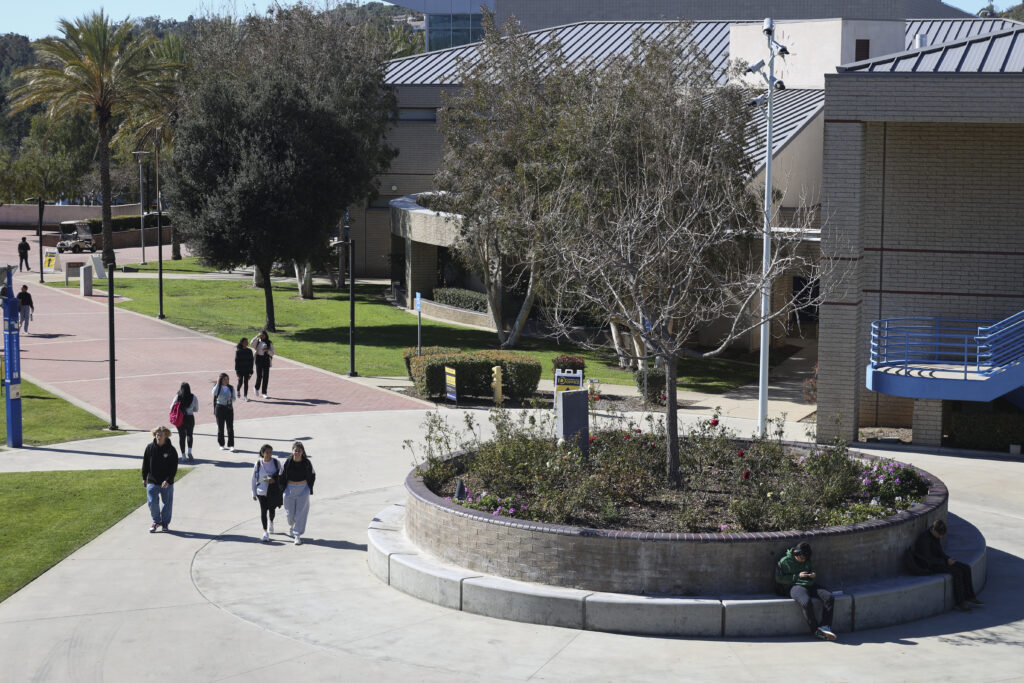
Courtesy of Santiago Canyon College
California’s community college officials are advocating for the urgent approval of several proposed bachelor’s degree programs that have faced protracted delays, primarily due to objections from California State University (CSU).
Current Landscape of Community College Degrees
As of now, 54 bachelor’s degree programs are offered or soon to be introduced by community colleges across California. Most of these degrees received approval in 2022 or later. However, 16 additional degrees remain blocked, with seven initially proposed as recently as 2023. Many community college leaders and students are expressing frustration over these delays, which hinder access to valuable educational opportunities.
The Dispute Over Degree Offerings
California law permits community colleges to establish bachelor’s degree programs as long as they do not duplicate offerings from the four-year CSU system. Nevertheless, CSU has raised objections, claiming overlaps with their existing curricula. Community college officials maintain that the proposed programs are distinct and aimed at filling workforce gaps not addressed by CSU.
Among the blocked degrees are:
- Cybersecurity Technology at Cerro Coso Community College
- Field Ironworker Supervision at Cerritos College
- Cloud Computing at Santa Monica College
- Building Trades Management at Foothill College
The ongoing stalemate has incited discussions at various meetings, including a recent gathering of the California Community Colleges Board of Governors in Sacramento. While no decision was reached during the meeting, board members voiced significant support for moving forward with approvals.
Advocacy for Approval
Several community college representatives emphasized their readiness to meet local workforce needs through these proposed programs. Kristina Whalen, President of Foothill College, highlighted that there has been no significant student transfer from Foothill to CSU for construction management, pointing out that delays are resulting in missed opportunities for students and the broader community.
James Todd, Vice Chancellor of Academic Affairs, reinforced that the blocked degrees have undergone a rigorous approval process, asserting that despite minor overlaps, they are unique and cater to unmet workforce demands in regions served by community colleges.
Analysis by WestEd
A recent WestEd analysis suggests that many blocked degrees may not be duplicative. The findings underscore the necessity for solutions that prioritize local academic needs, particularly for students restricted by geography. The intention behind the law regulating these programs is to address regional demands and allow community colleges to tailor their offerings to local community needs.
Community Voices Matter
Both students and board members have echoed the sentiment that local communities should have a say in their educational offerings. A student at Cerritos College, Tyler Bird, articulated the importance of the proposed Field Ironworker supervision degree, stating it would provide opportunities for better wages and career advancement.
Board member Joseph Williams emphasized that decisions regarding degree offerings should reflect local community input rather than external objections from distant universities.
Future Collaborations Needed
While support for degree approvals is prevalent, board members like Adrienne Brown advocate for greater collaboration with CSU to address mutual concerns. CSU campuses have struggled with enrollment issues, which may inform their resistance to community college bachelor’s degrees. Establishing pathways for more students to transition from community colleges to CSU could alleviate some resistance over time.
Conclusion
The debate surrounding the approval of bachelor’s degree programs at community colleges in California encapsulates larger issues of accessibility, regional needs, and educational equity. As discussions continue, it is crucial that all stakeholders work towards solutions that better serve students and communities across the state. For ongoing updates on the situation, stay informed through platforms like EdSource.
