

Privacy Groups Demand Removal of Covert License Plate Readers in Southern California
Growing Privacy Concerns Over Surveillance Technology
More than 25 privacy advocacy organizations are urging California Governor Gavin Newsom to dismantle a network of covert license plate readers (LPRs) scattered throughout Southern California. The groups are alarmed that this surveillance technology allegedly contributes to a contentious U.S. Border Patrol predictive domestic intelligence program, a system that analyzes travel patterns across the nation for suspicious activity.
Covert Surveillance Raised By Advocacy Groups
In a letter sent on Tuesday, the Electronic Frontier Foundation, along with other nonprofit organizations, emphasized the need for an investigation into the permits for these LPRs. Their request includes revoking any existing permissions and removing the devices to protect the privacy rights of Californians.
“This type of surveillance raises significant constitutional concerns and infringes on the rights of everyday citizens,” the letter states.
Investigative Findings on License Plate Reader Usage
An investigation by the Associated Press revealed that the U.S. Border Patrol has concealed license plate readers within commonplace traffic safety equipment. Collected data from these devices feeds into an intelligence program that monitors a vast number of drivers in the United States, forwarding the profiles of individuals deemed suspicious for further scrutiny.
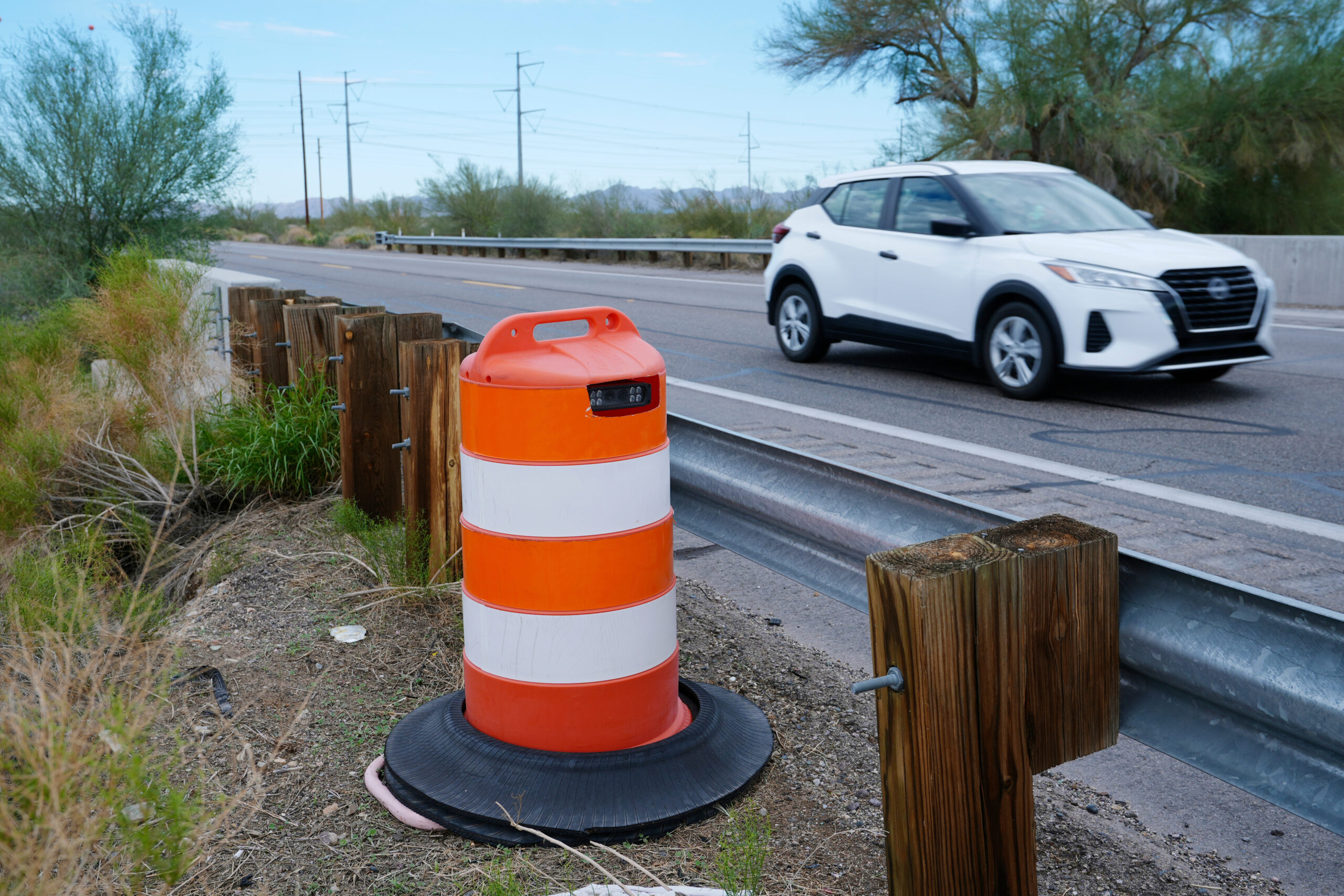
In Arizona, the Border Patrol camouflaged its surveillance equipment, hiding it inside orange and yellow construction barrels along highways, a tactic aimed at evading detection.
The Scope of Covert LPR Networks in California
Research from the advocacy groups indicated that approximately 40 LPRs exist in San Diego and Imperial counties, regions that border Mexico. Notably, many of these readers were found disguised in construction barrels. While the exact ownership of each device remains unclear, documents obtained from the California Department of Transportation reveal that both the Border Patrol and the Drug Enforcement Administration (DEA) have applied for permits to position these readers along state highways. Importantly, the DEA shares its license plate data with Border Patrol, further integrating these surveillance efforts.
The Mechanics of Predictive Intelligence Programs
The Associated Press identified a network of cameras utilized by the Border Patrol to scan vehicle license plates. Algorithms flag vehicles based on travel origins, destinations, and routes, indicating that the agency particularly targets brief trips to the border area, viewing them as potential indicators of illegal activity such as drug and human smuggling.
Federal agents often collaborate with local law enforcement on these cases, stopping drivers on purported violations—often with no awareness that they have been included in a predictive intelligence program.
Real-World Implications of License Plate Surveillance
Real incidents illustrate the program’s impact: in a 2024 case, a Border Patrol agent stopped a driver based on travel data that suggested a suspicious delay after crossing the border. Similarly, in a 2023 incident, agents detained a woman for taking a roundabout route between Los Angeles and Phoenix, assuming it was an indication of smuggling activity.
Both examples highlight how individuals may unknowingly become ensnared in a surveillance system aimed at combating illegal immigration and smuggling.
Legal Considerations Surrounding Surveillance Technology
The implementation of license plate readers and the resultant data collection has faced scrutiny from lawmakers, particularly in light of concerns about privacy rights. Previous court rulings have affirmed the collection of LPR data on public roads but have limited warrantless access to other sensitive tracking data, such as cellphone location information.
Legal scholars and civil rights advocates are increasingly questioning whether large-scale surveillance like LPR systems could violate the Fourth Amendment, which protects against unreasonable searches and seizures.
Government Responses and Ongoing Discussions
While the California Department of Transportation and Governor Newsom’s office have yet to comment on the situation, the agencies involved have stated that the technology is used responsibly and adheres to federal regulations meant to safeguard civil liberties.
The ongoing dialogue about the use of surveillance technology reflects a larger societal concern regarding privacy, civil rights, and the balance between security and individual freedoms.
Conclusion
As advocacy groups press for the removal of covert license plate readers in Southern California, the implications of these technologies remain at the forefront of a national conversation about privacy rights and government surveillance. This situation underscores the urgent need for transparency and accountability in the use of surveillance technologies.
For more information on the ongoing surveillance issues, visit Associated Press – Investigative Reporting.
This article aims to provide a clearer understanding of the complexities surrounding surveillance technology and the privacy concerns raised by various advocacy groups.
