

Winter Weather Returns: Northern California Welcomes Rain and Snow
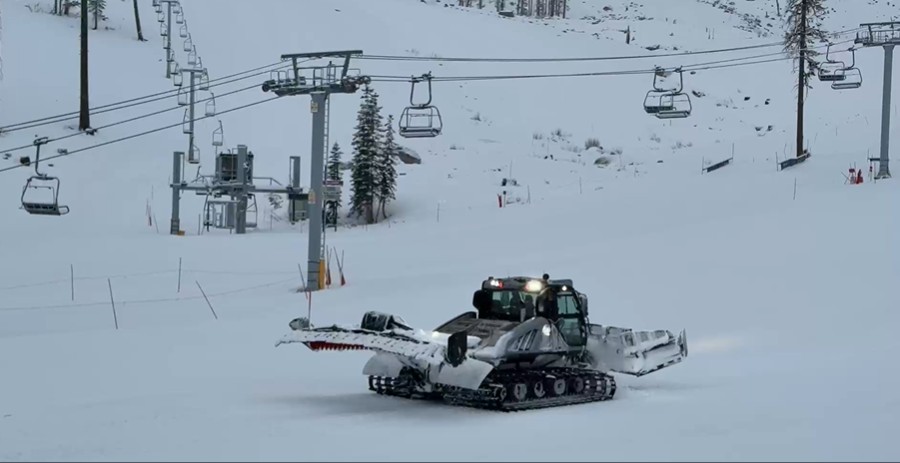
A refreshing change swept through Northern California on Wednesday, as residents rummaged through closets in search of umbrellas and raincoats to prepare for the latest weather front. After a dry spell of over five weeks, the state experienced its first significant storm, delivering welcome rain and nearly a foot of snow to the Sierra Nevada mountains.
Rainfall Totals and Impacts
The storm brought varying rainfall across the region, with most Bay Area cities receiving between a quarter inch and half an inch in just 24 hours. The Santa Cruz Mountains saw even heavier precipitation, accumulating about 2 inches. This rain alleviated concerns over drought conditions, helped cleanse the air of soot and pollutants, and improved snow conditions at ski resorts in the Lake Tahoe area. In summary, winter was making its return.
What’s Ahead: More Rain on the Way
Meteorologist Jan Null from Golden Gate Weather Services indicated that the latest storm was just the beginning. “On a scale of 1 to 10, what we just had is about a 2 or a 3,” he stated, predicting that the coming weekend would bring a storm rated at around a 6.
Forecast for the Upcoming Days
According to the National Weather Service, Wednesday’s wet conditions will give way to a brief respite with mild, dry weather on Thursday and Friday. However, more rain is anticipated late Saturday, continuing through at least the following Thursday. Regular forecasts predict approximately half an inch of rain each day from Sunday to Tuesday, with totals reaching 2 to 3 inches by the end of the week in many areas.
“We have moved away from the warm days of 65- to 75-degrees,” Null noted, “Now we are experiencing cooler, unstable air, leading to showery periods.”
California’s Winter: Feast or Famine?
This winter has showcased a typical California weather pattern of feast-or-famine. After a dry November, the state was saved from drought by powerful atmospheric river storms between Christmas and early January, which brought an impressive 8 to 10 feet of snow to Sierra resorts. Then, unexpectedly, the rains ceased.
Since early January, California had faced dry conditions until this week, causing challenges for the Sierra snowpack, which is vital to the state’s water supply. The snowpack percentage dropped from 93% of historical average on January 6th to just 55% as of Wednesday.
Andrew Schwartz, lead scientist at the UC Berkeley Central Sierra Snow Laboratory, remarked, “Since the first week in January, we’ve effectively seen nothing.” Despite the current conditions, Schwartz noted that California began this winter with higher-than-normal reservoir levels, thanks to three consecutive wet winters.
Reservoir Status: Levels Remain Healthy
As of mid-February, California’s major reservoirs are performing well. Shasta Lake, the state’s largest reservoir, is at 78% full or 116% of its historical average. Similarly, Oroville Reservoir is 80% full, and most others are above their normal averages as well, making the chances of summer water restrictions virtually nonexistent.
Several smaller reservoirs, such as Loch Lomond and Lake Cachuma, are currently at full capacity, with water flowing over spillways.
Seasonal Rainfall: A Steady Outlook
In many areas, seasonal rainfall totals are near normal levels. As of Wednesday, major cities are seeing favorable statistics:
- San Jose: 98% of normal
- Oakland: 91% of normal
- San Francisco: 83% of normal
- Santa Rosa: 84% of normal
Southern California cities have surpassed averages, with Los Angeles at 170% and San Diego at 139%. The anticipated storms may also bring 1 to 4 feet of new snow to the Sierra, helping to recover the snowpack.
Conclusion: Anticipation for Wet Weather
As California embraces this return of rain and cooler temperatures, both residents and experts are optimistic. While the state has faced fluctuations in weather patterns, the recent storms are set to help replenish water supplies and sustain the seasonal bounce back. With more rain anticipated, the next ten days may prove pivotal in shaping California’s winter outlook.
For continuous updates, keep an eye on local weather forecasts and remain prepared for changing conditions.
