

Historic California Wolf Wanderings: A Bold Quest for Love
Introduction to a Remarkable Journey
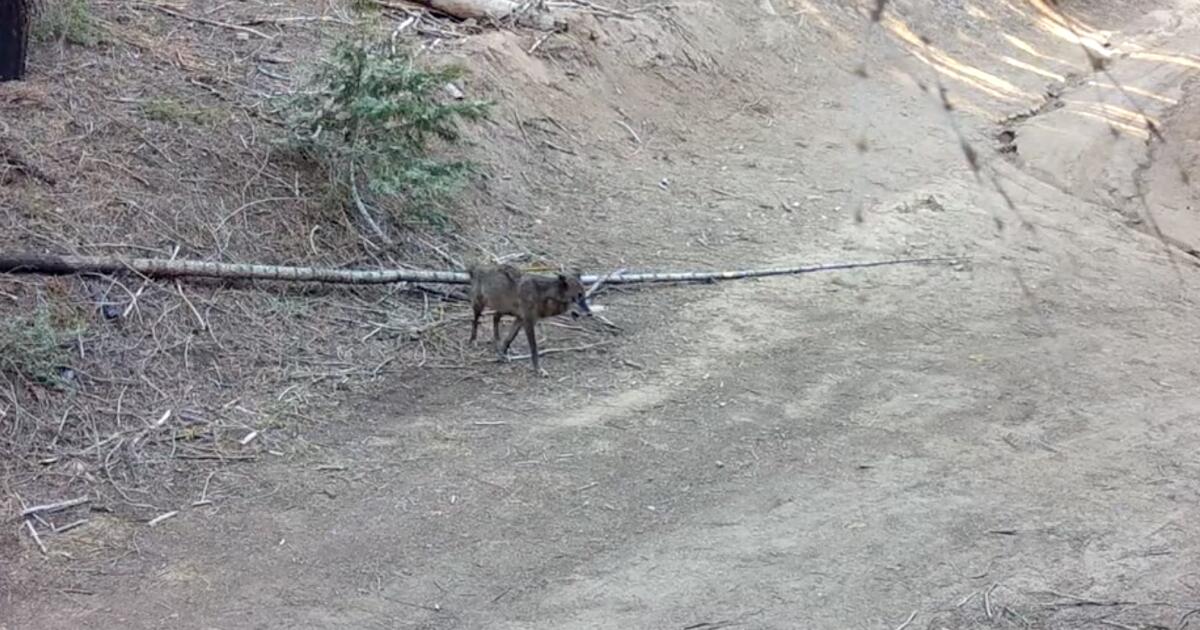
Last Saturday, a female wolf known as BEY03F made headlines by wandering into the mountains of Los Angeles County—a notable reemergence of wolves in an area where they hadn’t been documented in over a century. This remarkable journey highlights not only the resilience of nature but also the ongoing efforts to restore wolf populations in California.
The Quest for a Mate
As winter fades into spring, wolves enter their breeding season, which occurs once a year, typically around Valentine’s Day. For BEY03F, a three-year-old from Plumas County, time is running out to find a mate. According to Amaroq Weiss, a senior wolf advocate with the Center for Biological Diversity, wolves only come into heat once a year, making it critical for them to find a partner during this limited window.
“Unlike dogs who can mate multiple times a year, wolves aren’t that way. It’s essential for them to find a mate before this window of time,” Weiss noted.
She is currently residing in Kern County after briefly venturing into L.A. and is on a tight schedule to secure a companion.
The Journey So Far
BEY03F, affectionately referred to as “bae” by some fans, began her journey from the Beyem Seyo pack, where she was born in 2023. The pack gained attention last year due to a series of livestock attacks that resulted in state wildlife officials having to euthanize several members. Fortunately, BEY03F left her family before these incidents occurred, as noted by John Marchwick of California Wolf Watch.
Following her departure, she joined the Yowlumni pack, the southernmost wolf group in the state, located in Tulare County. GPS tracking indicates she traveled over 370 miles through the Sierra Nevada to reach the mountain ranges north of Santa Clarita. As of her last recorded location Saturday morning, she was just south of State Route 58.
What Lies Ahead for BEY03F?
Despite her remarkable journey, BEY03F faces challenges as she searches for a mate. Axel Hunnicutt, the gray wolf coordinator for the California Department of Fish and Wildlife, has surmised that she may be heading north due to the lack of signs from other wolves during her southern travel.
“If infrastructure like the Grapevine wasn’t there, I’d bet that she would have kept going west into Ventura County,” he remarked.
The uncertainty surrounding her next steps keeps conservationists and wildlife watchers eagerly anticipating her movements.
The Context of Wolf Populations in California
The return of wolves to California marks a significant moment for conservation efforts. Historically, Californian wolves were driven to extinction by hunters and trappers by the 1920s, with the last known wild wolf shot in 1924. The resurgence began in 2011 when a wolf entered California from Oregon, signifying the potential for recovery. Today, there are an estimated 60 wolves in the state.
While some celebrate this comeback as a conservation success, challenges persist, particularly concerning livestock predation in rural areas. These tensions highlight the need for ongoing education and awareness around coexistence with wildlife.
Major Threats to Wolves in California
One of the most significant dangers to California’s wolves is vehicle collisions. Unfortunately, many of these majestic animals have lost their lives on freeways. In 2021, OR-93, a notable wolf, tragically met his end after being struck along Interstate 5. This ongoing risk emphasizes the importance of creating safer environments for wildlife as conservation efforts continue.
Conclusion: A Symbol of Hope
The journey of BEY03F reminds us of the ongoing battle for wildlife preservation and the complexity of human-animal interactions. As the search for a mate continues, her story embodies hope for the future of wolves in California. Observers are left to wonder where this remarkable wolf will go next and how her journey will shape the ongoing narrative of wildlife recovery in the Golden State.
For more information on wildlife conservation and the importance of coexistence, visit the National Wildlife Federation or check local conservation efforts.
This article is crafted to enhance readability and engagement while optimizing for search engines, utilizing keyword strategies and external links to relevant resources.
