

Gavin Newsom’s Global Diplomacy: A Distraction from California’s Crises
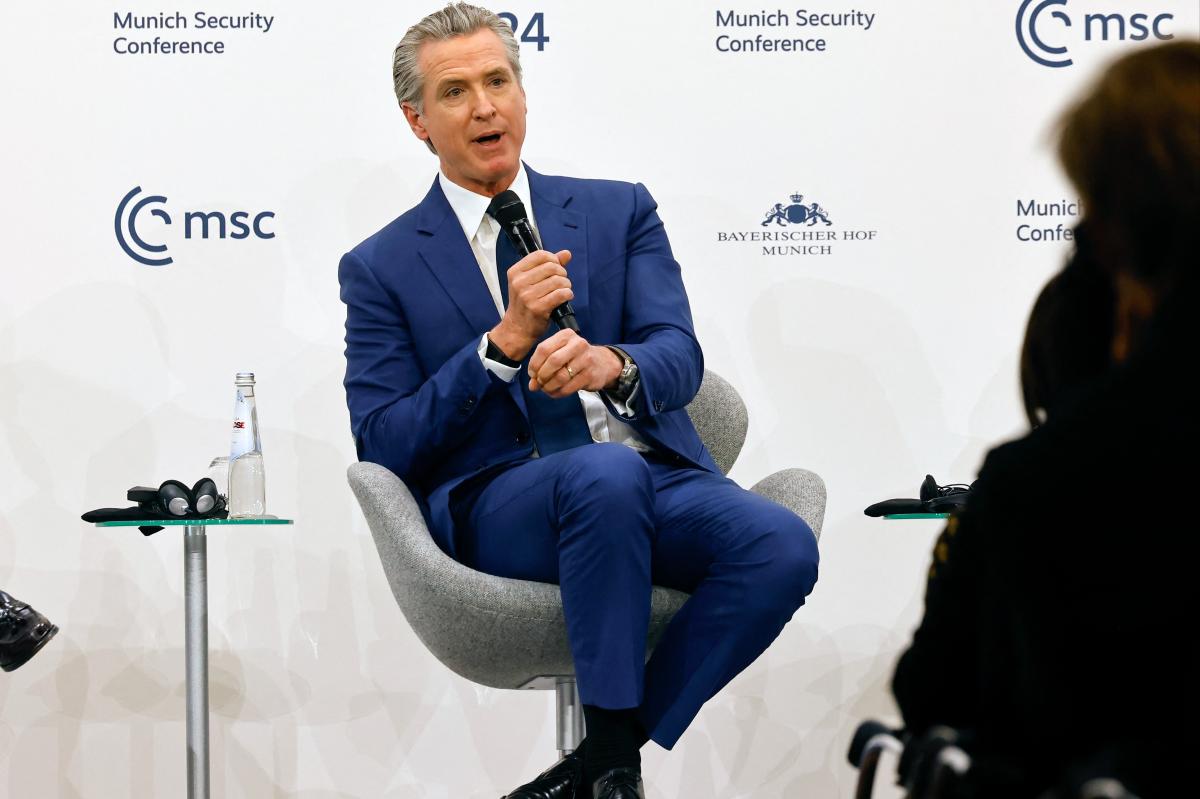
Gavin Newsom’s recent travels resemble those of a foreign minister rather than the governor of a state grappling with multiple challenges. Just this past week, he was in Munich, engaging with international leaders instead of focusing on pressing issues that affect Californians directly.
This foreign foray is notable in a pattern where Newsom has prioritized photo opportunities over meaningful outcomes for the people who elected him. His actions hint at ambitions that extend beyond California, possibly eyeing the 2028 presidential election. Recently, he attended events such as the World Economic Forum in Davos, the UN Climate Conference in the Amazon, and now his trip to Hong Kong, all while California faces significant internal struggles.
While Newsom positions himself as a global statesman, California suffers under the weight of neglect stemming from his administration’s decisions. A critical assessment of his time in office reveals a decline in the state’s financial stability. What began as a budget surplus of $97 billion has devolved into a looming deficit crisis. Newsom’s recent budget proposal frames the projected shortfall as a “manageable” $2.9 billion, but the Legislative Analyst’s Office forecasts a more concerning $18 billion deficit, jeopardizing essential services.
This decline isn’t merely due to external economic forces; it results from expanded social programs funded by temporary tax hikes. Under Newsom, California has become a state where only the wealthy thrive, while the middle class suffers, prompting an exodus for more affordable living conditions. The cost of living crisis manifests through:
- High Energy Costs: Californians face the highest electricity rates in the mainland U.S., nearly double the national average.
- Soaring Gas Prices: Environmental taxes and regulations leave Californians paying significantly more for gas compared to the national average.
- Poverty Paradox: California, despite its wealth, has the highest poverty rate in the nation, with over 7 million residents unable to meet basic living expenses.
When Newsom speaks about “California values,” he refers to a system that burdens the middle class with high taxes and regulations, pushing them to leave for states with better opportunities. The results of his ineffective policies are starkly visible in California’s cities, where despite spending over $20 billion on homelessness initiatives, the state remains the epicenter of the crisis.
Even amidst claims of a 9% decrease in unsheltered populations in 2025, homelessness in California is still higher than it was when Newsom took office in 2019. A leader allowing Sacramento, the state capital, to be defined by encampments and decay demonstrates an inability to restore order and safety.
A potential Newsom presidency raises concerns about his accountability. In California, failures are often attributed to external circumstances rather than faulty policymaking. Newsom must recognize that as governor, he is ultimately responsible for the challenges facing the state.
During his time as governor, rather than focusing on solving California’s high unemployment rate, he has sought to elevate his national profile as a political adversary. Yet, Americans desire a president capable of addressing pressing issues such as inflation and public safety. True leadership involves addressing the everyday concerns of citizens, not just sharing grand visions at summits like those in Munich or Davos.
Every day Newsom spends overseas represents a missed opportunity to negotiate solutions for issues like the insurance crisis that leaves California homeowners vulnerable. With an unemployment rate of 5.5%, significantly higher than the national average of 4.3%, his administration is failing to deliver results.
Once viewed as the “promised land,” California under Gavin Newsom serves as a cautionary tale. The persistent budget deficit and visible homelessness are indicators of what could result from his leadership on a national scale. The “California Model” is not a promising blueprint for the future but rather a guide toward decline.
