

California’s Gubernatorial Race: A Democratic Dilemma in a Blue State
As the Democratic Party prepares for a series of significant elections, California, the largest Democratic stronghold, presents an unexpected challenge. The state’s unique “top-two” primary system could lead to a situation where voters might have to choose between two Republican candidates in the upcoming general election for governor.
The Top-Two Primary System Explained
California’s top-two primary system allows all candidates, irrespective of party affiliation, to compete in a single primary. This means the two candidates with the highest votes will advance to the general election, regardless of their party. This structure has sparked concerns among California Democrats, who may find their support fragmented among multiple candidates.
The Risk of a Democratic Shutout
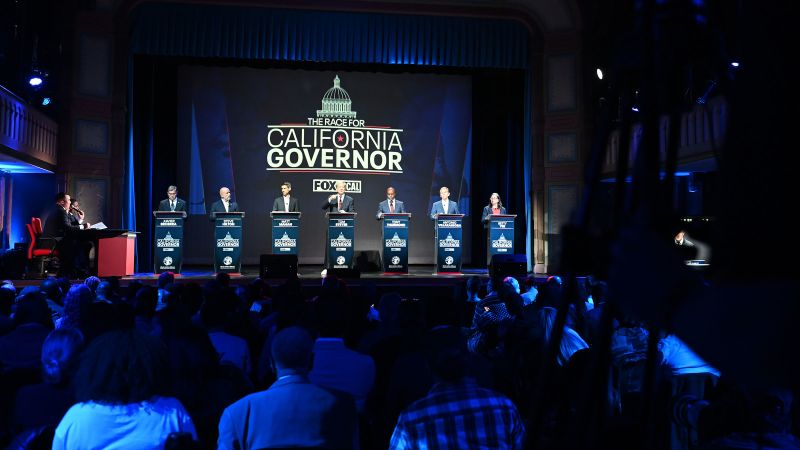
Currently, eight major Democratic candidates are vying for the governor’s seat, including figures like Katie Porter, Xavier Becerra, and Eric Swalwell. The fragmentation of votes among these candidates could lead to a situation in which two leading Republicans advance to the general election. Data analyst Paul Mitchell has indicated that there’s roughly a 20% chance of a Democratic lockout in the upcoming election, which is serious enough to raise red flags among party leaders and strategists.
Calls for Unification
Recognizing the potential crisis, Democratic leaders are urging low-polling candidates to consider exiting the race to consolidate support behind a stronger contender. Endorsements from prominent party figures including Governor Gavin Newsom and former Speaker Nancy Pelosi are viewed as crucial for boosting the visibility of a chosen candidate.
Divided Support Among Democrats
Historically, Democratic candidates in California have had clear frontrunners in gubernatorial primaries. However, this year presents a different scenario. Many leading Democrats, such as Senator Alex Padilla and former Vice President Kamala Harris, opted out of the race, leaving a relatively weak field. The lack of clarity and focus among candidates has led to a crowded and competitive primary landscape.
The Emerging Candidates
As the primary season unfolds, Katie Porter was initially seen as a frontrunner, but recent controversies over her media interactions have made her position less certain. This has opened the door for other candidates like Eric Swalwell, Tom Steyer, and Matt Mahan to enter the race, complicating the dynamics further. The presence of numerous candidates means that no single Democratic candidate has yet gained a significant lead in the polls.
Polling Insights
Recent public polls indicate that Steve Hilton, a Republican candidate, is currently leading the pack, with various Democratic contenders trailing closely behind. None of the candidates, Democratic or Republican, have surged ahead with more than 20% support, reflecting the chaotic state of the race.
The Impact of Endorsements on Campaign Dynamics
Endorsements play a crucial role in shaping the priorities and visibility of candidates in the competitive landscape of California politics. Eric Swalwell has garnered notable labor endorsements, including from the Service Employees International Union and the California Teachers Association. However, Katie Porter and Tom Steyer have also secured support from other influential unions, resulting in a split endorsement scenario that raises questions about party unity.
Potential Challenges Ahead
As the primary date approaches, candidates such as Steyer are expected to ramp up their negative advertising efforts against rivals like Swalwell and Porter. This could further complicate the campaign as candidates vie for a definitive position among a crowded field while attempting to fend off critiques.
Republican Prospects in a Blue State
Most analysts agree that Republicans are unlikely to surpass 38% of the primary vote. If the Democratic vote remains divided, it poses a real risk that a Republican could unexpectedly secure one of the general election slots. Several strategists are cautiously optimistic, asserting that a Democrat reaching just 20% would likely ensure their advancement past the primary.
Long-Term Repercussions for Democratic Leadership
Should a Republican secure the governorship, it could severely impact Newsom’s aspirations for a presidential run in 2028. A GOP victory would likely be perceived as a rejection of Democratic leadership in California, provoking concerns regarding the party’s future, leadership, and integrity.
Conclusion: The Future of the California Democratic Party
The upcoming primary raises fundamental questions about the power dynamics within the California Democratic Party. This evolving situation underscores the complexities of the top-two primary system and could serve as a prompt for reevaluation of California’s electoral processes. As the candidates prepare for the primary elections, the looming uncertainty continues to stir anxiety among Democratic strategists and party officials.
With its challenges and uncertainties, the California gubernatorial race is more than just an electoral contest; it reflects the broader struggles of the Democratic Party in maintaining unity and relevance in a rapidly changing political landscape. For detailed updates, visit the Public Policy Institute of California and stay informed about election polling trends.
