

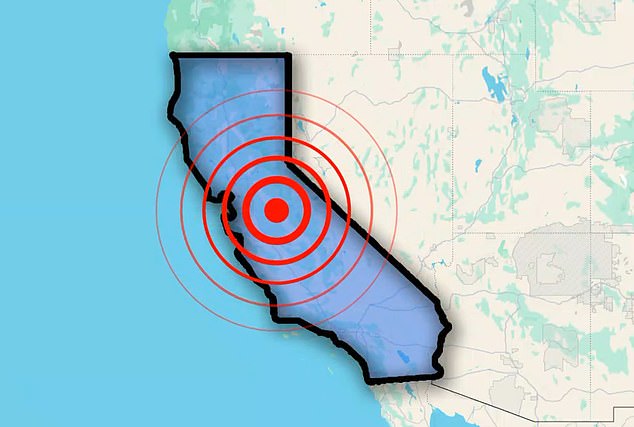
Northern California Faces Earthquake Swarm: Imminent Major Quake by 2043?
An unsettling earthquake swarm has been reported in Northern California, alarming both residents and experts alike. According to the US Geological Survey (USGS), the swarm comprises dozens of small earthquakes occurring in a geologically active area known as The Geysers, located less than 75 miles north of San Francisco. The potential for a significant seismic event looms large, with experts estimating that a major earthquake could strike before 2043.
Notable Earthquakes and Tremors
The earthquake swarm reached its peak recently with a magnitude 4.2 quake that occurred near Cloverdale just after 3 AM ET on Thursday. Reports from nearly 200 residents indicated that the tremor was felt as far as the San Francisco Bay and Palo Alto, over 100 miles from the epicenter. Fortunately, there have been no reports of injuries or property damage, with most describing the quake as producing only “light” shaking.
In the wake of the 4.2 magnitude quake, 12 minor tremors have been recorded around The Geysers, a large geothermal field that sits atop several significant seismic faults, notably the Bartlett Springs Fault Zone and the Healdsburg-Maacama Fault system.
Future Predictions for Major Earthquakes
This recent seismic activity has reignited concerns regarding the likelihood of a major earthquake in the region. A 2015 report by USGS scientists estimated a 95% probability that at least one quake stronger than magnitude 6.7 will occur in the area by the year 2043. Additionally, forecasts predict a 72% chance that such an earthquake will strike within the San Francisco Bay Area, which is home to approximately eight million residents.
Configuration of Fault Lines
The grim predictions are largely based on the complex network of fault lines running through Northern California. The Hayward, Calaveras, and San Andreas faults are all identified as potential sources for a devastating quake. While the San Andreas Fault has historically been viewed as the most probable area for a seismic event, the report indicates that the Hayward and Calaveras faults currently have a higher likelihood of rupturing within the next two decades.
The Geysers: A Seismically Active Area
The Geysers, known for its geothermal energy production, is home to 18 geothermal power plants. This region is characterized by frequent minor earthquakes, arising from the manipulation of geothermal resources. Seismologists warn that as steam and heat are extracted from underground reservoirs, the surrounding rock contracts, which can trigger tremors. Moreover, the practice of pumping reclaimed water back into these steam chambers can destabilize the environment further, especially with the stark temperature differences driving seismic activity.
Can Larger Earthquakes Occur?
While there’s a possibility of increasing tremors reaching magnitude 5, the USGS explains that larger quakes are deemed less likely due to the absence of large, continuous faults in the geothermal field. However, the surrounding Bartlett Springs Fault Zone and Healdsburg-Maacama Fault system, both of which branch off from the larger San Andreas Fault, contribute to ongoing seismic concerns.
Historical Context of Seismic Risk
Historical data underscores the risk of catastrophic earthquakes in the region. The infamous 1906 earthquake along the San Andreas Fault, which reached a magnitude of 7.9, resulted in extensive destruction and loss of life in San Francisco, with about 80% of the city devastated and over 3,000 fatalities recorded.
In conclusion, the recent swarm of earthquakes in Northern California serves as a reminder of the geological volatility present in the region. Experts emphasize the importance of preparedness, given the high probability of significant seismic events in the coming decades. For residents in Northern California, staying informed and ready for potential earthquakes is more crucial than ever.
For further reading on earthquake predictions and safety, explore the USGS earthquake forecasting resources and local emergency preparedness guidelines.
