

Southern California Rattled by Series of Earthquakes: Is the “Big One” Coming?
A brief yet intense series of 16 earthquakes rocked Southern California within a 24-hour period, prompting renewed anxiety about the potential for a major seismic event. The most significant quake struck with a magnitude of 4.9 near Indio in the Coachella Valley on Monday night, according to the U.S. Geological Survey (USGS).
The Earthquake Activity Explained
This latest seismic activity is part of a persistent swarm affecting the region, predominantly along the San Andreas Fault, which runs close to Indio. The USGS confirmed that the primary quake occurred at a shallow depth of just two miles, making it feel like a sudden and violent jolt for residents, though thankfully no significant damage has been reported.
In addition to the initial quake, four additional tremors ranging from 3.4 to 2.9 magnitude were recorded shortly thereafter, marking the start of an ongoing sequence of seismic disturbances.
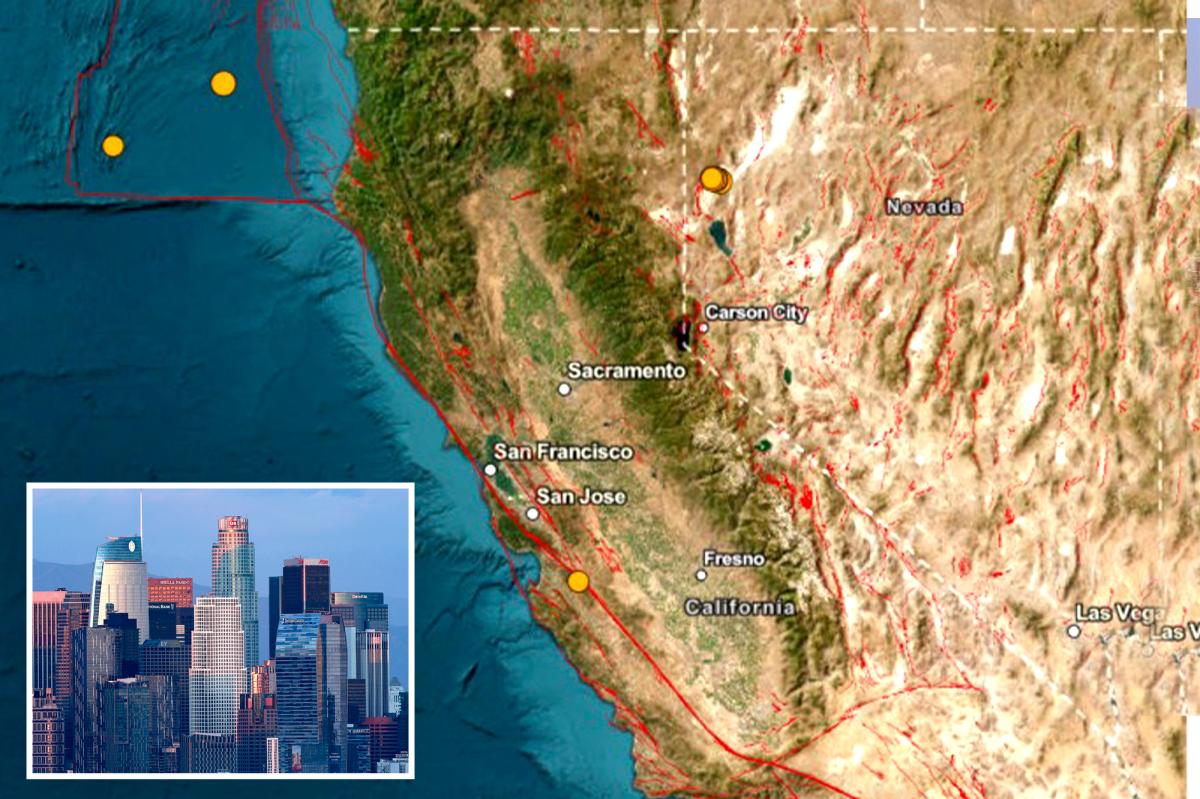
Figure: A map showing earthquakes of magnitude 2.5 or greater in California over the past 24 hours (Source: USGS).
Wave of Tremors Following the Main Shock
Following the initial earthquake, over a dozen aftershocks continued to shake the area, adding to the anxiety felt by locals. The second strongest tremor in this string was recorded at 3.8 magnitude on Tuesday morning, approximately 11 miles north of Indio. Although these aftershocks were classified as “weak” to “light” on the Modified Mercalli Intensity scale, they effectively maintained an atmosphere of uncertainty among residents.
A Cautionary Outlook
Seismologists have cautioned that aftershocks may persist for up to a week, with a 6% chance that one could exceed a magnitude of 5. The USGS projects a 99% chance of experiencing additional quakes of magnitude 3 and above through January 27, indicating that up to 14 of these quakes may occur in the coming days.
The San Andreas Fault, spanning roughly 745 miles, is known for producing some of the most powerful earthquakes in the region, potentially generating quakes of up to magnitude 8.2. This geological feature serves as a constant reminder that California’s ground is far from stable.
Conclusion: Preparedness is Key
For residents of California, the recent tremors underscore the importance of earthquake preparedness. With experts continually monitoring seismic activity along the San Andreas Fault, it remains crucial to stay informed and ready for any future disturbances. As the earth beneath them shifts, residents are left to ponder not if, but when the next major quake will strike.
For more information on earthquake safety, visit Ready.gov.
