

Severe Weather Threats Loom Over California: Flooding, Snow, and More
California is bracing for an intense week of weather as a series of storm systems move into the state, bringing with them a mix of hazards like flash flooding, tornadoes, and significant snowfall in the mountains.
A Welcome Shift in Weather Patterns
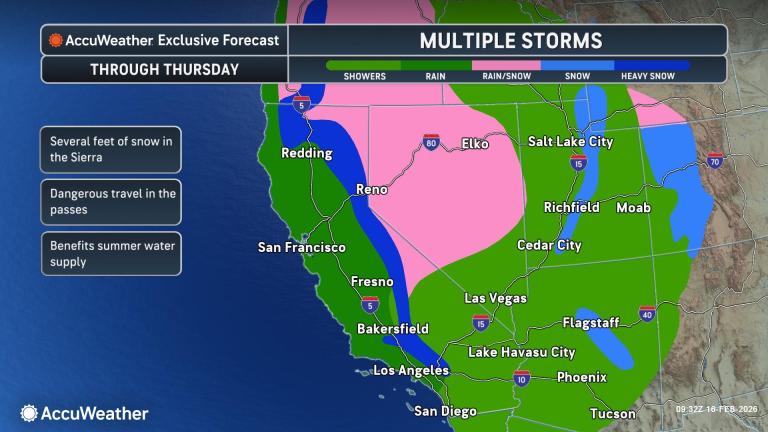
After a prolonged period of dry and unusually warm weather, California will experience a dramatic transformation this week. Statewide water levels are currently about half of what they typically are for mid-February, making these incoming storms crucial for replenishing water resources. Forecasters anticipate the arrival of three separate storm systems, each poised to deliver substantial precipitation.
Storm Timeline and Impacts
The first storm has already begun its approach as of Sunday, with its main energy expected to shift inland on Monday. The subsequent system is predicted to move southward from the Pacific Northwest, showering California with additional rainfall from Monday night through Tuesday. A third storm will follow later in the week, focusing on the central coast and southern regions by Thursday.
- Rainfall Forecast: Southern California and the Central Valley may receive 1-2 inches of rain, while the central coast and Northern California could see totals between 2-4 inches. In the Sierra Nevada and higher terrain, orographic effects may push localized totals beyond 4 inches.
Thunderstorm Risks and Flash Flooding
Thunderstorms are expected to develop as the first storm makes its way into California, affecting areas such as the Los Angeles Basin. These storms could trigger flash flooding, particularly in urban areas and places near burn scars. Wind gusts and even tornadoes may also be possible, especially across the densely populated corridors stretching from San Luis Obispo County to Los Angeles and San Diego County.
- Severe Weather Alert: Residents are urged to stay informed and prepared for rapidly changing weather conditions.
Mountain Snow and Travel Disruptions
As the jet stream plunges along the West Coast, it is set to introduce cooler temperatures, allowing moisture to accumulate as snow in the higher elevations. Snow levels are expected to dip to as low as 4,000 feet by Monday evening, resulting in significant snowfall across the Sierra Nevada, with some areas projected to accumulate between 4-8 feet.
- Travel Advisory: Passes, including I-80 over Donner Pass, may face closures. All Sierra passes could see closures from Monday to Wednesday as conditions worsen.
Southern California’s mountainous regions, including the Tehachapi Mountains near the Grapevine and the San Gabriel and San Bernardino ranges, may also experience their first notable snowfall of the season. This could make travel conditions treacherous, affecting routes like Interstate 5.
Long-term Benefits of Snow Accumulation
While the stormy conditions may present immediate challenges, they also hold long-term benefits for California’s water supply. Given that the state’s snowpack is below average due to recent dry spells, this influx of precipitation is crucial for summer water availability.
Final Thoughts
As California navigates this intense weather system, residents are urged to stay updated on storm developments through reliable sources. Preparing for potential travel disruptions and flash flooding will be essential as the week unfolds. For the latest information and alerts, visit AccuWeather.
For more insights into weather forecasts and alerts, download the AccuWeather app to stay informed and secure advanced weather alerts.
