

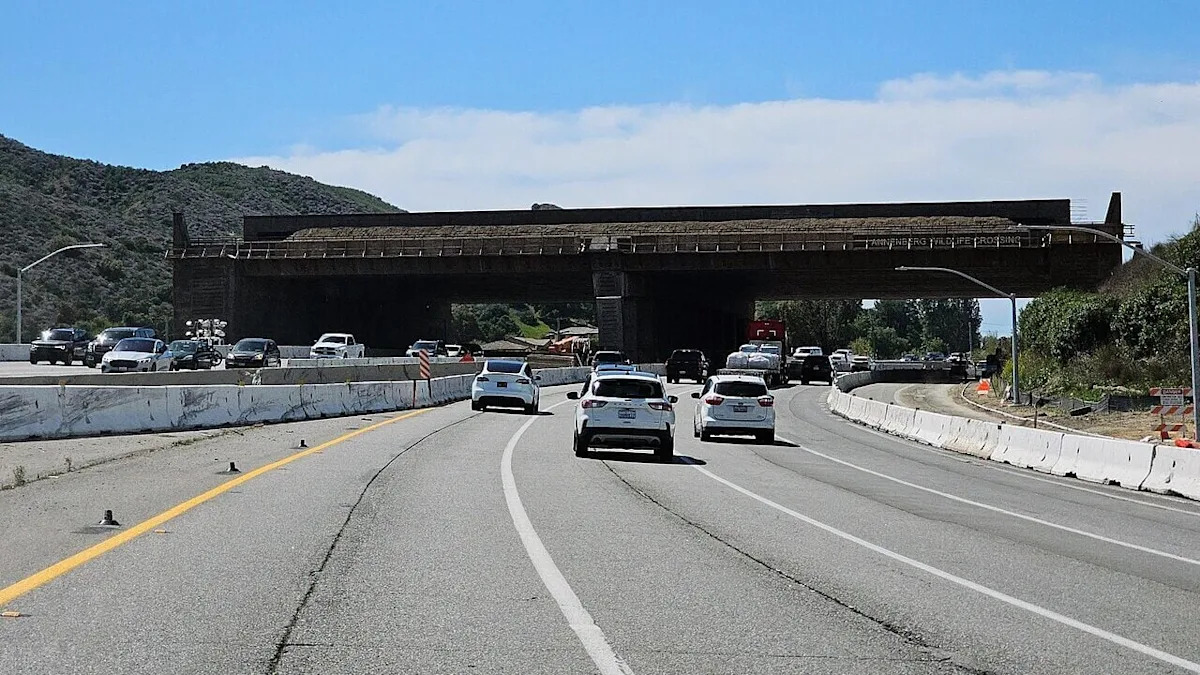
California’s Wallis Annenberg Wildlife Crossing: A Bridge for Wildlife, Not Cars
In Los Angeles, California, a groundbreaking infrastructure project is taking shape that will ultimately prioritize wildlife over human traffic. The Wallis Annenberg Wildlife Crossing, which will gracefully arch over the bustling lanes of US 101, is designed solely for animals—ranging from deer to butterflies. While drivers won’t ever cross it, they may find themselves benefiting indirectly from this innovative construction.
Ambitious Project with Rising Costs
Backed by California Governor Gavin Newsom, the Wallis Annenberg Wildlife Crossing has captivated public attention not only for its ecological purpose but also for its escalating budget. Originally estimated to cost $93 million, the project’s price tag has ballooned to approximately $114 million, as reported by the Los Angeles Times. The state is covering around $77 million, while the remaining funds come from private donations.
Construction commenced in 2022 with the aim of restoring critical wildlife corridors fragmented by one of the busiest highways in the nation. The vast 10-lane stretch of US 101 has long disrupted natural migration paths for numerous species, from majestic mountain lions to smaller wildlife.
An Ecosystem Above the Freeway
As viewed from above, the wildlife crossing resembles a thriving ecosystem rather than standard road infrastructure. The design includes a robust structure topped with soil, native plants, and pathways that blend seamlessly with the surrounding landscape. This thoughtful approach is essential; animals are unlikely to venture onto a bare concrete bridge. Therefore, engineers and conservationists are working tirelessly to replicate a natural environment atop the freeway.
While progress is evident, the crossing remains incomplete and currently doesn’t connect to the ground on either side. Consequently, animals cannot yet utilize the crossing. The initial completion date of late 2025 has been revised to fall 2026.
Investing in Conservation and Safety
State officials promote the crossing as a dual investment in wildlife conservation and public safety. Newsom emphasizes its role in bridging urban development with natural habitats, ultimately aiming to reduce vehicle-wildlife collisions that pose risks to both drivers and animals alike.
Additionally, the project holds vital ecological significance. By facilitating safe passage, the crossing is expected to help restore genetic diversity for isolated populations. Species such as mountain lions, which face inbreeding challenges, stand to benefit as their habitats become interconnected.
A $114 Million Initiative Under Scrutiny
Despite its potential benefits, the project’s rising costs and timeline delays have spurred criticism. Skeptics question whether allocating over $100 million toward a structure that serves primarily animals is justified. Conversely, supporters highlight broader advantages, including reduced accidents, healthier ecosystems, and a progressive vision for coexistence.
Cost increases can be attributed to various factors including supply chain issues, tariffs, and post-wildfire rebuilding challenges—all of which have inflated material and equipment prices. Severe weather conditions in recent years have further contributed to construction delays.
Continuing Construction and Future Maintenance
As work progresses, crews are focused on constructing approaches that will connect the bridge to the surrounding land, relocating underground power lines, and drilling support structures to ensure stability. Conservation organizations involved in the project are also actively raising funds to support ongoing habitat maintenance once the crossing opens.
The Wallis Annenberg Wildlife Crossing stands as an extraordinary initiative—an endeavor that will never accommodate human traffic but promises to make roads safer for all who share the landscape.
For further insights into this groundbreaking project and its ecological importance, visit Los Angeles Times.
