

Advancing Bioindustrial Manufacturing in California’s Northern San Joaquin Valley
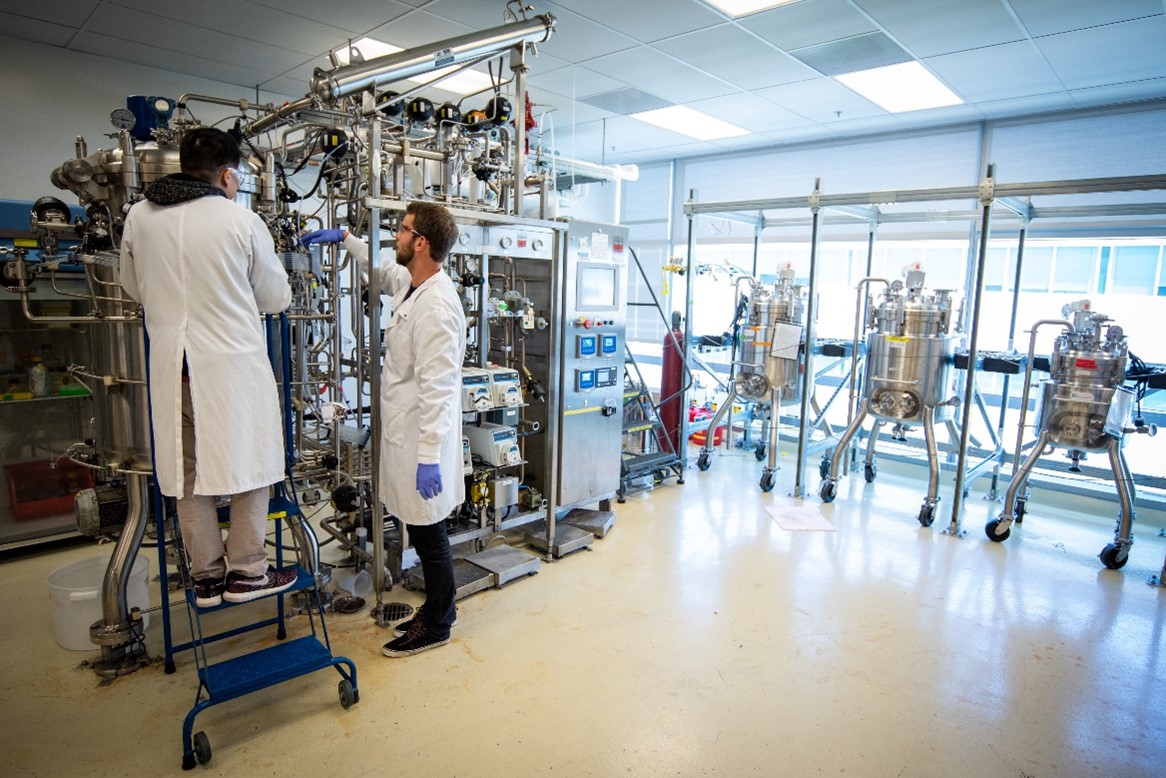
The ABPDU’s 15,000 square foot facility serves as a scale-up testbed for industry collaborators developing products that affect our everyday lives. Credit: Thor Swift/Berkeley Lab
Introduction to Bioindustrial Manufacturing
The Northern San Joaquin Valley, encompassing San Joaquin, Stanislaus, and Merced counties in California, is positioned to transform into a hub for bioindustrial manufacturing. Despite challenges such as unemployment and public health issues, the region’s extensive agricultural activities and proximity to biotechnology innovation centers can catalyze a vibrant bioeconomy.
The Circular Bioeconomy Innovation Collaborative
A collaborative initiative known as the Circular Bioeconomy Innovation Collaborative (CBIO Collaborative) is paving the way for this transformation. Co-led by the University of California, Merced and Lawrence Berkeley National Laboratory’s Advanced Biofuels and Bioproducts Process Development Unit (ABPDU), the collaborative was awarded $1 million from the U.S. National Science Foundation’s Regional Innovation Engines program. This funding aims to foster economic growth and technological advancements in the region.
A Vision for the Future
The CBIO Collaborative is committed to developing a strategic plan for an innovation campus in the Northern San Joaquin Valley. This initiative will focus on biomanufacturing, which utilizes biological processes to create sustainable products from renewable materials.
Deepti Tanjore, ABPDU director and project co-investigator, emphasized, “Scaling up biomanufacturing technologies is crucial, as gaps exist in transitioning basic research into large-scale applications.” The Valley’s agricultural residues can serve as ideal feedstocks for these technologies, fostering commercial-scale production.
Proximity: A Game-Changer for Innovation
James Gardner, ABPDU program manager, highlighted the advantages of having innovation and production facilities close to each other. “Driving 90 minutes to test new technology is a significant advantage,” he noted, underscoring the need for localized development.
Leveraging Expertise for Commercial Success
The ABPDU is a state-of-the-art facility that has been instrumental in bridging the gap between laboratory innovations and commercial viability. Funded by the U.S. Department of Energy’s Bioenergy Technologies Office (BETO), it has over a decade’s experience in scaling biomanufacturing technologies. As part of the CBIO Collaborative, ABPDU will provide technical expertise and connect with a diverse network of industry partners.
Dr. Valerie Sarisky-Reed, director of BETO, noted the ABPDU’s impact, asserting that it continues to drive bioproducts toward market relevance.
Industry Growth and Workforce Development
The biomanufacturing industry is witnessing rapid growth, leading to an increasing demand for skilled professionals. ABPDU has positioned itself at the forefront of this trend by training more than 90 staff members, many of whom have opted for careers in biomanufacturing. In collaboration with UC Berkeley, ABPDU has also created specialized courses that provide hands-on experience with bioprocessing equipment.
Overcoming Production Challenges
A significant concern voiced by industry partners is the necessity to travel out of state for large-scale production development. Kaina Pereira, a senior advisor in the California Governor’s Office of Business and Economic Development, remarked, “The Circular Bioeconomy Innovation Collaborative exemplifies California’s commitment to fostering innovative solutions in the bioeconomy.”
Future Endeavors and Federal Support
Looking ahead, the CBIO Collaborative plans to submit a proposal to become an NSF Engine, which would qualify it for up to $160 million in federal funding. This initiative aims to solidify the Northern San Joaquin Valley’s role as a critical player in the global bioeconomy.
Conclusion
With its capabilities and resources, the Northern San Joaquin Valley is on the brink of becoming a leader in bioindustrial manufacturing. By harnessing local agricultural assets and fostering collaboration among key institutions, the region aims to build a sustainable bioeconomy that benefits local communities, workers, and the environment.
For more information, explore the resources from Lawrence Berkeley National Laboratory and the U.S. National Science Foundation.
