

The Impact of AI on the Future of Trade Jobs in California
The State of Trade Jobs: Insights from Industry Experts
As technology rapidly evolves, many trade workers in California are expressing their concerns about job security. Bart Pantoja, a seasoned glazier with over 20 years of experience, now represents a variety of tradespeople in the Bay Area. He notes that the current job market presents significant challenges.
Economic Uncertainty Affecting Employment
Pantoja highlights that various economic factors, including interest rates and tariffs, are hindering developers from pursuing new construction and renovation projects. “The economy is rough,” he states, emphasizing the difficulties faced by both workers and employers in the current climate.
The Role of Technology in the Construction Industry
Technology has long been intertwined with the construction sector, and this trend continues to grow. One notable example is the emergence of AI-driven robots that perform tasks traditionally carried out by skilled laborers. Pantoja mentions innovative machines that can autonomously finish drywall by applying mud and sanding surfaces.
AI and Job Displacement: A Growing Concern
Despite the advantages of technology, Pantoja expresses concern that advancements in artificial intelligence may lead to job losses for workers. He reflects on the earlier belief that their skills were irreplaceable, stating, “There is a concern that technology will continue to move forward and find ways to do things.”
According to a recent World Economic Forum survey, nearly 55% of business leaders anticipate significant job displacement due to AI by 2030. In contrast, only 12% believe that AI will result in higher wages for workers.
Call for Regulation and Job Security
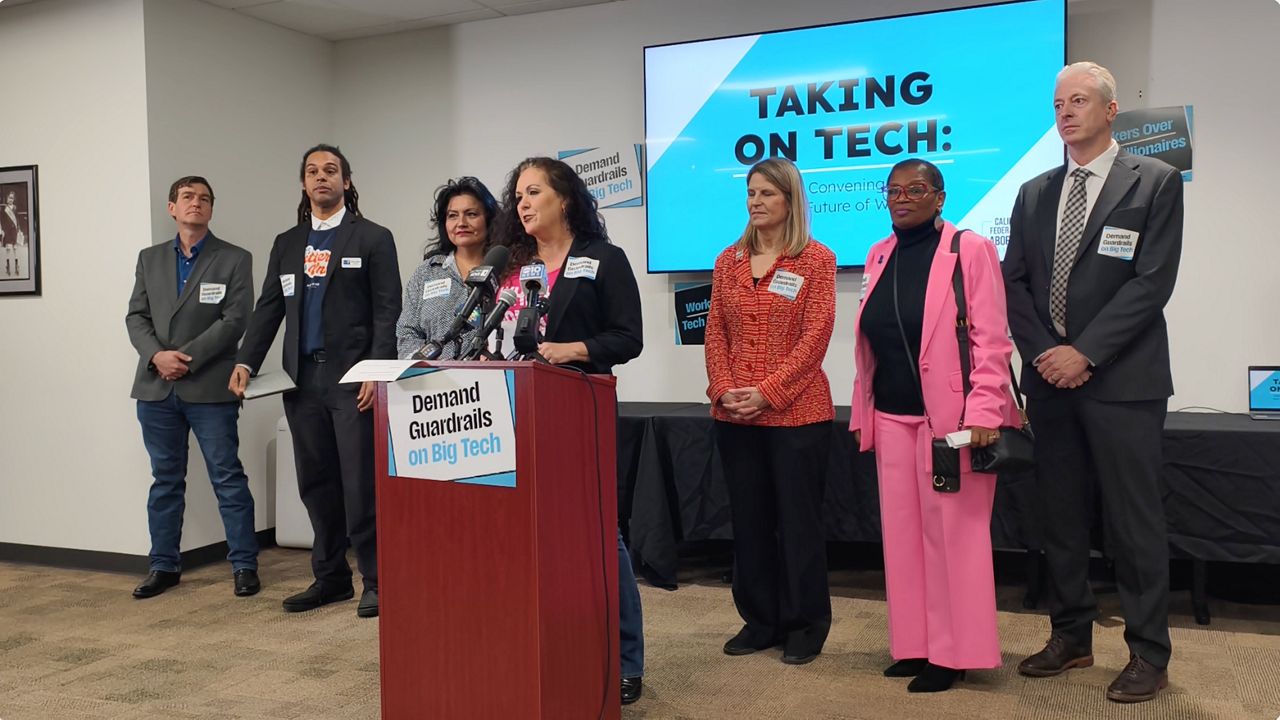
In light of these challenges, union leaders nationwide have urged California’s Governor Gavin Newsom and legislators to establish stronger regulations that secure jobs for workers. Lorena Gonzalez, president of the California Labor Federation, argues that the impact of AI on employment is a pressing issue, stating, “This year we hope to pass dozens of bills addressing AI in the workplace.”
Diverging Views on AI in the Workforce
The debate surrounding AI’s influence in the workplace is not uniform, even among tech leaders. Dan Schulman, CEO of Verizon, asserts that machines are becoming more efficient than humans in many tasks. In contrast, Brad Smith, president of Microsoft, advocates for utilizing technology as a means to enhance human capabilities rather than replace them.
California’s Position on AI Regulation
California, home to many leading AI firms, plays a significant role in national conversations about technology regulation. Governor Newsom has acknowledged the anxiety surrounding job displacement due to AI and has pledged that California will take the lead in addressing these concerns. “No other state is regulating the AI space as we are,” he stated.
Union Leaders and Future Candidates
Union representatives are also engaging with gubernatorial candidates on this critical issue. Gonzalez highlights that some candidates are eager to confront the challenges posed by big tech, which could significantly influence their political standing among union members.
The Importance of Addressing AI Concerns
Pantoja emphasizes that how the governor reacts to these technological changes will resonate with union members, particularly if he pursues a presidential run. “This technology will affect job prospects for today’s generations and beyond,” he cautions, stressing the need for thoughtful action on this front.
Conclusion: The Need for Collaboration and Awareness
The intersection of technology and the workforce is an evolving narrative that requires attentiveness from both industry leaders and policymakers. As AI technology continues to advance, maintaining job security and enhancing the skills of the workforce will become increasingly vital. For more insights on AI and job displacement, stay informed and engaged in this crucial conversation.
