

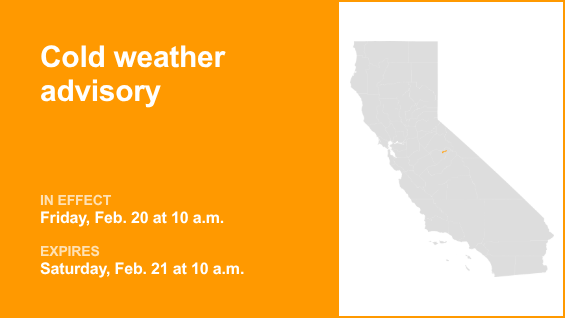
Cold Weather Advisory Issued for Yosemite Valley
The National Weather Service (NWS) announced a cold weather advisory for Yosemite Valley, effective from 5:40 p.m. on Friday, February 20, until 10 a.m. on Saturday, February 21. This advisory warns locals and visitors alike about the significant drop in temperatures expected in the region.
According to the NWS Hanford CA, temperatures are anticipated to plummet to as low as ten degrees, with some areas above 6,000 feet potentially experiencing temperatures dipping to 5 degrees below zero. Below the 6,000-foot mark, temperatures in the Sierra Nevada and adjacent foothills are expected to range between 10 to 20 degrees.
The NWS cautions that wind chills could reach a chilling 10 degrees below zero, posing a risk for hypothermia if adequate measures are not taken. Travelers and outdoor enthusiasts are urged to exercise caution and dress appropriately. Recommended gear includes warm clothing, hats, and gloves to ensure safety during this cold spell.
Understanding Cold Weather Alerts
Cold Weather Advisory: Be Aware
A cold weather advisory signifies seasonably cold temperatures or wind chill values that could be uncomfortable but aren’t dangerously cold. It’s crucial to dress appropriately and protect exposed skin when going outdoors during such advisories.
Extreme Cold Warning: Take Action!
An extreme cold warning indicates dangerously cold temperatures or wind chills that are currently occurring or expected. Individuals in affected areas should minimize outdoor activities. If venturing outside is necessary, ensure to layer clothing, cover all exposed skin, and inform someone about your whereabouts, updating them upon reaching your destination.
Extreme Cold Watch: Be Prepared
An extreme cold watch serves as a heads-up for dangerously low temperatures or wind chill values that could become imminent. As with warnings, it is advisable to avoid being outside during the colder parts of the day. Additionally, ensure that your vehicle has a sufficient fuel supply—at least half a tank—and check your winter survival kit to be fully prepared.
Stay informed by regularly checking local weather alerts and advisories related to winter conditions on our Weather Advisory page. Being aware of the changing weather conditions is key to staying safe and protected.
