

PacifiCorp Settles $575 Million Fire Damage Claims in Oregon and California
PORTLAND, Ore. – PacifiCorp has settled for $575 million to address federal claims linked to six wildfires in Oregon and California that erupted in 2020 and 2022. This settlement marks the utility’s latest significant financial commitment related to the disastrous wildfires.
Overview of the Claims Against PacifiCorp
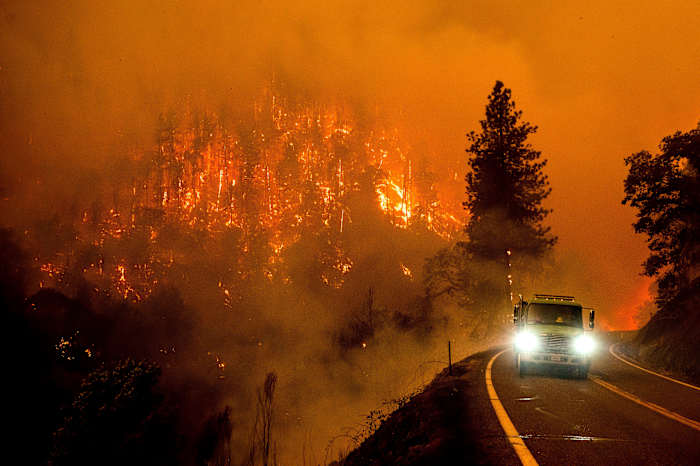
The federal government accused PacifiCorp of negligence, asserting that its electrical lines were responsible for igniting four fires in Oregon in 2020 and two more in California during 2020 and 2022. The recent settlement aims to assist in the restoration of approximately 290,000 acres (117,359 hectares) of public land that was devastated by these wildfires. Additionally, funds will help cover the expenses incurred by the government in fighting the fires, a critical issue as the U.S. Forest Service allocates over half of its budget annually to wildfire suppression efforts.
Federal Commitment to Accountability
“This settlement aligns with the Department of Justice’s commitment to holding individuals and corporations accountable for wildfire-related damages,” stated U.S. Attorney Eric Grant, from the Eastern District of California. He underscored that every wildfire affecting federal land is a priority, irrespective of its scale.
PacifiCorp’s Ongoing Efforts
PacifiCorp has reaffirmed its dedication to resolving claims associated with the wildfires, reporting settlements that have now surpassed $2 billion. The utility faces multiple lawsuits arising from the 2020 fires in Oregon, where juries have ruled against PacifiCorp, ordering it to pay substantial amounts to victims.
In 2023, an Oregon jury found PacifiCorp liable for failing to cut power to its 600,000 customers amidst warnings from fire officials about heightened dangers. The jury’s ruling deemed the utility’s actions negligent and willful, leading to punitive damages for a group of affected property owners. Over a thousand additional cases are anticipated to go to trial between 2026 and 2027. Currently, PacifiCorp’s appeal of this ruling is still progressing through the state court system.
The Impact of the 2020 Wildfires
The wildfires that occurred over the 2020 Labor Day weekend are recognized as some of the most catastrophic natural disasters in Oregon’s history. This series of fires resulted in the loss of 11 lives, destruction of thousands of homes, and the incineration of over a million acres (404,686 hectares) of land.
Additionally, California experienced significant losses due to the Slater Fire in 2020 and the McKinney Fire in 2022.
Strategic Financial Moves by PacifiCorp
In a strategic shift, PacifiCorp announced plans to sell its wind and natural gas generation and distribution assets in Washington State to Portland General Electric Company for $1.9 billion. This decision is primarily aimed at stabilizing the utility’s finances amid ongoing legal challenges. Despite appealing previous wildfire judgments, the company has been required to post bonds, straining its cash flow.
“We believe this move will enhance our financial stability and streamline operations, ultimately ensuring reliable service for our Washington customers,” stated Darin Carroll, PacifiCorp’s CEO.
Berkshire Hathaway’s Role
PacifiCorp operates under the umbrella of Berkshire Hathaway, led by Warren Buffett. The conglomerate maintains over $382 billion in cash reserves; however, it expects PacifiCorp to manage its obligations independently. Notably, Greg Abel, who previously led Berkshire’s utility division, is currently the company’s CEO.
For more information on how companies are held accountable for wildfire damage, you can check out additional resources on wildfire liability and fire safety protocols.
Conclusion
The settlement to resolve wildfire damage claims illustrates a significant step in addressing the ramifications of these devastating natural disasters while highlighting the ongoing issues surrounding corporate responsibility in environmental safety. As PacifiCorp navigates its legal challenges and strategic decisions, the impact of its actions will continue to shape its relationship with affected communities and regulatory bodies.
