

Plutarch’s Legacy: Horse Racing and Political Ambition Intertwined
Plutarch’s Unlikely Racer Takes Center Stage
On February 7, 2023, Plutarch, a 3-year-old thoroughbred racing at Santa Anita Park, caused a stir by winning the 8th race against formidable competitors like Desert Gate and Secured Freedom. This unexpected victory—achieved by three-quarters of a length—has prompted oddsmakers to speculate that Plutarch could emerge as a serious contender for the 2026 Kentucky Derby.
Resonating Historical Figures
The name Plutarch is not just confined to the racetrack; it also recalls the ancient Greek historian whose insights into human character and leadership continue to resonate today. Plutarch, who lived from around 50 to 120 C.E., is famed for his biographies of prominent historical figures such as Alexander the Great and Julius Caesar. His work, particularly in Parallel Lives, explores the nature of ambition and moral integrity, a theme apparent in contemporary politics.
Leadership and Public Service: A Balancing Act
In a world where ambition often overshadows civic duty, Plutarch posited that great leaders aren’t necessarily perfect; they grapple with human flaws yet strive to uplift others. His wisdom offers a modern lens through which to evaluate leaders, especially those like California Governor Gavin Newsom, who cites him frequently. Newsom has made public his appreciation for Plutarch’s philosophy, especially in critiques of political policies he deems harmful to the disadvantaged.
Newsom’s Plutarchian Reflection
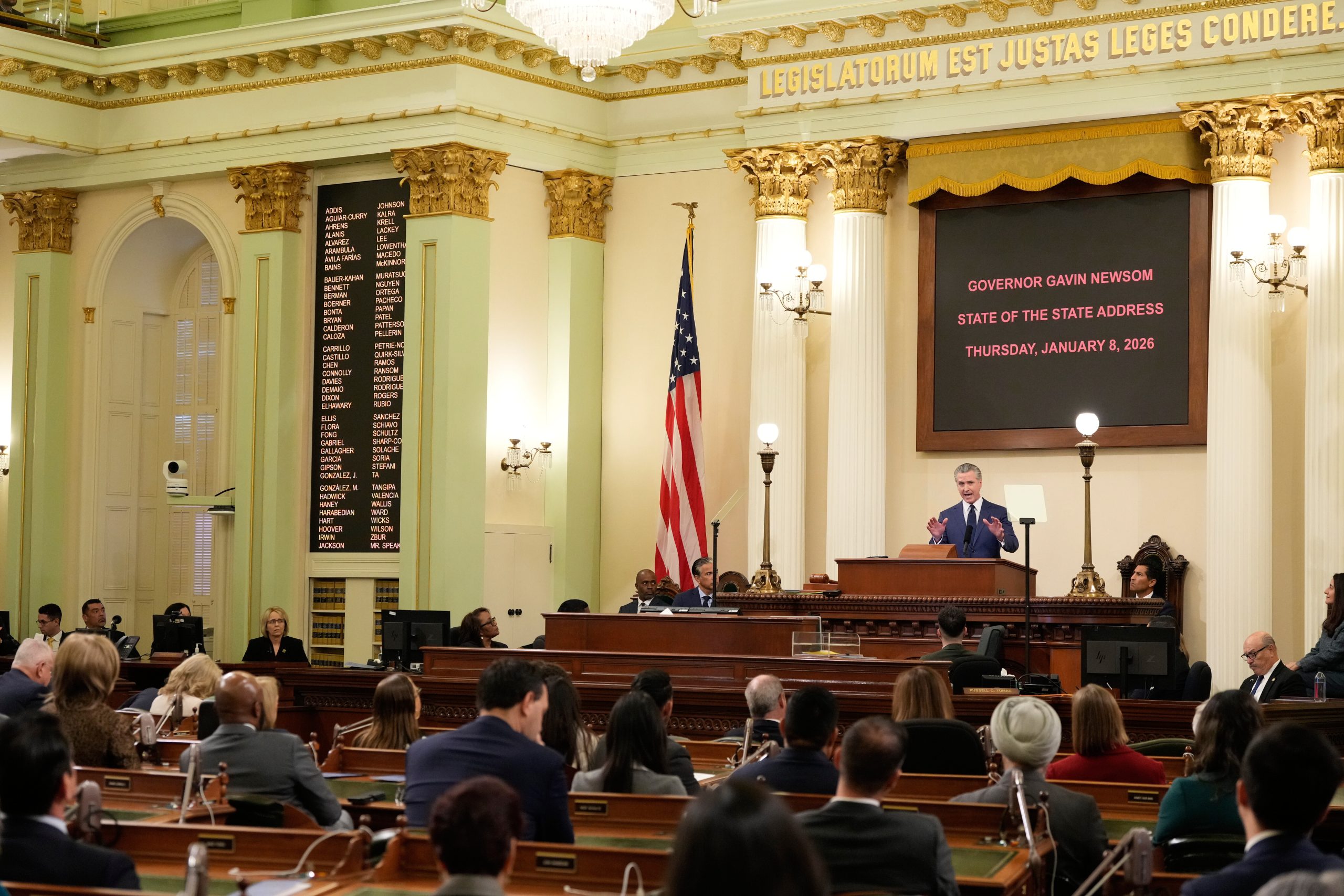
In his most recent State of the State address, Newsom invoked Plutarch while condemning legislation that puts millions of Californians at risk of losing vital resources. He remarked on the age-old issue of wealth inequality, quoting Plutarch’s warning about the detrimental impact of such an imbalance on republics.
Further emphasizing his affinity for Plutarch, Newsom’s autobiography, Young Man in a Hurry, echoes the structure of Plutarch’s Parallel Lives. It juxtaposes the contrasting lives of two Gavs—from humble beginnings with a single mother to his ascent in political fame.
Political Ambition: The Double-Edged Sword
The parallels between Plutarch the horse and Newsom are striking. Both face their challenges: while Newsom navigates the complex political landscape, Plutarch the horse has endured ups and downs in racing. Plutarch recently transitioned from dirt to turf racing, mimicking Newsom’s journey through political scrutiny and growth.
Both figures demonstrate that setbacks can lead to greater wisdom. As Plutarch once wrote, “To make no mistakes is not in the power of man,” a sentiment clearly applicable to modern governance and horse racing alike.
The Significance of Civic Virtue
Plutarch’s emphasis on civic virtue over personal ambition is particularly pertinent in an era filled with political candidates who often prioritize their own agendas over public service. This conversation around leadership is vital, especially as many vie to succeed Newsom in California.
The calls for a focus on civic engagement bring to light the foundational elements of democracy, which should guide today’s politicians towards a commitment to public good rather than self-interest.
Conclusion: Growth and Recovery in Politics and Racing
Both Governor Gavin Newsom and Plutarch the horse must navigate their journeys toward strength and resilience. As they learn from past mistakes—Newsom through his public service and Plutarch through his racing experiences—they embody the lessons taught by the original Plutarch.
In conclusion, the narrative unfolding around Plutarch and Newsom reflects a broader human experience, one that encourages leaders to engage with their civic responsibilities while embracing their flaws as part of their growth journey. The need for introspection in leadership, infused with the wisdom of the past, remains crucial for a brighter future.
For more insights into the life and philosophy of Plutarch, visit Plutarch Biography and explore his classic works.
