

The Impact of California’s Offshore Oil Revival on National Security and Energy Supply
Increased Tensions Over Oil Prices and Supply
Rising oil prices have raised concerns about their economic ramifications across the United States. Experts like FOX Business’ Stuart Varney highlight the urgency of addressing these challenges, predicting a market recovery driven by international military and diplomatic factors that aim to reopen key shipping routes like the Strait of Hormuz.
Defense Production Act: A Bold Move by the Biden Administration
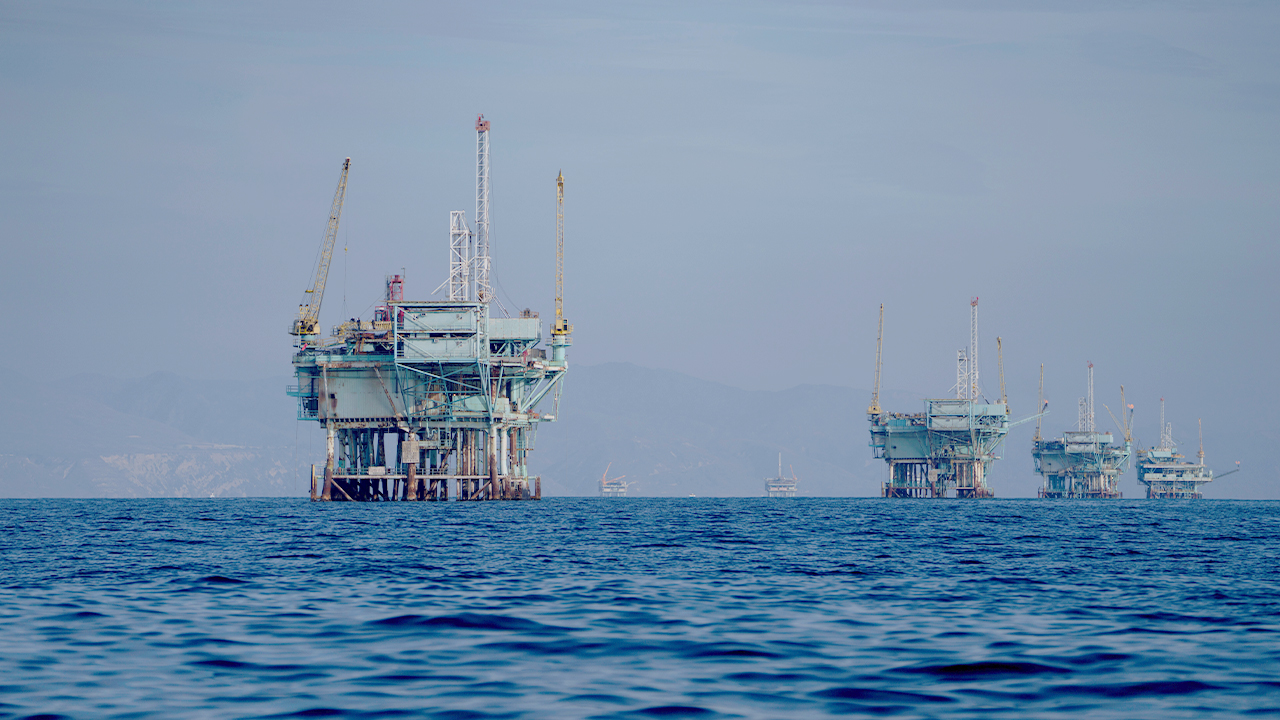
In response to growing oil supply risks and reliance on foreign crude, the Biden administration has leveraged the Defense Production Act to revive oil production from previously shuttered offshore operations in California. Secretary of Energy Chris Wright has taken action by directing Sable Offshore Corp. to restart its facilities near Santa Barbara, specifically the Santa Ynez Unit and its associated pipeline system.
The significance of this directive cannot be understated; it aims to restore crucial pipeline capacities necessary for transporting oil from the Las Flores Pipeline System to Pentland Station, a vital hub for moving offshore oil to domestic refineries.
California’s Historical Context in Oil Production
According to the Department of Energy (DOE), California once produced about 40% of U.S. oil, but stringent state policies have led to a significant decline in that output. As of now, over 60% of the oil refined in California is imported, much of it traversing the precarious Strait of Hormuz, which presents serious national security threats.
Promoting Domestic Supply and Security
The Sable Offshore facility has the potential to produce approximately 50,000 barrels of oil per day. This output could significantly enhance California’s oil production, providing about 1.5 million barrels of domestically sourced crude monthly. “This order will fortify America’s oil supply and ensure the West Coast military installations have the energy required for military readiness,” Wright emphasized.
The use of the Defense Production Act for this purpose seeks to streamline the flow of oil to refineries, effectively reducing dependence on foreign sources.
Governor Newsom’s Opposition
In stark contrast to federal actions, California Governor Gavin Newsom has expressed vehement opposition to the Trump administration’s directives, labeling them “reckless and illegal.” Newsom’s office contends that the expected output from the Sable Offshore pipeline is negligible, only making up about 0.05% of global oil production.
Newsom articulated concerns about the potential environmental hazards associated with offshore drilling, recalling the 2015 oil spill near Refugio State Beach that released over 140,000 gallons of crude oil, causing significant ecological and economic damage.
“I will not allow the Trump administration to risk our coastal communities and our $51 billion coastal economy,” Newsom stated. His administration plans to challenge these federal orders in court, citing multiple ongoing legal concerns around offshore drilling activities.
Conclusion: A Tipping Point for U.S. Energy Policy?
The unfolding events centered around California’s offshore oil production signify a critical juncture for U.S. energy policy. As the country grapples with fluctuating oil prices, national security concerns, and environmental considerations, the responses from both federal and state governments will be pivotal in shaping the future of American energy independence.
For continued insights on energy and economic implications, stay connected with industry updates.
