

The Ecological Legacy of Mono Lake: A Case Study in Environmental Law
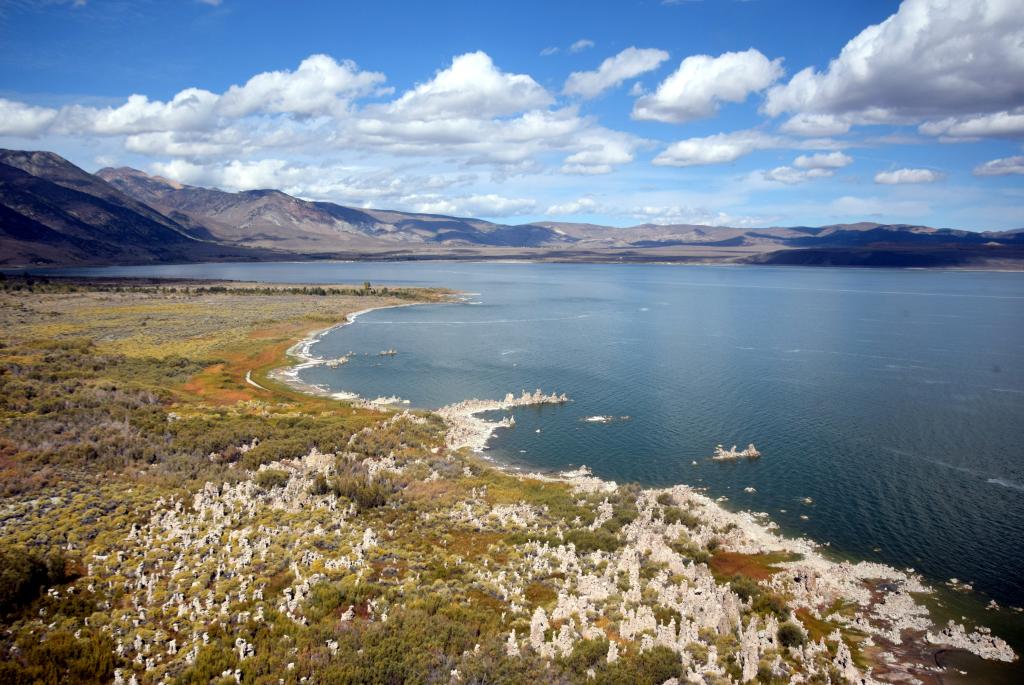
Mono Lake. (Photo courtesy of LADWP)
A Historical Overview
In the summer of 1976, a group of biology students camped along the shores of Mono Lake, a unique saline body of water in eastern California. Their gathering aimed to investigate the lake’s ecological changes, particularly its alarming shrinkage. The outcome of their research would transform environmental law in the region and beyond.
Mono Lake, with a diameter of 13 miles and depths reaching 150 feet, is known for its striking blue waters set against a backdrop of sagebrush and sandy soil. Its “triple water” composition, containing chlorides, carbonates, and sulfates, makes it saltier than ocean water, which piqued the students’ interest. Mark Twain once referred to it as “this lonely tenant of the loneliest spot on earth,” highlighting its remote yet captivating allure.
The Crisis of Mono Lake
Despite its beauty, Mono Lake faced a significant crisis due to water diversion by the Los Angeles Department of Water and Power (LADWP). In the early 20th century, the LADWP constructed the Los Angeles Aqueduct, diverting water from the Sierra Nevada mountains toward L.A., which subsequently dried up nearby Owens Lake by the 1930s. By the 1940s, the extension of the aqueduct enabled the LADWP to siphon off more water from the Mono Basin, severely impacting the lake’s ecosystem.
In the 1970s, the effects of these diversions became evident: declining water levels led to habitat loss for birds, including approximately 1 million birds from 300 different species that relied on the lake’s resources. Dust storms became increasingly common as the lake’s shores exposed dried-out lakebeds, raising health concerns for local communities.
Legal Action and Breakthroughs
In response to declining conditions, the student researchers and various environmental organizations published a 200-page report titled An Ecological Study of Mono Lake, California. This study underscored the urgent need for legal intervention to protect the lake.
In 1979, a landmark lawsuit was filed against the LADWP, leveraging the public trust doctrine, a principle that mandates states to protect natural resources for public benefit. The ruling from the California Supreme Court in 1983 established that the state had an obligation to manage water diversions sustainably to preserve ecosystems like Mono Lake.
Expanding the Public Trust Doctrine
Initially aimed at protecting navigation and commerce, the public trust doctrine evolved in California, widening its scope to include environmental preservation. This change became pivotal in the Mono Lake case, allowing for increased water allocations to restore the lake.
By the 1990s, Mono Lake served as a model for innovations in environmental law. The Clean Air Act, typically associated with industrial emissions, was adapted to address dust pollution emanating from dried lakebeds. This precedent was crucial in holding the LADWP accountable for environmental degradation, compelling actions to mitigate dust storms affecting local air quality.
Incorporating Tribal Interests
In recent years, Tribal Beneficial Uses (TBUs) have emerged as a significant factor in California’s water management strategy. In 2020, the Mono Basin became the first region to incorporate TBUs into its watershed management plan, representing a shift toward recognizing and integrating tribal cultural practices and traditional fisheries into environmental governance.
This evolution reflects a broader commitment to inclusivity in environmental decision-making, reminding stakeholders that active collaboration is critical to restoring Mono Lake’s ecosystem.
Ongoing Challenges and Climate Change
Unfortunately, despite legal achievements, Mono Lake’s water levels have yet to recover significantly. A 1994 projection indicated that the lake would reach a target elevation by 2014; however, it remains perilously low, experiencing similar conditions to those observed during initial ecological assessments in 1976.
Current climate challenges, particularly the “snow drought,” are exacerbating the situation, as shifting weather patterns reduce snowpack crucial for replenishing water bodies like Mono Lake. Continued advocacy is essential to implement effective policies aimed at reversing the damage and ensuring sustainable water practices.
Looking to the Future
Mono Lake holds a pivotal role in shaping environmental law, not just in California but across the United States. Efforts to apply the public trust doctrine have seen successes in states like Utah and Nevada, while Hawaii has started applying it to groundwater. Such case studies underline the lake’s significance as a reference point for ecological advocacy.
As Mono Lake navigates its challenges, both advocates and policymakers must collaborate creatively to ensure its preservation and restore its ecological balance. The legacy of Mono Lake, underscored by its impact on legal frameworks, continues to serve as a beacon of hope and a call to action for environmental stewardship.
For more information, visit Mono Lake Committee.
