

California’s Congressional Map Ruling: A Boost for Democrats in 2026 Midterms
California’s federal three-judge panel has ruled that the state can implement a newly voter-approved congressional map aimed at enhancing Democratic chances in the upcoming 2026 midterm elections. This ruling, delivered on Wednesday by a 2-1 vote, dismisses challenges from state Republicans and the U.S. Justice Department seeking to block the map, which they argue contravenes constitutional principles regarding race in districting.
Key Background on the New District Lines
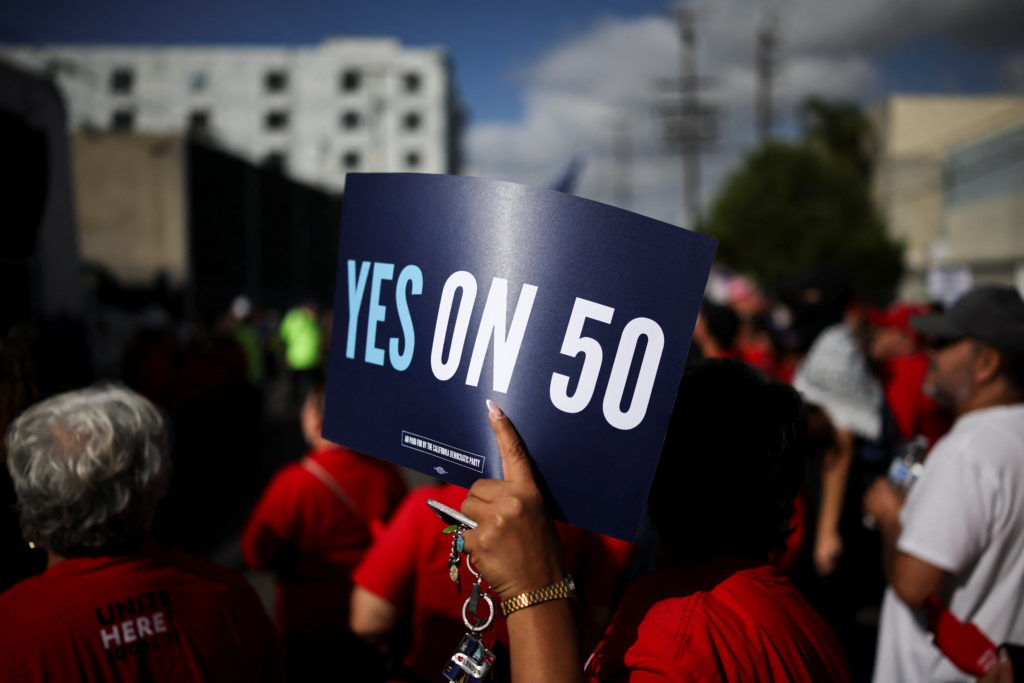
The contentious map, which is expected to help Democrats flip up to five House seats, was passed by voters through Proposition 50 in November. Spearheaded by Gov. Gavin Newsom, who has aspirations for a 2028 presidential run, the initiative was seen as a response to efforts in Texas, where changes designed to favor Republicans are backed by former President Donald Trump. Currently, Republicans hold nine out of California’s 52 congressional seats.
Implications for the 2026 Elections
This ruling marks a significant win for Democrats amid a broader national struggle over redistricting that could shape the balance of power within the U.S. House of Representatives in 2026. Following the back-and-forth between California and Texas, several Republican-leaning states, such as Missouri, North Carolina, and Ohio, have also redrawn their district maps. Notably, a judge mandated that Republican-controlled Utah adopt a map creating a district favorable to Democrats.
Reaction from Political Figures
Following the ruling, Gov. Newsom issued a statement emphasizing that efforts by Republicans to challenge the map were unsuccessful. “Republicans’ weak attempt to silence voters failed,” he declared. Conversely, GOP leaders have expressed their intention to appeal the decision to the U.S. Supreme Court. Corrin Rankin, chair of the California Republican Party, stated, “The well-reasoned dissenting opinion better reflects our interpretation of the law and the facts.”
Legal and Political Context
California Democrats argue that the new district map is legitimate as it was constructed with partisan advantages in mind. The U.S. Supreme Court’s 2019 ruling determined that partisan gerrymandering falls under political questions rather than legal ones, meaning state concerns over partisan map-drawing are less likely to be overturned in federal courts. The judges in the recent ruling affirmed this stance, noting insufficient evidence to conclude that the maps were drawn primarily on racial lines.
Dissenting Opinions
Despite the majority ruling, dissent arose from U.S. District Judge Kenneth Lee, a Trump appointee, who contended that at least one of the new districts was influenced by racial considerations aimed at appealing to Latino constituents.
Comparison with National Trends
This decision follows a series of significant rulings from the Supreme Court, including a December ruling that permitted Texas to use its newly drawn congressional map due to its obvious partisan intentions. Notably, Conservative Justice Samuel Alito’s concurring opinion acknowledged similar characteristics in California’s map, suggesting it may withstand further legal scrutiny.
Understanding Congressional Redistricting
Every ten years, following the U.S. Census, new congressional maps are drawn across the nation. States like California utilize an independent commission for this process, whereas others, like Texas, allow political figures to define their lines. The initiative to redraw these maps mid-decade is uncommon, intensifying the already heated political landscape.
The Road Ahead for House Democrats
In the 2026 elections, House Democrats need to secure just a handful of seats to potentially regain control of the chamber—a shift that could disrupt Trump’s agenda and enable congressional investigations into his administration. Currently, Republicans maintain a slim majority in the House with 218 seats compared to Democrats’ 213.
For further insights into the legal battles surrounding congressional redistricting, you can refer to detailed reports from organizations like the PBS NewsHour.
