

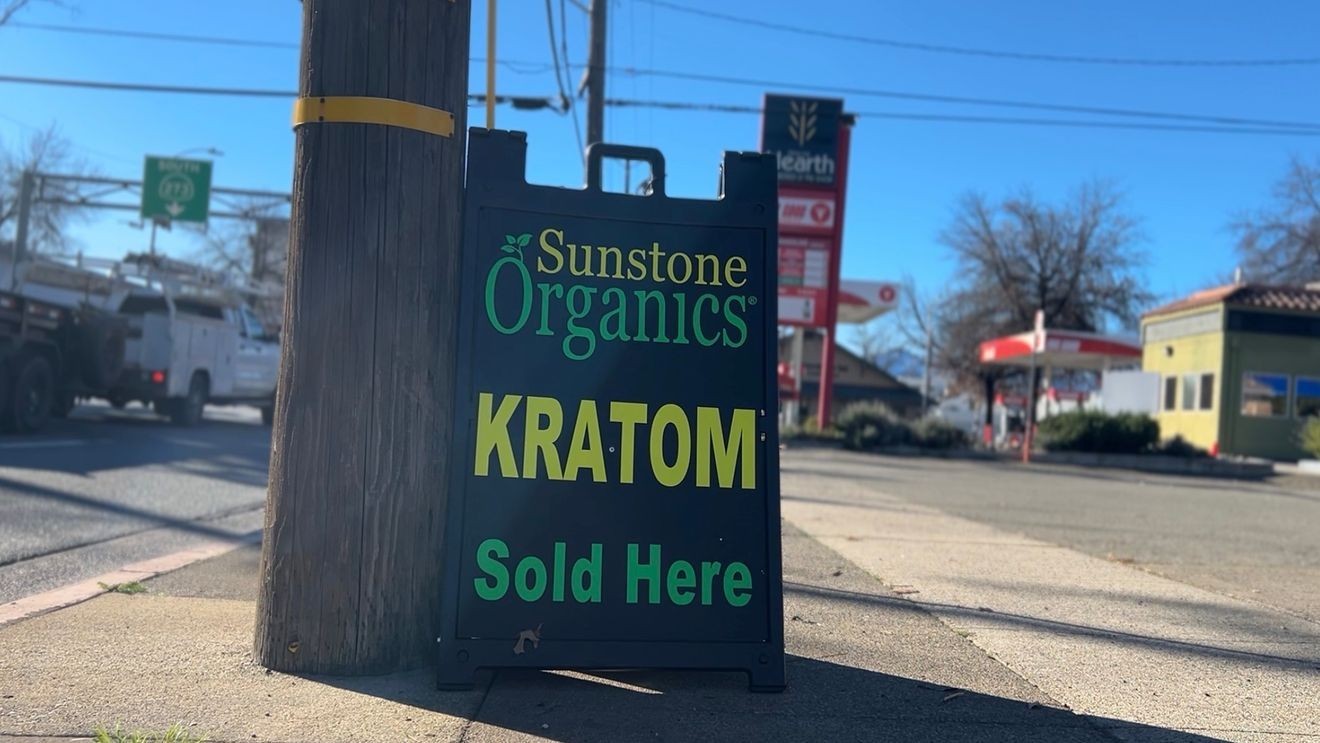
California Enforces Ban on Kratom and 7-OH Products
SHASTA COUNTY, California — The California Department of Public Health (CDPH) has announced the immediate enforcement of a ban on the sale of all Kratom products, including synthetic derivatives such as 7-hydroxymitragynine, commonly known as 7-OH. This measure comes after retailers were previously warned earlier this month about the illegality of selling these substances, and it will be enforced in collaboration with the state’s licensing and tax agencies.
All Kratom and 7-OH products are deemed illegal for sale, according to the CDPH. (Photo provided by CDPH)
Understanding the Health Risks of Kratom
Kratom and its synthetic counterpart, 7-OH, can be easily found in many gas stations and tobacco shops. However, CDPH officials have made it clear that these products are being sold in direct violation of both federal and state laws, as no Kratom or related products have received approval for sale by the FDA. Despite this, manufacturers continue to market these substances as remedies for various health issues, including dietary concerns, anxiety, and even opioid addiction.
Ongoing concerns have arisen due to multiple deaths linked to Kratom and 7-OH across the nation; notably, six fatalities were reported in Los Angeles County in 2025. Authorities cite the Sherman Food, Drug, and Cosmetic Act, which empowers them to restrict the sale of misleading or adulterated products. A CDPH spokesperson confirmed that all Kratom-derived products fall under this classification, with over $5 million worth of such merchandise already confiscated.
Crackdown on Retailers and Manufacturers
To combat this issue, the CDPH is working alongside the California Department of Alcoholic Beverage Control and the California Department of Tax and Fees. They are actively targeting both manufacturers and retailers involved in the sale of Kratom and 7-OH products. Letters have already been sent to various sellers, demanding that they cease operations related to these substances or face substantial penalties, potentially including fines of up to $1,000 per day or complete revocation of licenses.

Retailers rarely enforce age restrictions on Kratom purchases, despite many products advising against use for individuals under 21. (Photo taken at KRCR on January 16, 2026)
Interestingly, while California currently does not have specific laws regulating the sale of Kratom or 7-OH, two key legislative bills are under consideration: Senate Bill 758, which would make it a misdemeanor to sell or manufacture synthetic 7-OH products, and Assembly Bill 1088, focusing on banning Kratom sales to individuals under the age of 21.
Advocates and Industry Perspectives
Matthew Lowe, Executive Director of the Global Kratom Coalition, has voiced support for both bills, emphasizing that not all Kratom manufacturers should be painted with the same brush due to the presence of synthetic 7-OH products. He points out that the chemical composition of 7-OH is derived from a small fraction of natural Kratom’s makeup yet creates intense opioid-like effects, posing significant health risks.
Lowe also stated, “Several 7-OH brands advertise themselves as opioid replacements, which is illegal and undermines consumer safety. These products should follow the same regulatory processes as legitimate medications.”
The Public Health Warning
The CDPH has issued a blanket warning that does not distinguish between natural and synthetic forms of Kratom, categorizing both as dangerous and illegal under state and federal law. Reported side effects associated with these products include addiction, withdrawal symptoms, anxiety, seizures, and even fatal respiratory depression.

All Kratom and 7-OH products are deemed illegal for sale, according to the CDPH. (Photo provided by CDPH)
Though the Shasta County Public Health Department has reported few deaths directly tied to Kratom products, anecdotal evidence reveals that some residents have struggled with addiction issues related to its use.
For further information, consider visiting related resources on the dangers of Kratom and current legislative developments regarding its regulation.
