

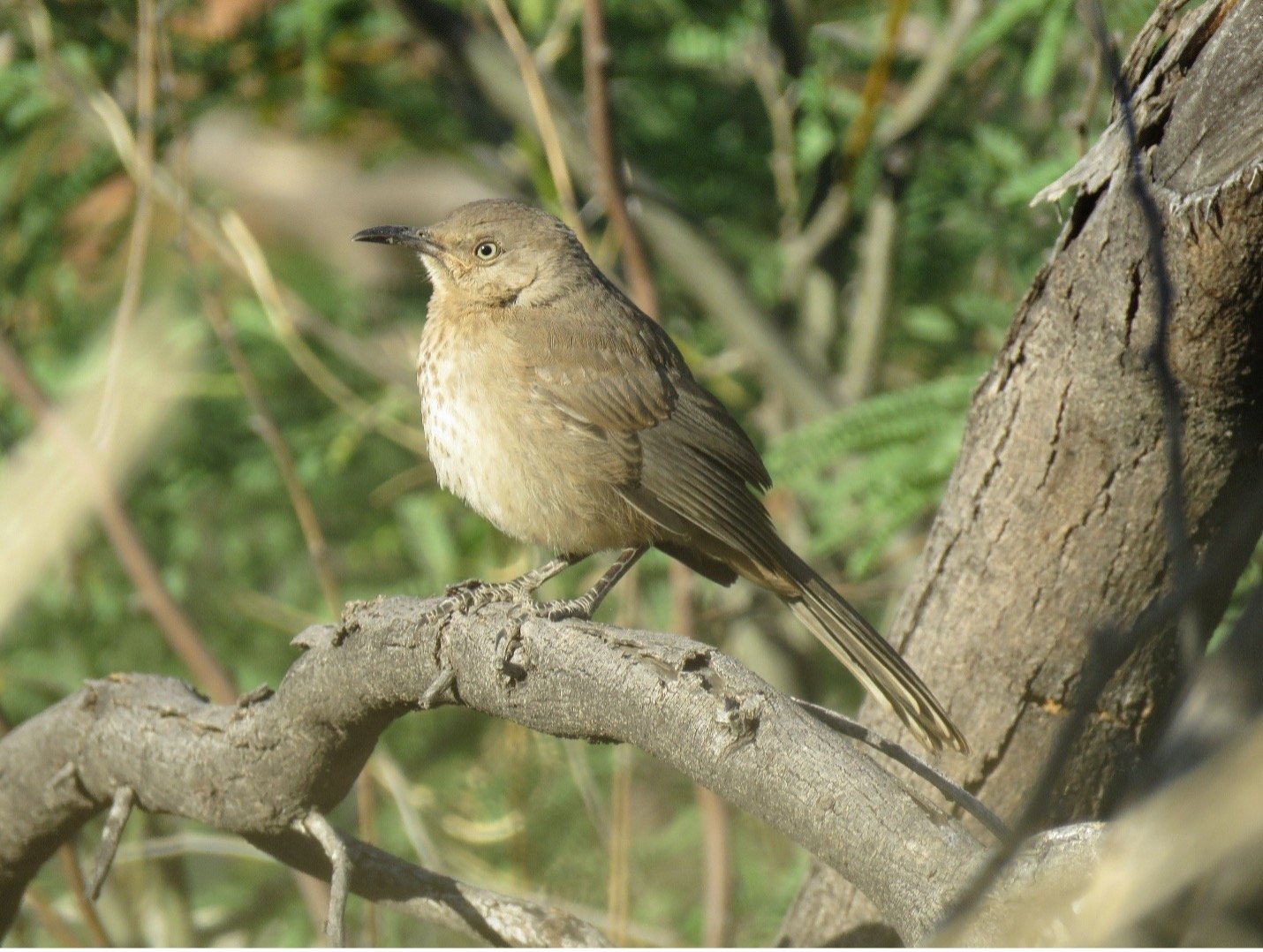
State Proposal for Protection of Vulnerable Desert Songbirds in California
SACRAMENTO, Calif. — The California Department of Fish and Wildlife has made a significant recommendation this week urging the state’s wildlife commission to evaluate protective measures for two endangered species: Bendire’s thrasher and LeConte’s thrasher. This recommendation follows petitions initiated by the Center for Biological Diversity.
Importance of Protection for Desert Thrashers
“Today’s recommendation is a crucial step toward essential state protection for desert thrashers, which are on the verge of extinction,” stated Jeff Miller, a senior conservation advocate at the Center for Biological Diversity. He highlighted that both bird species have faced severe habitat loss due to reckless development and climate change, exacerbating their decline in the Southern California deserts. The department’s recommendation could serve as a lifeline for these vulnerable species.
Evidence for State Protections
Following an assessment, the California Department of Fish and Wildlife uncovered compelling evidence within the petitions from 2025, which could trigger a review for state protections of both the Bendire’s and LeConte’s thrashers. If the California Fish and Game Commission accepts the petitions in their upcoming April meeting, this will initiate an in-depth review of both species, propelling them closer to receiving state protection.
Declining Populations
In the last five decades, Bendire’s thrashers have experienced a staggering 90% decline in population, while LeConte’s thrashers have faced a nearly 70% reduction across their U.S. range. Once thriving in arid regions of the southwestern United States and northwest Mexico, Bendire’s thrasher now has only about 5% of its global population—approximately 4,400 birds—remaining in California’s Sonoran and Mojave deserts.
In contrast, more than 80% of LeConte’s thrashers, estimated at 37,000 individuals, can still be found in the Sonoran Desert, Mojave Desert, and southern San Joaquin Valley of California.
Habitat Loss and Threats
The habitat for both species has suffered significantly due to urban sprawl and agricultural expansion. Key threats also include habitat fragmentation, invasive species, climate change, altered wildfire patterns, livestock grazing, and off-road vehicle activities. These factors collectively threaten the delicate ecosystems where these thrashers reside.
Characteristics of LeConte’s Thrasher
LeConte’s thrashers dwell in some of the hottest and driest desert habitats, favoring sandy areas abundant with saltbush vegetation. Known as the “gray ghost” due to their elusive behavior and pale sandy plumage, these birds rarely fly, choosing instead to forage on the ground for insects while cleverly camouflaging against their surroundings.
Bendire’s Thrasher Behavior
Similarly, Bendire’s thrashers are secretive and predominantly forage on the ground. During the breeding season, male thrashers become more visible as they perch on shrubs, providing melodious songs that fill the desert air. Their nesting sites include cholla cactus, mesquite trees, yuccas, and Joshua trees, while LeConte’s thrashers primarily use cholla cactus and saltbush for nesting.
Both species thrive in expansive, flat desert scrub habitats, which offer abundant prey and the necessary conditions for survival in their arid environment.
Current Conservation Status
Since 1978, both the Bendire’s and LeConte’s thrashers have been classified as California Species of Special Concern. Unfortunately, this designation has not halted their alarming decrease in population.
In a push for broader protections, the Center for Biological Diversity has urged for federal Endangered Species Act protections for both species. However, the prospects for federal support remain grim amidst hostile environmental policies from previous administrations, complicating any potential forward motion for these imperiled birds.
Conclusion
As habitat loss and various threats continue to accelerate the decline of Bendire’s thrasher and LeConte’s thrasher, the current state recommendations serve as a beacon of hope for these remarkable desert songbirds. Protecting their habitats is not just a matter of saving these species but preserving the intricate ecosystems they inhabit.
For more insights on these species, visit the Center for Biological Diversity and discover ways to support wildlife conservation efforts.
