

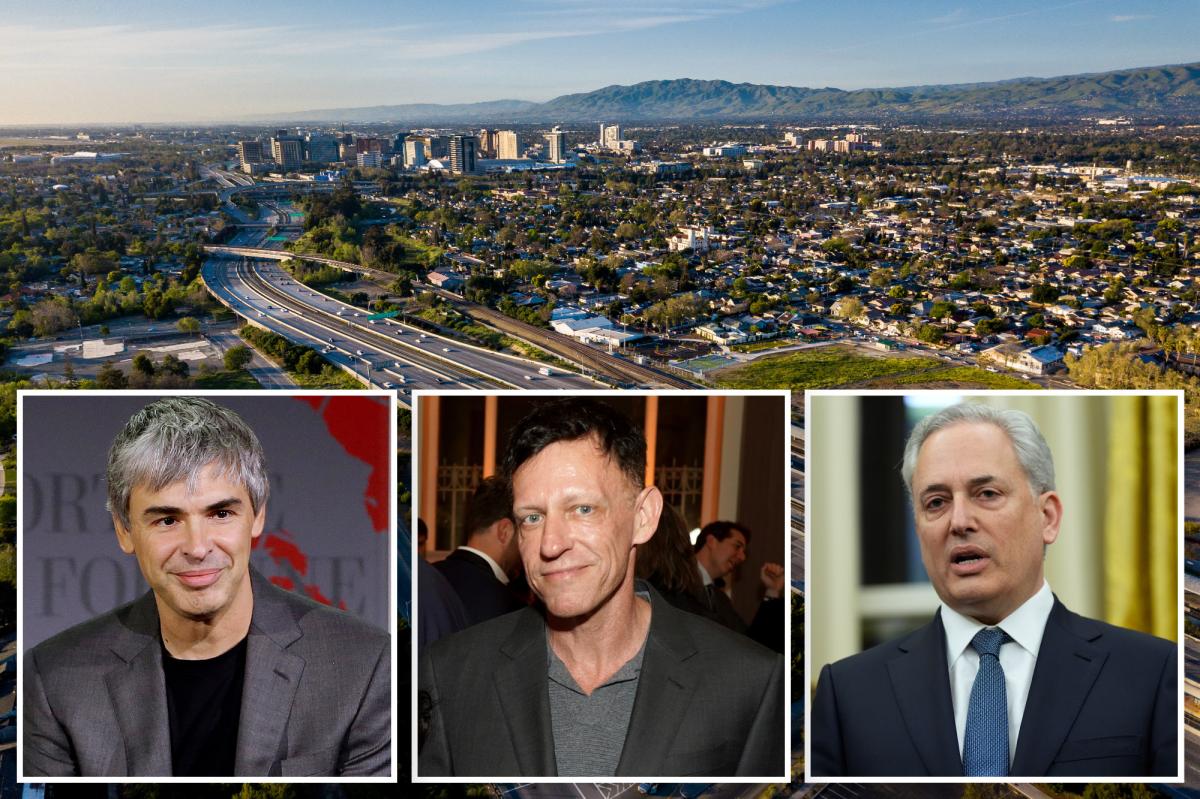
California’s Proposed Wealth Tax Sparks Billionaire Exodus
The potential introduction of a substantial wealth tax in California has prompted several high-profile billionaires, including tech giants Larry Page and Peter Thiel, to sever their connections with the state. This decision is believed to be a strategic move ahead of a one-time tax proposal that could impose a 5% levy on individuals with fortunes exceeding $1 billion—a measure set to be voted on in the upcoming November elections.
Billionaires Making Moves
Before New Year’s Day, the deadline to avoid this proposed tax, at least six billionaires relocated from California. David Lesperance, a tax adviser specializing in assisting affluent clients in high-tax areas, disclosed that he helped four billionaires establish residency outside California. This shift could signal a broader trend, with Divesh Makan, co-founder of the investment firm ICONIQ Capital, estimating that approximately 20 additional billionaire families may follow suit if the tax is approved by voters.
High-Profile Exits
Larry Page, co-founder of Google, has taken significant steps to distance himself from California by investing around $173 million in waterfront properties in Miami, Florida. This includes a $101.5 million estate and a $71.9 million mansion, signaling a definitive move to Florida. Reports confirm that Page has cut ties with California and most of his assets just ahead of the January 1 deadline.
Similarly, Peter Thiel, known for his criticism of wealth taxes, has expanded his presence in Florida by establishing a Miami office for his investment firm, Thiel Capital. He officially registered to vote in Florida and has been spending increasing amounts of time outside California while maintaining a residence in Los Angeles.
Other Influential Relocations
On the last day of 2025, billionaire venture capitalist David Sacks announced that his firm, Craft Ventures, opened an office in Austin, Texas, after relocating from San Francisco—timing his move directly before the proposed residency cutoff. Although his announcement didn’t explicitly mention the wealth tax, it comes amidst growing concerns about its implications for California’s wealthy residents.
Meanwhile, Google co-founder Sergey Brin is reportedly in discussions to purchase a waterfront home in Miami, though no confirmations have been made. Tech investor Chamath Palihapitiya has voiced his serious consideration of moving to Texas, echoing sentiments that the proposed tax could drive away entrepreneurs and investment from California.
Mixed Reactions from the Wealthy
However, not all billionaires are fleeing California. Nvidia CEO Jensen Huang stated he is “perfectly fine” with the proposed tax, while real estate developer John Sobrato expressed his intention to remain in California, predicting the tax proposal would ultimately fail at the ballot box.
Supporters of the tax legislation argue that it’s a necessary response to California’s projected $190 billion fiscal shortfall over the next decade. The funds generated from this wealth tax are intended for critical public services, including healthcare and education, with proponents asserting that it targets a small percentage of the population whose wealth has surged in recent years.
Concerns Over Economic Survival
Critics argue that targeting the wealthiest individuals could have dire consequences for the state’s economy. William Stern, a financial expert, cautioned about the potential economic repercussions of such policies: “If you chase the ‘golden goose’ out of the state with a wealth tax, who pays for the lights? This isn’t a political debate—it’s a math problem.”
Advisers caution that the mobility of billionaires dramatically increases the risk associated with instituting such a tax. According to Lesperance, billionaires do not need to reside in California to maintain their wealth, underscoring the importance of attracting and retaining wealthy residents for the state’s fiscal health.
Conclusion
As California prepares for a significant vote on the proposed wealth tax, the exodus of billionaire residents raises questions about the long-term impacts on the state’s economy. With both proponents and opponents voicing strong opinions, the future of wealth taxation in California remains uncertain, highlighting the intricate balance between taxation and economic vitality.
For more insights on this developing story, you can check out Bloomberg.
