

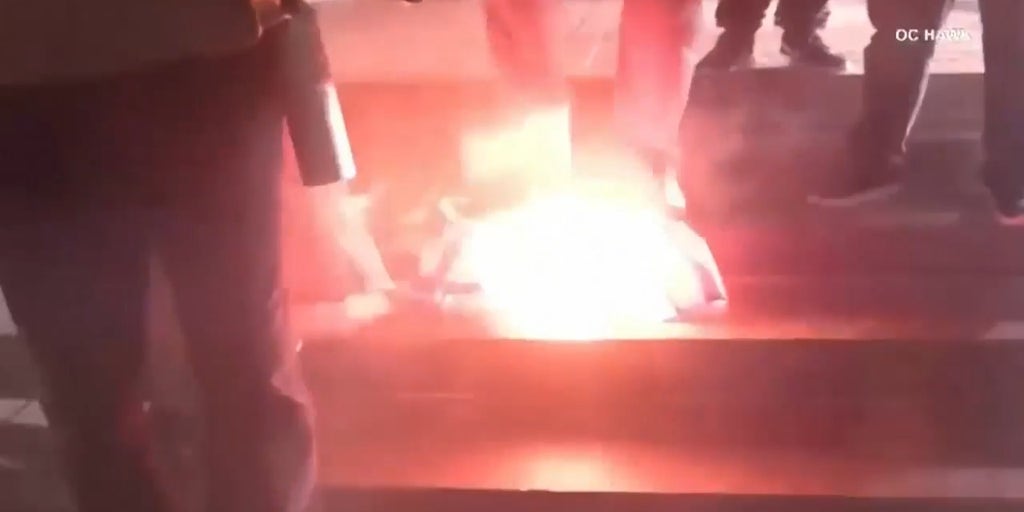
Protests Against ICE: American Flag Burned Outside California Federal Building
Overview of the Protest
A recent demonstration outside a federal building in California took a dramatic turn as activists protesting against ICE (U.S. Immigration and Customs Enforcement) burned an American flag. This act, which occurred amidst rising tensions regarding immigration enforcement, has sparked a nationwide conversation about civil disobedience and the role of government agencies like ICE.
Background on ICE and Immigration Policies
ICE has faced significant public scrutiny in recent years due to its aggressive policies related to immigration enforcement. Many activists argue that the agency’s actions are detrimental to immigrant communities across the nation. Concerns have been raised about family separations, deportations, and the treatment of individuals in detention centers. For an overview of ICE’s role and its impact, see U.S. Immigration and Customs Enforcement.
The Protest Details
The protest featured a diverse group of participants unified in their opposition to ICE’s policies. They gathered outside the federal building, where they voiced their concerns through speeches and chants. The decision to burn the American flag, a symbolic act meant to draw attention to their cause, has elicited mixed reactions from the public.
Symbolism and Meaning
Burning the flag is often seen as a powerful form of protest in the United States. For many, this act symbolizes a rejection of governmental practices that they believe go against the nation’s founding principles of liberty and justice for all. However, it also raises questions about patriotism and the methods through which dissent is expressed.
Community Response
Local reactions to the protest have varied widely. Supporters of the demonstration believe it created necessary dialogue around immigration issues and highlighted injustices faced by many. Conversely, opponents argue that such actions are disrespectful and counterproductive.
For perspectives on community reactions to civic protests, you can explore this insightful discussion on civic engagement and community response.
Historical Context of Flag Burning
Flag burning has a long history in the United States, often linked to political statements. It was notably protected as a form of free speech under the First Amendment, as established in the landmark Supreme Court case Texas v. Johnson in 1989. This legal precedent reinforces the notion that even the most contentious forms of expression are protected under the Constitution.
Legal Implications
While flag burning is legal, the act remains controversial. Understanding the legal frameworks surrounding protests can provide additional context—read more about the legal protections for protests in America.
Conclusion
The protest against ICE, marked by the burning of the American flag, serves as a poignant reminder of the complexities surrounding immigration policy in the United States. As discussions continue, it is crucial for individuals and communities to engage in conversations about the values they wish to uphold and the actions they believe are necessary for achieving those ideals. Whether one agrees or disagrees with the protesters’ methods, the issues at hand are undeniably critical to the fabric of American society.
For ongoing updates and discussions about immigration and civil rights, visit Immigration Advocacy Organizations to learn more about various perspectives and ongoing initiatives.
