

Controversy Surrounds Prediction Markets in California’s Gaming Landscape
The ongoing conflict over prediction markets in California has escalated, with James Siva, the chairman of the California Nations Indian Gaming Association, publicly accusing Flutter Entertainment’s FanDuel of promoting “unlawful gaming” on tribal lands. This accusation highlights a significant legal battle that could potentially escalate to the U.S. Supreme Court or prompt congressional action.
Unlawful Gaming Accusations
In his statement to Gambling Insider, Siva called attention to the legality of prediction markets linked to sports betting. He emphasized that these platforms are unregulated and have already faced multiple court challenges across the United States. According to Siva, these gaming entities are attempting to bypass California’s laws and impose their gaming models on tribal lands—an infringement on tribal sovereignty.
FanDuel’s Entry into Prediction Markets
FanDuel, along with competitors such as DraftKings and Fanatics, is venturing into the burgeoning field of prediction markets. This move follows a decision by the Trump Administration to allow federally regulated operators like Kalshi and Polymarket to introduce contracts tied to sporting events. This shift indicates a new direction for FanDuel and its counterparts, which diverged from traditional sports betting operators in November.
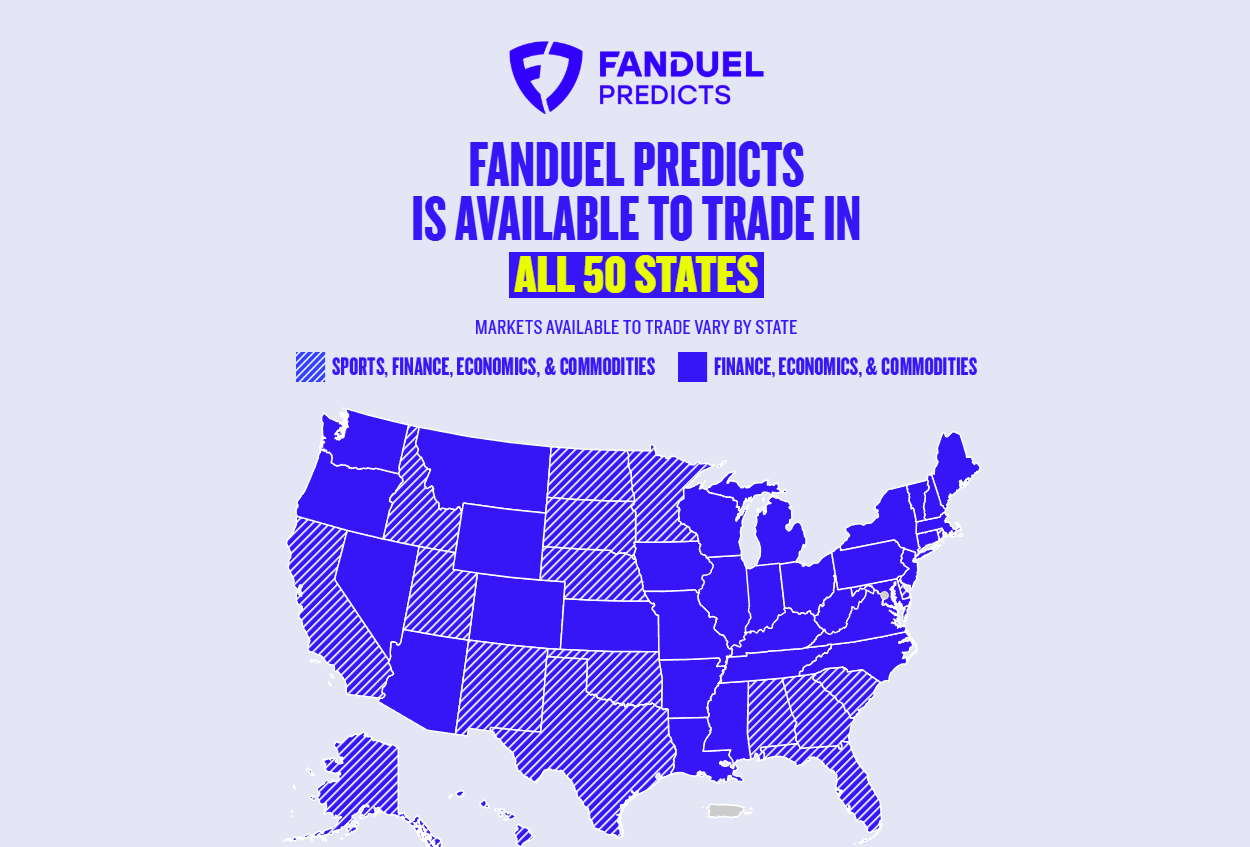
Unlike other players in the prediction market sector, these sportsbooks have opted not to offer contracts on sporting events within states where they currently provide sports betting services. This strategic decision gives FanDuel an edge, enabling it to offer sports wagering products in populous states like California, Georgia, and Texas—regions where legal sports betting has yet to receive legislative approval.
Current Legislative Climate
Among these states, only Georgia is anticipated to consider legalizing sports betting in the near future. In Texas, where lawmakers convene in odd-numbered years, the prospects remain dim, while California’s recent referendum related to sports betting was decisively rejected by voters in 2022. Consequently, any future sports betting proposal in California may not surface until at least the 2028 ballot.
Tribal Nations Push Back
Tribal gaming leaders in California have made it clear that any successful sports betting measure must involve their participation. The rejection of commercial initiatives in favor of a tribal-led approach demonstrates the complexities of collaboration within California’s gaming framework. With no sports betting question poised for the upcoming ballots, the delay could push potential legalization until 2029 at the earliest—several years after the U.S. Supreme Court opened the doors for legalized sports betting nationwide.
Legal Challenges and Partnerships
Just as FanDuel has ramped up its prediction market initiatives, tensions between the sportsbooks and tribal nations have reemerged, complicating the possibility of partnerships. Lawsuits have surfaced to challenge the sights of companies like Kalshi, with California tribal nations asserting their federal rights to define gaming types on their lands. A federal judge’s recent decision to decline an injunction has left these discussions open for future legal scrutiny.
In a bid for reconciliation, FanDuel has actively recruited influential tribal gaming leaders post-2022 vote. However, its recent move into California’s prediction markets complicates potential collaborations, especially concerning any forthcoming sports betting initiatives.
Understanding FanDuel Predicts
FanDuel Predicts has made its platform available across all 50 states, although it limits sports prediction markets to 16 states, including California and Texas. The structure of prediction markets differentiates them from traditional sportsbooks. In prediction markets, participants need to place opposing bets on an outcome, fostering a unique betting environment where contracts can be traded based on event outcomes.
Additionally, users in states where the platform is available can engage in predictions tied to financial and economic markets. Notably, the age restrictions for participating in prediction markets are more lenient, allowing traders as young as 18, in contrast to the more common age limit of 21 for sports betting in most states.
Users can access the prediction markets platform using existing FanDuel login information, although it operates with a separate wallet from other FanDuel products, such as online sports betting and daily fantasy sports.
The Road Ahead
As FanDuel continues to expand its footprint in the prediction market arena, the friction with California’s tribal gaming nations raises significant questions about the future landscape of sports betting in the Golden State. With ongoing legal challenges and a complex relationship between commercial sportsbooks and tribal entities, the legal and legislative frameworks will play pivotal roles in shaping the direction of this evolving industry.
For more information about prediction markets and their impact on the gaming landscape, please visit Gambling Insider.
This article provides an overview of the legal and operational challenges surrounding prediction markets in California, offering insight into the ongoing contention between established gaming entities and tribal nations vying for sovereignty and control in an evolving landscape.
