

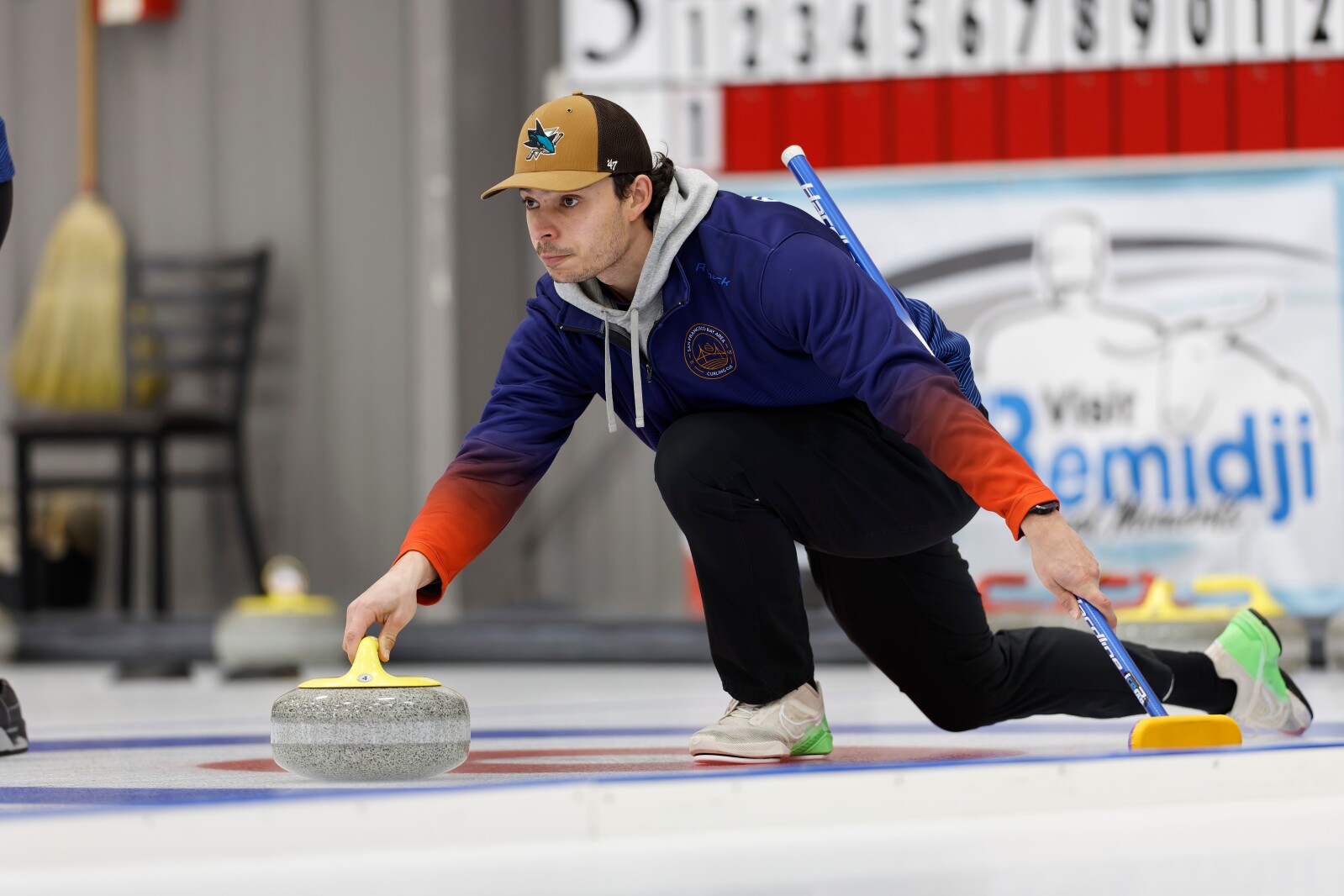
Bemidji Hosts the 2026 Mixed Doubles National Championship Amidst Extreme Cold
Extreme Weather Conditions Challenge Competitors
BEMIDJI, MN — As the excitement built up for the 2026 Mixed Doubles National Championship at the Bemidji Curling Club, the announcer humorously remarked, “Ladies and gentlemen, welcome to the curling rink, where it feels 80 degrees warmer than it does outside.” The irony wasn’t lost on the competitors as temperatures plummeted to a bone-chilling -28 degrees, with the wind chill on the day dipping as low as -51 degrees.
USA Curling CEO Dean Gemmell noted, “It is 100% living up to the stereotype.” Not even the hotel heaters, cranked up to 89 degrees, could fully shield curlers from the infamous cold. San Francisco resident Connor Robertson expressed disbelief, claiming it to be the coldest place he had ever experienced, adding, “This is probably 60 degrees colder than I’ve ever felt before.” The biting cold left many players scrambling for shelter after just a few moments outdoors.
Not Just Competitive Spirit
With a free day before their matches, Robertson and his partner Gabrielle Coleman ventured to the Bemidji Visitor Center, only to be advised to come back in the summer. In contrast, Los Angeles native Sean Franey, who competes with his wife BriAnna Weldon, was well aware of the frigid conditions in northern Minnesota. “You know what’s funny? The coldest days are always when we’re up here,” Franey recalled, humorously blaming previous trips for setting a precedent.
Franeys’ and Weldon’s experiences reflect a larger theme: the dedication and adaptability of curlers from warmer climates like California. The curling scene in California, although not as robust as in the upper Midwest, thrives largely due to Canadian immigration. Many have found a home in clubs like the Orange County Curling Club and the San Francisco Curling Club, which recently opened a dedicated curling rink.
Mixed Doubles: A Growing Phenomenon
Mixed doubles curling requires fewer players, making it an attractive option for teams from places like California. “I think the greatest part about it is that you get to do everything,” said Robertson. “Every shot, you’re calling the line, you’re sweeping, you’re judging, you’re throwing.” This versatility makes it particularly appealing for newcomers to the sport.
For Coleman, competing in Bemidji has always been a dream. After getting into curling in 2006, she saw Bemidji as a legendary venue, especially after the men’s Olympic team, led by skip Pete Fenson, secured America’s first medal in curling there.
Travel and Logistics for Curling Teams
The journey to Bemidji isn’t easy. From flying into the Twin Cities and driving for four hours, teams face unique travel challenges. Coleman and Robertson are accustomed to this travel routine after competing in remote areas of Canada, understanding that dedication is key to participating in national-level competitions.
In the ongoing championships, teams are responsible for travel expenses, but the chance to represent the U.S. on a world stage remains a motivating factor. As they compete in Pool B, Robertson and Coleman secured a win, currently sitting at 1-3, while Franey and Weldon are positioned at 2-2, battling for a spot in the qualification round.
Aiming for the World Championship
The championship rounds will culminate on Sunday, where the semifinal victors will advance to compete for gold in hopes of representing Team USA at the Mixed Doubles World Championship in Switzerland. This opportunity adds extra stakes as teams put their skills to the test amidst the intense conditions found in Bemidji.
As the championship unfolds, the camaraderie and competitive spirit displayed by these curlers serve as a reminder of the passion for sport that transcends geographic and climatic barriers.
