

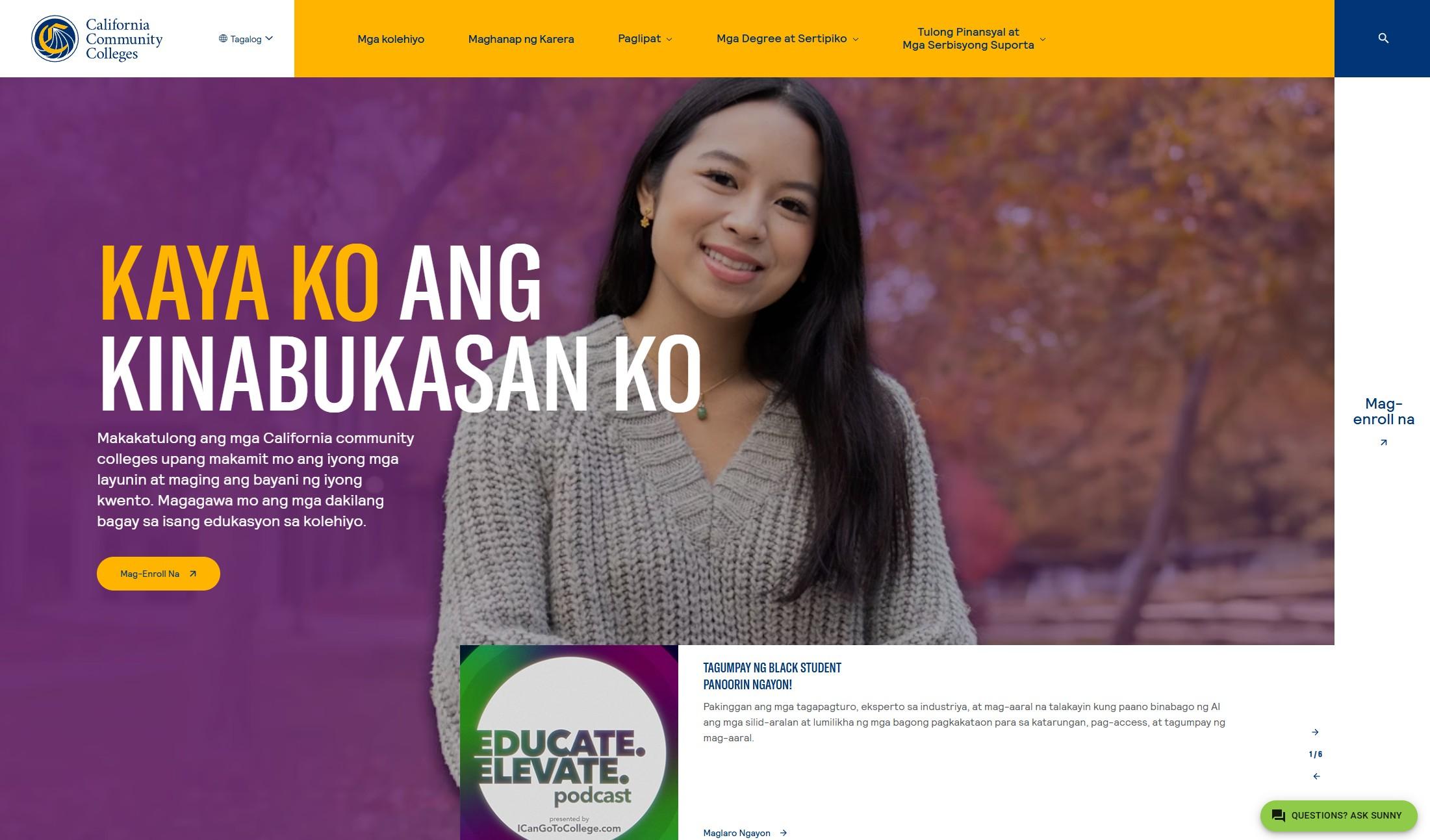
Celebrating Filipino American History Month: California Community Colleges Launch Tagalog Language Website
Strengthening Community Engagement Through Language
In recognition of Filipino American History Month, the California Community Colleges (CCC) have unveiled a comprehensive Tagalog language website as part of their ICanGoToCollege.com campaign. This initiative aims to enhance access to vital information for California’s Filipino community, bolstering engagement and potential enrollment.
A One-Stop Shop for Educational Resources
The newly launched Tagalog website serves as a crucial resource for current and prospective students, as well as their families. It provides in-language details on several key topics, including:
- Career Education Programs
- Guaranteed Transfer to Four-Year Universities
- Financial Aid Opportunities
- Support Services for Food, Housing, Childcare, and Mental Health
In addition, the site features information on dual enrollment, allowing high school and adult students to earn both high school diplomas and college credits simultaneously. The Tagalog option can be accessed via a dropdown menu on the ICanGoToCollege homepage.
Promoting Equity and Access
California Community Colleges Deputy Chancellor Rowena Tomaneng expressed pride in the Tagalog website’s launch, citing it as an important step toward equitable access to education. “This initiative reflects our ongoing commitment to removing barriers and unlocking opportunities,” she stated, aligning with the Vision 2030 strategic plan aimed at making education more accessible.
Filipino Community in California
California boasts a vibrant Asian American Native Hawaiian Pacific Islander (AANHPI) community, with over 7.3 million individuals. Filipinos represent the second-largest group within this community, making it essential to provide resources in Tagalog, a widely spoken language, ensuring that crucial information is culturally responsive and accessible.
Impact of Community Colleges
Community colleges offer an affordable pathway to higher education, and studies indicate that graduates with an associate degree see an increase in annual earnings of approximately $11,300, translating to around $486,000 over a lifetime compared to those with only a high school diploma. Furthermore, many community college students transfer to four-year universities, with 29% of University of California and 51% of California State University graduates having started their academic journeys at these colleges.
Making Education Cost-Effective
One of the most significant advantages of California’s community colleges is the potential for students to complete their education at low or no cost. This provides foundational skills that can assist students in various pursuits, whether that be transferring to a four-year institution or launching a new career through vocational training.
Commitment to Diversity
The California Community Colleges Chancellor’s Office is dedicated to celebrating the diversity woven throughout the state. By offering culturally relevant resources like the Tagalog I Can website, CCC strives to ensure all students can efficiently access higher education, helping them achieve their goals and positively impact the lives around them.
With the inclusion of Tagalog, the ICanGoToCollege platform now offers six languages, including Spanish, Chinese, Vietnamese, Korean, and English, making it more inclusive than ever.
Explore the New Resources
To explore the Tagalog language resources or learn more about what California’s community colleges can offer, visit the ICanGoToCollege website and utilize the accessible tools and information provided.
Conclusion
The launching of the Tagalog website by California Community Colleges is an essential milestone in promoting educational equity. Addressing the needs of the Filipino community fosters inclusivity and empowers individuals to embark on their educational journeys with confidence and clarity. This initiative not only highlights the commitment to diversity but also underscores the importance of accessibility in higher education for all Californians.
