

California’s Population Decline: Implications for the Las Vegas Valley
Understanding the Shift in Demographics and Economics
According to the latest U.S. Census Bureau data, California is experiencing a noticeable population decline, standing out as one of only five states to report this trend from July 2024 to July 2025. While Nevada’s population growth has also slowed since the pandemic, the dynamics between California’s decline and Las Vegas’ trajectory offer a complex picture.
Migration Trends: From Domestic to International
Before the pandemic, Las Vegas mainly attracted residents through domestic migration, particularly from states like California, Illinois, Arizona, Texas, and Utah. However, demographic expert Andrew Woods, director of UNLV’s Center for Business and Economic Research, notes a shift post-pandemic. The growth of the Las Vegas Valley is now increasingly driven by international migration, primarily from Asia and the Philippines.
Woods explains, “From a California perspective, the migration growth to Las Vegas is not what it was in previous years.” This change indicates that while people are still relocating, the sources of that growth are evolving.
Economic Impact: A Dual-Edged Sword
The implications of California’s population drop are not straightforward for Las Vegas’ economy. On one hand, an influx of Californians could drive up home prices. On the other hand, if the California economy falters, this could negatively impact tourism—an economic staple for Las Vegas’ casino and gaming sectors.
“It’s not an either/or situation where if they are suffering, we’re prospering,” Woods emphasizes. Indeed, the economic health of both states appears interconnected. Increased home prices in California fueled by a robust real estate market allowed many Californians to sell high and move to Nevada, consequently pressuring local housing markets.
Housing Market Insights: Las Vegas Stays Resilient
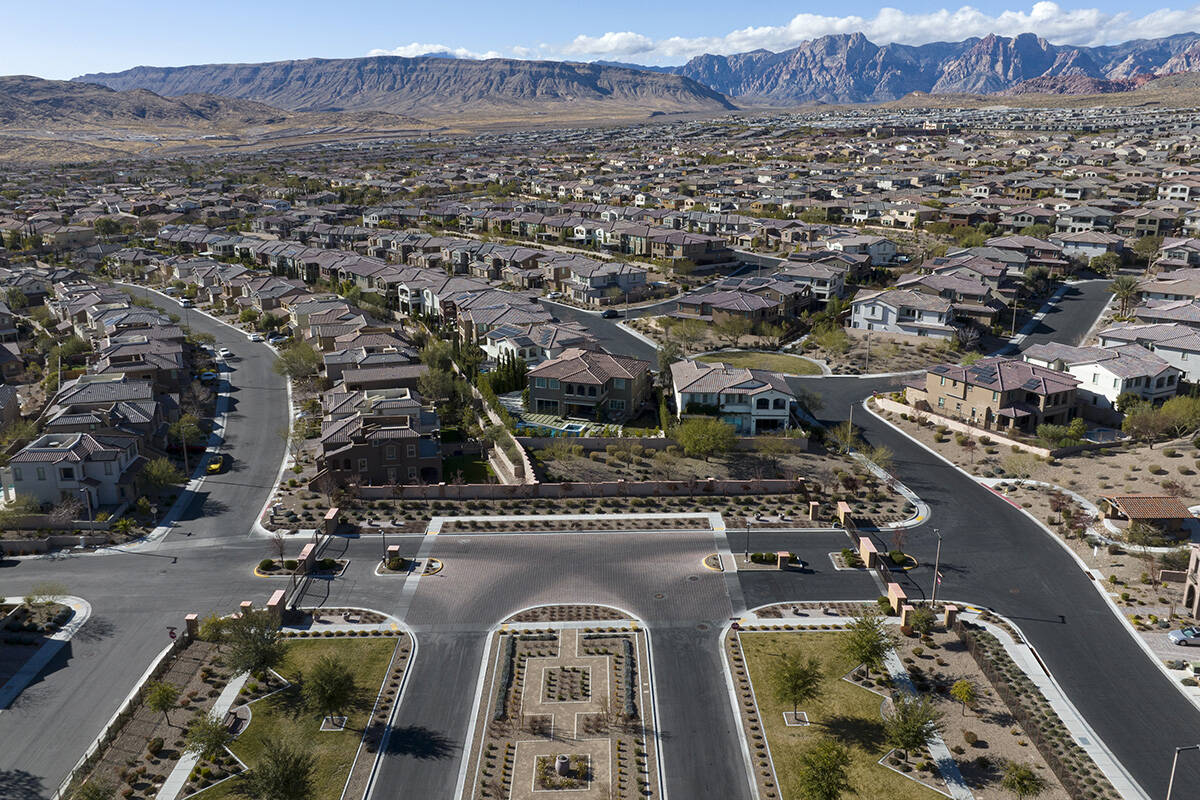
Despite witnessing a substantial number of new listings, home prices in Southern Nevada have continued to climb, defying patterns seen in other Sun Belt cities. Data from Redfin indicates Las Vegas maintains consistent home values, even during challenging market conditions.
Woods points out that high-end real estate has notably benefited from California’s soaring property values, aiding not just sellers but also local builders. However, this has induced challenges for domestic workers who face rising living costs due to inflated housing prices.
Attracting High-Net-Worth Individuals
The need for Nevada to attract affluent individuals is paramount. High-net-worth residents bring along their businesses and their families, contributing to the local economy and educational systems. As wealth migration from California and Washington becomes more prevalent—spurred by changes in tax policies—Las Vegas stands to benefit significantly.
Brian Bonnenfant, project manager at the Center for Regional Studies at the University of Nevada, Reno, underscores the complexity of wealth migration, highlighting that while California may be losing residents on paper, retaining affluent taxpayers poses a unique challenge. “California remains a beautiful destination, and wealthy individuals will continue to seek residence there, even if only temporarily.”
The Future of U.S. Population Dynamics
Demographic experts predict that the U.S. will see natural population growth peak around 2030. Bonnenfant warns that states will need to compete vigorously for in-migration to sustain their economies and communities. Drawing parallels with Detroit, which has struggled with population decline, he raises concerns about states like Nevada that rely heavily on immigration.
With only 28.7 percent of residents in Nevada born within the state, the future heavily hinges on attracting individuals from high-tax states like California and New York. As Bonnenfant states, “States will be forced to play a version of ‘Hunger Games’ for new populations from high-taxed states.” He expresses confidence in Nevada’s ability to attract new residents due to its low tax structure, favorable climate, and overall amenities.
Conclusion: The Path Forward
As California’s population decline unfolds, the Las Vegas Valley finds itself at a crossroads. The interplay between local and Californian economies, demographic shifts, and housing markets will shape Las Vegas’ future. By fostering an environment that attracts both high-net-worth individuals and their businesses, Nevada can position itself as a desirable destination amid changing demographic landscapes.
For more information on population trends and their implications for regional economies, visit U.S. Census Bureau and Nevada State Government.
