

New Solar Farm Project Gains Momentum in California’s San Joaquin Valley
A prominent solar farm project is set to transform California’s agricultural landscape. If realized, this ambitious initiative will cover an impressive 200 square miles and produce a staggering 21,000 megawatts of energy—enough to power entire cities. To address fluctuating energy demands, substantial battery storage will be implemented.
Farmers Join Forces for Innovative Solutions
Many farmers in the region are backing this solar project as they deal with water shortages that limit their agricultural activities. Ross Franson, president of Woolf Farming and Processing, emphasizes the struggle faced by farmers, stating, “If we had the water to do it, we would farm it. But the reality is, you don’t.”
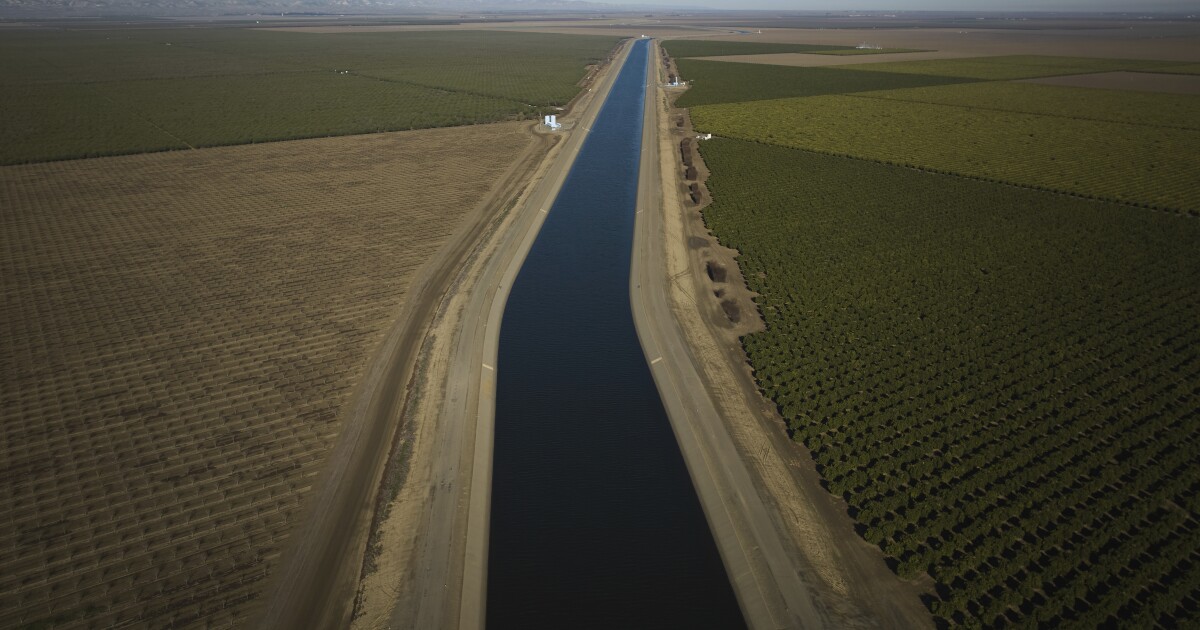
Franson is also a board member of the Westlands Water District, an organization committed to advocating for farmers in the San Joaquin Valley. Historically, the district played a vital role in obtaining federal support to construct a canal that supplies water to the area.
Grappling with Water Scarcity
In recent years, the Westlands Water District has faced significant challenges due to dwindling water supplies caused by drought and competing water claims. A recent state law has also restricted the ability to pump groundwater, exacerbating the dilemma. As a result, many farmers are leaving portions of land uncultivated while searching for viable alternatives.
According to Franson, this shift has led to increased dialogue about the conversion of unproductive farmland into renewable energy production. A solar developer, Golden State Clean Energy, presented a comprehensive plan aimed at maximizing the land’s potential for solar generation.
The Scale of the Project Justifies Infrastructure Expansion
Golden State Clean Energy partner Patrick Mealoy notes the importance of scaling up operations to warrant the construction of new power lines. These installations would enable the transportation of electricity from the San Joaquin Valley to urban centers, including Los Angeles and Silicon Valley. Smaller initiatives have struggled due to insufficient capacity to justify such significant investments.
Franson’s immediate reaction to the proposal was enthusiastic. Following extensive negotiations and an environmental review, the Westlands Water District’s board decided to move forward with the project in December.
Employment Opportunities and Community Concerns
While approximately 150 farmers within the district have committed to utilizing solar energy on their lands, local communities express concerns over job availability. Rey León, the mayor of Huron—home to many farmworkers—voiced his worries about the community’s future, indicating that a decline in agricultural work could limit employment opportunities.
León advocates for a community benefits package to ensure local residents gain from the solar revenue. “We are shareholders,” he states, insisting that the local economy should benefit from the solar development.
A Model for Future Solar Initiatives
The Westlands project may serve as a blueprint for other California farming communities facing similar challenges. According to the Public Policy Institute of California, agricultural regions will need to adapt to new water regulations and could potentially convert between 500,000 to 1 million acres of farmland to solar energy production.
As California grapples with water shortages and the impacts of climate change, the expansion of solar initiatives like this could provide both a solution for farmers and a renewable energy source for the state.
Conclusion
This transformative solar project effectively addresses the pressing needs of California’s farming community while simultaneously paving the way for sustainable energy solutions. As local stakeholders collaborate, the potential benefits for both agriculture and energy sectors may establish a new paradigm for land use in the San Joaquin Valley.
For more information on this evolving project, visit the official Valley Clean Infrastructure Plan website.
