

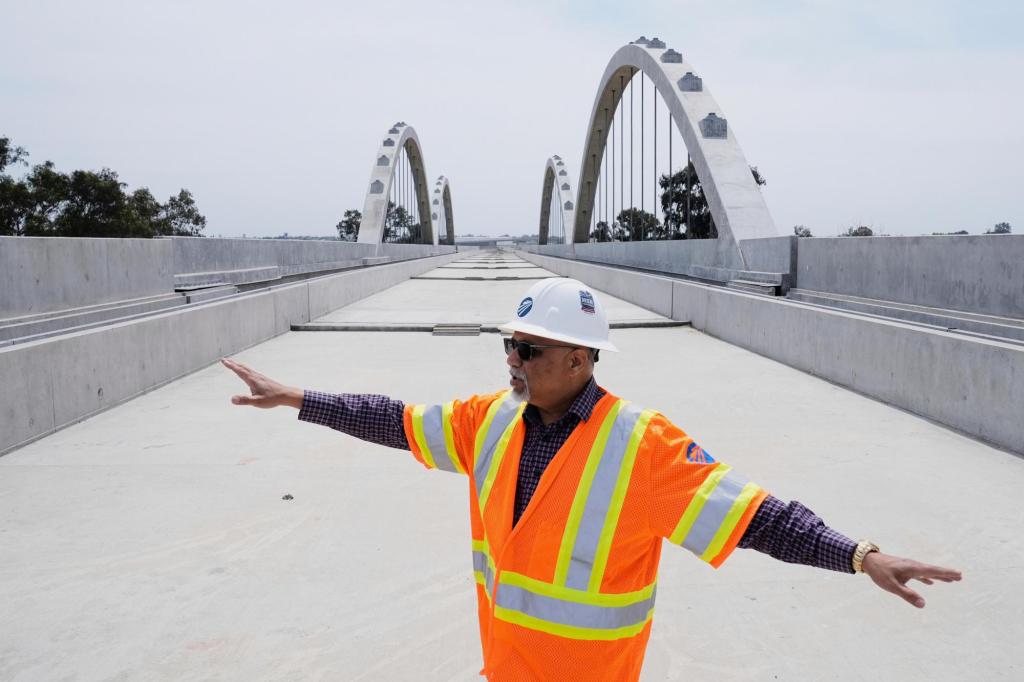
California’s High-Speed Rail: Challenges and Financial Hurdles Ahead
California’s ambitious high-speed rail project aims to revolutionize transportation in the state. The 2026 Draft Business Plan for high-speed rail presents a more grounded approach than previous iterations. However, significant challenges remain unresolved. Critically, the High-Speed Rail Authority may need to revisit the voters for a new ballot measure to effectively navigate the complexities of the current Proposition 1A framework.
Timeline for Completion
The plan outlines a timeline that targets the completion of the Merced-to-Bakersfield segment by 2032, with the expectation that passenger services could commence by 2033. However, this schedule is heavily conditional, hinging on “additional time for optimization and pending policy changes.” The primary concern lies in the financial viability of the project. The Authority’s forecasts indicate that it cannot meet these deadlines without securing funds from the state’s cap-and-invest greenhouse gas reduction program.
Funding and Financial Viability
To address immediate financial needs, the proposal envisions borrowing approximately $8.6 billion against future revenues. However, as highlighted by the Legislative Analyst’s Office (LAO), such borrowing could lead to an additional $4 billion in costs, resulting in a projected shortfall of around $2 billion just for the Merced-to-Bakersfield segment. The financial roadmap is further complicated by the challenges involved in securing reliable funding from the cap-and-invest program.
Obstacles in the Financing Structure
At a recent oversight hearing led by the Assembly Transportation Committee, persistent issues with financing surfaced. The California Air Resources Board (CARB) can tweak the cap-and-invest system, potentially leading to reduced revenues for the high-speed rail initiative. Moreover, auction revenues have demonstrated volatility, particularly during periods such as the COVID-19 pandemic, where undersubscription resulted in revenue drops. These uncertainties could elevate borrowing costs beyond the estimated 4.3 percent that the Authority currently assumes.
Notably, last year’s legislation aimed at securing the $1 billion annual cap-and-invest funding did not include important protective language that would reassure bondholders. Without this non-impairment clause, there is a significant risk that investors may hesitate to finance the project.
Compliance with Proposition 1A Requirements
The 2026 Business Plan also navigates around two crucial requirements established by voters in Proposition 1A in 2008. The first is the mandate concerning travel times, which stipulates that non-stop service from San Francisco to Los Angeles must be completed in under two hours and forty minutes. Currently, the high-speed rail operates within a blended system, sharing tracks with existing commuter services that limit speed to 110 mph. The latest plan exacerbates these frustrations by suggesting a route on the Metrolink’s existing Antelope Valley Line instead of the initially proposed dedicated tunnel.
No-Subsidy Requirement
Secondly, the plan overlooks the no-subsidy requirement of Proposition 1A, which mandates that the system should not rely on operational subsidies. Projections indicate that the Merced-to-Bakersfield corridor would only recoup 35 to 49 percent of its operating costs through ticket sales and ancillary revenue, indicating a likely need for subsidies to cover shortfalls.
Looking Ahead: Future Financial Needs
Beyond the Merced-to-Bakersfield segment, the projected cost for completing the entire Phase 1 system—which includes routes from San Francisco to Los Angeles and Anaheim—stands at $126.2 billion. After accounting for the $34.8 billion source from cap-and-invest funding, the remaining balance is over $91 billion. At this juncture, credible funding sources for this substantial shortfall are absent, and the likelihood of the private sector assuming revenue or ridership risk without state guarantees remains low.
Conclusion: A Call for Voter Engagement
The realistic approach lies in reconsidering the funding mechanism. It may be prudent to return to voters for additional bond issuance, possibly around $100 billion, alongside amendments to Proposition 1A that could eliminate the stringent travel time and no-subsidy stipulations. This open dialogue with the electorate would empower them to make informed decisions about the future of California’s ambitious high-speed rail project.
For comprehensive details, refer to the 2026 Draft Business Plan for high-speed rail and insights from the Legislative Analyst’s Office (LAO) on the financial implications of the project.
