

Bay Area’s Unprecedented Heat Wave: The Transition from Winter to Spring
As dawn breaks on Friday, March 17, at 7:46 a.m., the Bay Area welcomes spring amid an intense heat wave. This remarkable transition from winter to summer-like temperatures is expected to captivate residents, with forecasts indicating highs that could set new records.
Record-Breaking Temperatures This Week
Throughout the week, the region has experienced a meteorological phenomenon, witnessing over 30 daily high-temperature records. Salinas has distinguished itself by breaking its all-time March record not once, but twice in just two days. Meanwhile, Redwood City has consistently shattered its daily records, and Napa recently toppled a longstanding record that has stood since 1914.
On Thursday, however, the Bay Area exhibited its classic microclimate behavior. A shallow marine layer cooled certain areas, particularly San Francisco, until it eventually cleared. Once the fog lifted, temperatures surged, reaching an impressive 86 degrees—surpassing the previous record set in 2010.
Forecast: A Warm Spring Day Ahead
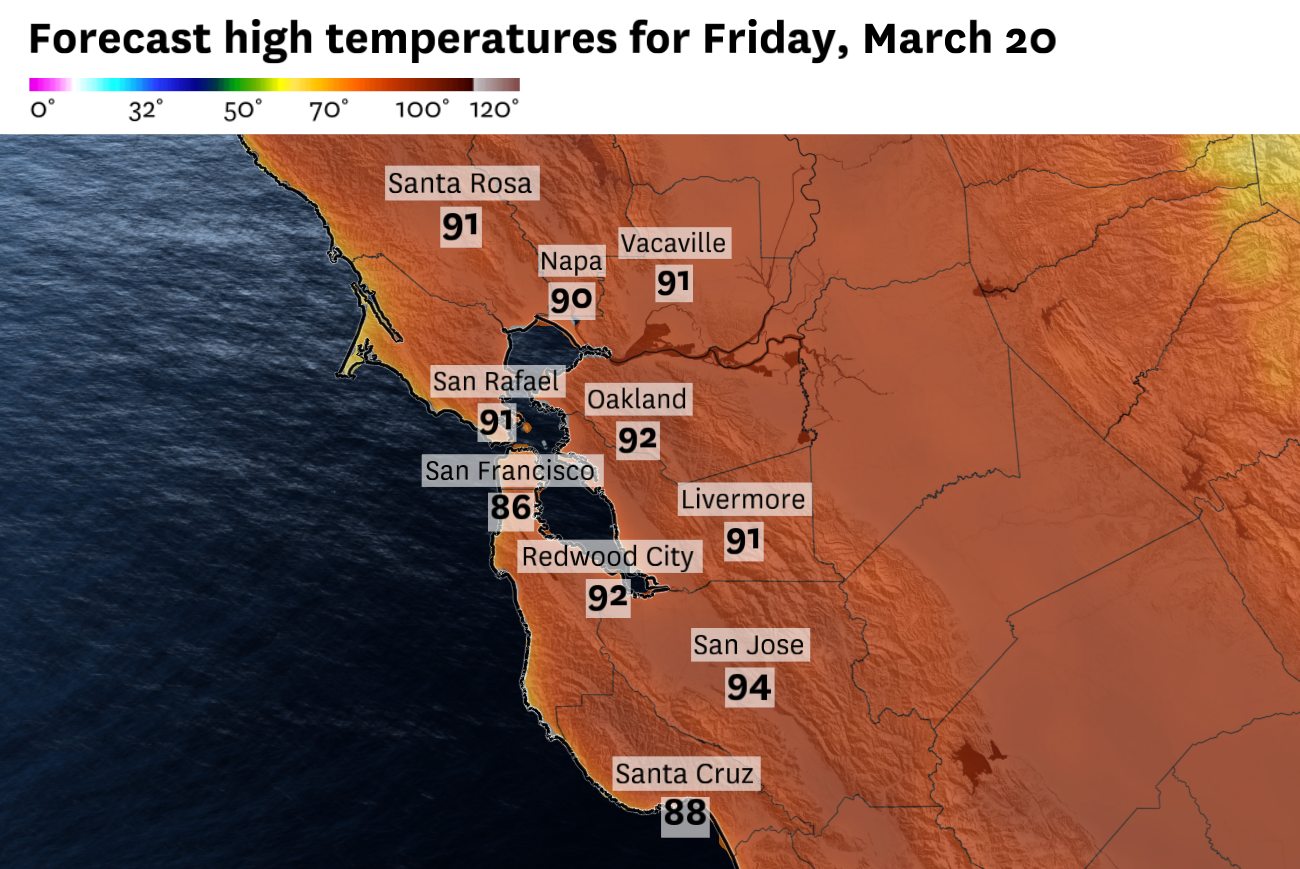
This Friday promises a different experience. Early morning offshore winds will help dry out the atmosphere, aligned perfectly with the arrival of spring. Enhanced conditions—a combination of dry air, strong upper-level winds, and plenty of sunshine—will result in exceptionally warm temperatures across the region. Inland locations like Walnut Creek and Concord are forecast to soar into the mid-90s. Even San Francisco could reach 86 degrees, tying its monthly temperature record.
The Weekend: A Cool Down on the Horizon
As temperatures peak, the cooling trend will commence. The high-pressure system that has enveloped the area is set to shift eastward Friday night, allowing a cold front to approach. This transition will bring relief from the heat, with temperatures expected to decrease by 10 to 15 degrees. By Sunday, you might enjoy even cooler conditions—5 degrees lower as the cool air settles in.
Nevertheless, even with the anticipated reset, it is crucial to note that temperatures will still remain well above normal for this time of year. The heat wave has significantly raised the baseline for what is typical in late March.
Weekend Breakdown: What to Expect in Various Regions
San Francisco
- Friday: Expect highs in the upper 80s, potentially tying the monthly record. The morning offshore flow will clear out humidity, producing a wonderfully warm day.
- Saturday: A cool front will bring clouds and moderate temperatures, setting highs between 65 to 75 degrees.
- Sunday: Conditions will feel fresh, with temperatures ranging from the lower 60s to mid-70s.
North Bay
- Friday: Valleys will see highs in the lower 80s to mid-90s, especially in regions like Santa Rosa and Napa.
- Saturday: Temperatures slide into the 70s to 80s with partly cloudy skies.
- Sunday: A comfortable finish with expected highs in the lower 70s to mid-80s.
East Bay
- Friday: The heat continues with highs in the upper 80s to lower 90s, particularly in places like Concord and Walnut Creek.
- Saturday: Cool breezes will bring temperatures back down to the 70s and lower 80s.
- Sunday: Bright skies but cooler conditions, ranging through the 60s and 70s.
Pacific Coast
- Friday: Warm conditions are likely, pushing highs near 80 degrees.
- Saturday: Cloudy and cooler while temperatures retract into the 60s.
- Sunday: Further cooling, with expected highs in the mid-60s.
Peninsula
- Friday: Temperatures will rise to the mid-80s to lower 90s, especially inland.
- Saturday: Transition to partial sun with highs in the 70s.
- Sunday: A sunny day with temperatures in the upper 60s to lower 70s.
South Bay
- Friday: The region will experience its warmest day, with highs in the low to mid-90s.
- Saturday: A cooldown occurs more gradually, with expected highs in the lower 80s.
- Sunday: Comfortable temperatures in the 70s.
Conclusion
As the Bay Area navigates this unusual spring transition, residents can anticipate a dynamic weather weekend. Stay informed about these changes to ensure a safe and enjoyable experience, especially as temperatures fluctuate.
For additional updates and weather alerts, keep an eye on reliable local resources and forecasts.
