

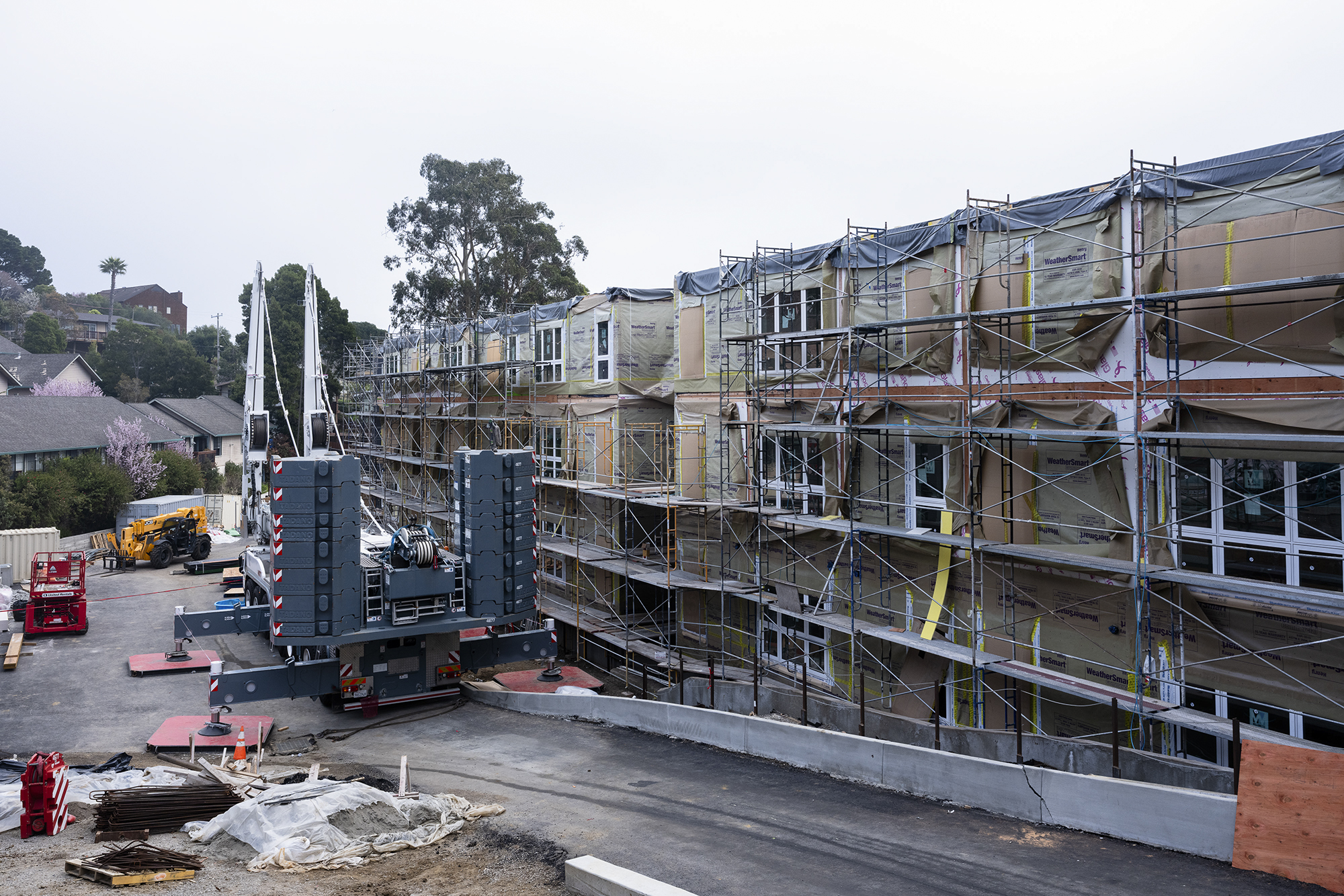
California Considers Bold Move to Address Housing Crisis with Factory-Built Homes
In an innovative approach to combat the persistent housing shortage in California, state lawmakers are contemplating an unprecedented venture into the construction insurance sector. This initiative aims to encourage developers to adopt cost-effective strategies, particularly through factory-built housing.
The Push for Factory-Built Housing
Assemblymember Buffy Wicks, alongside a bipartisan group of legislators, recently unveiled a comprehensive package of bills designed to promote development efficiencies. The emphasis is on factory-based construction, a method that has the potential to expedite building processes, enhance worker safety, and ultimately lower housing costs.
Despite the promising benefits of factory-built housing, such as faster construction times and reduced expenses, widespread acceptance has been elusive. Advocates attribute this to regulatory and financial challenges that hinder large-scale production.
Legislative Innovations
The new legislative package seeks to overcome these obstacles. Most proposals aim to streamline existing regulations; however, one notable bill, Assembly Bill 2166, takes a different approach. Authored by Wicks and fellow Assemblymember Juan Carrillo, this bill proposes that the state provide a form of insurance guarantee for developers and lenders involved in factory-built projects. This support is intended to mitigate financial risks associated with these endeavors.
Tyler Pullen, a researcher from the Terner Center for Housing Innovation at UC Berkeley, calls this initiative a significant departure from previous efforts to reduce housing costs in California. He notes that while the bill is complex, it reflects a common theme in discussions with industry stakeholders regarding the need for financial assurance in factory-built housing.
Breaking the Construction Doom Loop
The construction industry is fraught with financial risks. Developers often face cash flow shortages, escalating costs, and lawsuits. One tool commonly used to manage these risks is a surety bond, which ensures that if a subcontractor fails to deliver, the insurer will cover the costs.
However, many factory-built housing projects struggle to secure such bonds. This creates a “doom loop” where hesitant developers require insurance for factories, yet factories cannot obtain it due to a lack of proven track records. This cycle ultimately leads to project failures and business closures.
The State’s Role in Insurance
The proposed legislation aims to transform the insurance landscape for factory-built homes. By allowing the state to act as a re-insurer, project risks can be significantly mitigated. If a project fails and a bond is needed, the state will cover part of the payout under certain conditions. This could encourage insurance companies to offer more coverage, helping developers feel more secure in partnering with factories.
The ultimate goal is to increase production efficiency, reduce costs, and fulfill the long-standing promise of affordable housing through mass production.
Similar Initiatives and Innovative Solutions
California’s proposed approach draws parallels to federal initiatives, such as those by the U.S. Department of Veterans Affairs and Fannie Mae, which guarantee loans to enhance lending accessibility for homebuyers. There are also existing state-level programs that support construction, though none specifically address the housing sector on this scale.
Experts in the field, such as Jan Lindenthal-Cox from the San Francisco Housing Accelerator Fund, view the bill as a groundbreaking step essential for scaling the factory-built housing industry.
Potential Criticisms and Alternatives
Despite its potential, some industry advocates express skepticism. For instance, Ryan Cassidy of Mutual Housing California argues that the bill primarily incentivizes less experienced developers, rather than addressing the needs of established manufacturers. He suggests that providing direct financial support might be more effective than the proposed insurance model.
Similarly, other successful companies like Autovol rarely face bonding issues due to their financial stability. They believe a direct investment in factory-built projects might yield better results than relying solely on surety bonds.
Looking Ahead
As legislators prepare to discuss this innovative insurance proposal, questions about its fiscal implications remain. The bill is set for its first committee hearing soon, and its future hinges on whether lawmakers are willing to back this pioneering insurance model for the housing construction industry.
The underlying premise is that while state involvement may be necessary currently, the ultimate aim is a self-sustaining market where private insurers can step in as the factory-built housing sector gains a solid reputation.
For more insights on California’s housing crisis and the evolution of factory-built homes, explore additional resources here.
