

Advancing Career Opportunities Through College Credit for Work Experience
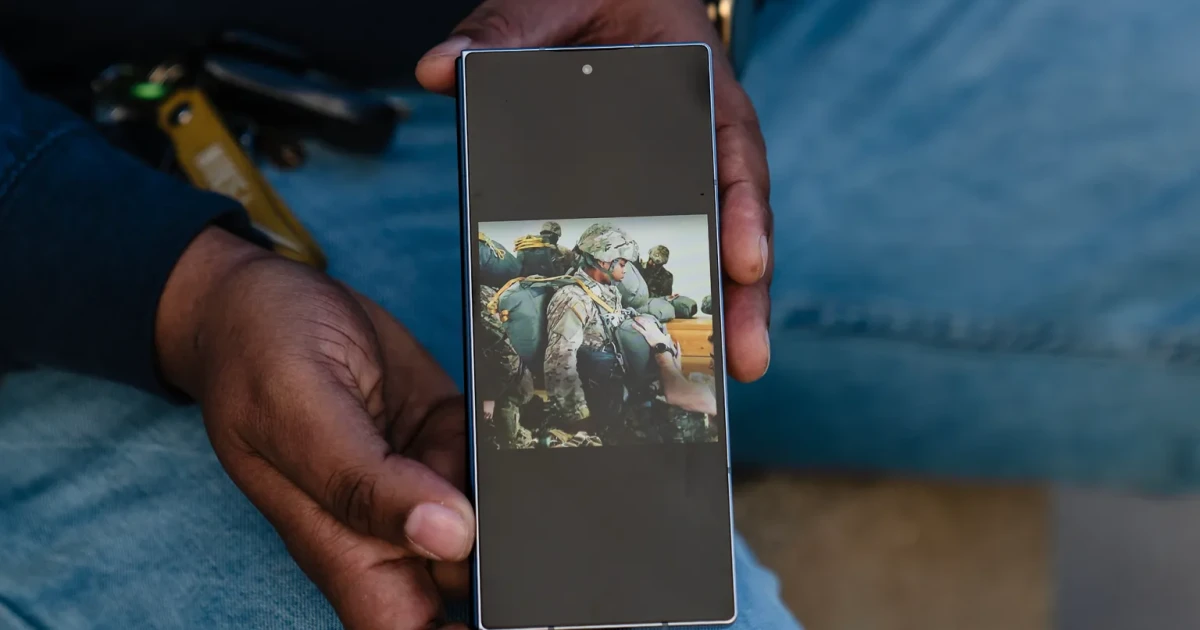
In the ever-evolving landscape of higher education, community colleges in California are increasingly recognizing the value of life experience, particularly for individuals like Laylah Rivers. At 31, Rivers transitioned from a successful career as a paratrooper in the U.S. Army and experience in tech to enroll as a freshman at West Los Angeles College. Despite being surrounded by students much younger than herself, Rivers’s journey is emblematic of a growing trend: the accreditation of prior learning experiences.
California’s Initiative to Credit Prior Learning
Since 2017, California’s community colleges have been implementing programs that grant college credit for prior work experience and military training. Riverside’s West Los Angeles College awarded Rivers seven credits – equivalent to roughly two classes – after she submitted her military transcript and proof of computer courses she had taken during her tenure at Amazon. “With 13 years of experience, I believe I should receive more credit,” Rivers expressed, “but I am truly grateful.”
With over $34 million allocated by Governor Gavin Newsom toward these initiatives in recent years, California aims for at least 250,000 students to earn credit from previous work experience by 2030. Newsom further proposed an additional $37 million to sustain this growth.
While the California Community Colleges Chancellor’s Office maintains a public dashboard showing that over 40,000 students have received college credits for work experience, officials estimate the actual number to be around 80,000, emphasizing the pressing need for standardized tracking systems across institutions.
Bridging Education Gaps for Veterans and Working Adults
Historically, veterans like Rivers have been the primary beneficiaries of these credits, but students from diverse backgrounds can also qualify by substantiating their skills with certifications or examinations. For instance, Cabrillo College offers credits for knowledge in French, Italian, or Spanish wines, proving the diverse application of this initiative.
Earning just a few credits can significantly reduce educational costs—potentially saving students upwards of $14,000. Research indicates that these participants are also more likely to graduate.
For Rivers, her education and living costs are supported through the GI Bill. Given that these benefits have a time limit, each class she can skip not only saves her financial resources but also accelerates her educational journey.
The Tech Industry’s Evolving Landscape
Despite not holding a college degree, Rivers thrived in the tech sector, earning over $70,000 annually. However, as the California tech industry begins to relax degree requirements for certain positions, studies show employers still favor candidates with formal education. Rivers noted the complexities faced as a Black woman in a predominantly white field, saying, “Even with years of experience, they often change the criteria for entry.”
Upon completing her degree at West Los Angeles College, Rivers aims to transfer to a four-year institution to ultimately pursue a management position in tech. However, the idea of receiving credit for her prior work experience didn’t occur to her until months into her enrollment. “The process should be integrated into registration,” she suggested, reflecting on the challenges of navigating this new landscape.
Implementing Transparency and Accessibility
Starting in the fall of 2026, West Los Angeles College made it mandatory for transfer-oriented students to learn about credit for prior work experience through counseling sessions or orientation. Allison Tom-Miura, the dean of academic affairs at the college, emphasized, “This is a crucial equity issue; we must prevent students from redundantly taking classes.”
Legislation passed in 2018 mandated that all colleges adopt policies for awarding credits for prior learning, yet many faced hurdles in implementation due to inadequate funding and resources. Today, students still need to provide evidence of their experience for assessment.
The Push for a Unified System
Efforts are ongoing to establish a cohesive tracking system that will simplify the process for students seeking credit for prior learning. Discussions involving state officials and college leaders aim to create a more unified approach.
In a recent conference, Samuel Lee, a senior adviser to the community college chancellor, advocated for greater collaboration among colleges throughout the state to streamline how credit for prior work experience is logged. Currently, participation rates in this effort vary significantly among California’s 116 community colleges.
Legislative actions have been taken to ensure funding is available for colleges looking to enhance their systems for tracking credits, but the goal remains to create an efficient and transparent process for students.
Conclusion
As California’s community colleges continue to innovate by recognizing prior learning experiences, aspiring students are afforded opportunities to fast-track their education and career advancement. By facilitating easier access to academic credits for prior work, the state is not only democratizing higher education but also nurturing a more skilled workforce for the future.
For further reading on earning credits through prior learning, visit the California Community Colleges Chancellor’s Office for detailed information and resources.
