

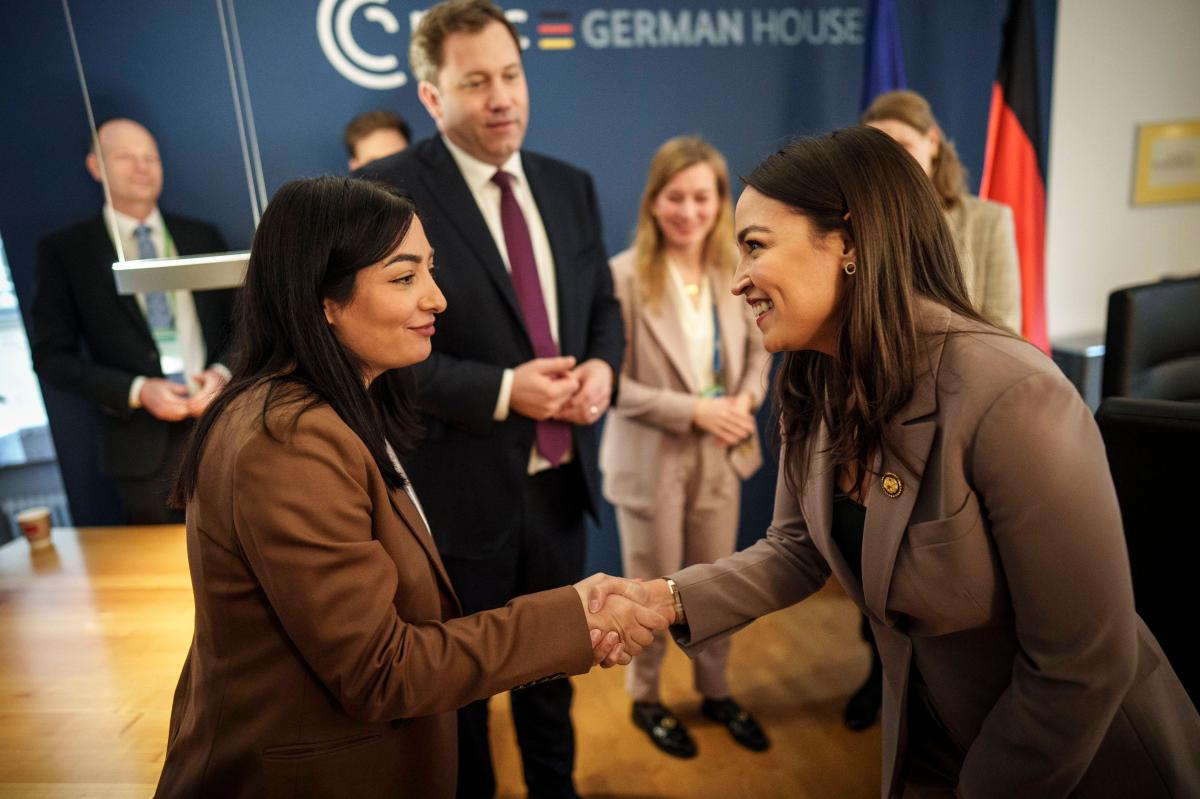
AOC’s Controversial Claims in Munich: A Reflection on Antisemitism
Alexandria Ocasio-Cortez (AOC) has recently stirred controversy with her remarks in Germany, where she accused Israel of genocide—a claim that has been criticized for its potential to fuel antisemitism. While she acknowledges her lack of expertise on Middle Eastern affairs, her statements raised eyebrows, especially against the backdrop of Munich’s historical significance.
Revisiting Munich: A City with a Heavy Legacy
Earlier this month, Munich served as the backdrop for a pivotal dialogue focused on the future of the Abraham Accords, the landmark agreement aimed at fostering peace between Israel and several Arab states. This occurred amidst recent threats to local Jewish communities, including a troubling incident involving live ammunition being sent to the Ohel Jakob Synagogue.
The legacy of the Holocaust and the 1972 murder of 11 Israeli athletes at the Munich Olympics remains palpable in this city. These memories serve as a stark reminder of the dangers of hatred and violence.
AOC at the Munich Conference: An Opportunity Missed
During her appearance at the Munich Security Conference, AOC aimed to connect with left-leaning Europeans seeking hope amid the geopolitical upheaval caused by former President Donald Trump. However, her remarks—which echoed Hamas-promoted narratives—received significant backlash. Critiques argue that her statements not only reflect historical illiteracy but also perpetuate dangerous antisemitic tropes.
The Broader Impact of Divisive Rhetoric
AOC’s choice to issue such controversial claims in Germany, a nation grappling with its dark history, raised questions about her political motivations. Many wonder who she was attempting to connect with and what her statements may mean for her domestic support. Her rhetoric has already begun to resonate, leading to increased discussions of antisemitism within U.S. media, schools, and popular culture.
The Rise of Anti-Israel Sentiments
With her remarks, AOC may inadvertently inspire anti-Israel campaigns, providing negative reinforcement to those advocating for similar ideologies. Recent rallies have demonstrated a growing vocal anti-Israel movement, underscoring the potential ramifications of such statements.
An Overlooked Perspective: Protests Against Oppression
While AOC focused on Israel, significant protests took place in Munich against the Iranian regime, highlighting human rights abuses and calls for freedom. These protests—joining similar movements in cities like London and New York—sought to shed light on the plight of countless individuals suffering under oppressive regimes. AOC’s silence on these issues raises concerns about her true priorities.
Every Voice Matters
As discussions about global injustices continue, voices must advocate for all those oppressed, whether in China or the Middle East. AOC’s actions in Munich could have been a platform for showing solidarity with myriad victims of human rights violations.
Conclusion
The implications of Alexandria Ocasio-Cortez’s remarks in Munich will resonate both historically and politically. As the discourse surrounding Israel intensifies, it is vital to confront antisemitism while fostering a more nuanced understanding of global issues. Constructive dialogue must be rooted in historical accuracy and empathy for those facing oppression worldwide.
For further insights on the impact of rhetoric in politics, explore articles on antisemitism and human rights to expand your understanding of these critical issues.
