The word “affordability” has become the Democratic Party’s favorite economic incantation—repeated so often that politicians seem to think utterance alone solves the problem. New York City’s Zohran Mamdani popularized the term with enough articulacy to distract voters from its fundamental vagueness. Senator Elizabeth Warren strings it together with the same casual confidence she’d apply to “achievability”—an agenda so meaningless it could justify any government program imaginable.
But here’s the uncomfortable truth: affordability detached from economic reality is nothing more than political theater.
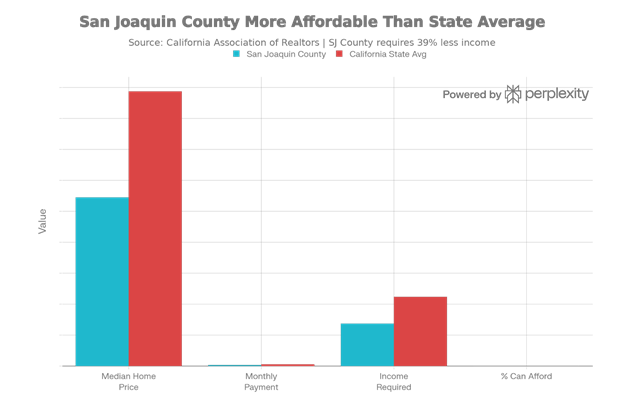
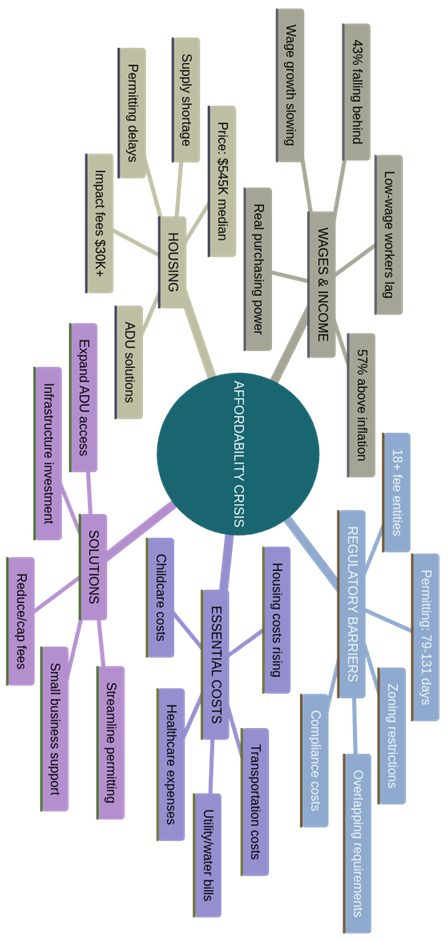
For working families in San Joaquin County, the affordability crisis is painfully real. The median home now costs $545,000—requiring an annual income of $137,200 to purchase. Only 25 percent of county households can afford that median-priced home. Young teachers, nurses, construction workers, and small business owners are being priced out of homeownership. Rent consumes larger and larger portions of paychecks. A family emergency becomes a catastrophe. This is not an abstraction.
But the solutions being offered by certain politicians who invoke “affordability” are either worthless or actively counterproductive.
The Problem Isn’t That Prices Are Too High—It’s That Supply Is Too Low
Democrats operate from an unstated assumption: government knows the “correct” price for housing, healthcare, utilities, and childcare. Prices that exceed this theoretical ideal are evidence of greed, corporate malfeasance, or market failure. The solution, naturally, is government intervention to bring prices down.
This gets the problem backwards.
When prices rise faster than wages, it signals scarcity—not evil. Housing prices have soared not because developers are greedy, but because we haven’t built enough homes. Regulatory barriers, permitting delays, and excessive fees make housing construction prohibitively expensive. In California, the average impact fee alone is nearly $30,000 per home. These costs don’t disappear—they get passed to buyers and renters.
Energy prices spike when policies restrict supply. Childcare remains expensive because regulations limit provider capacity and drive up labor costs. Healthcare costs spiral partly due to regulatory complexity that only large corporations can navigate.
The affordability crisis is fundamentally a supply crisis, not a price crisis.
What Actually Works: California’s ADU Lesson
Evidence exists that supply-side solutions work. California’s accessory dwelling unit (ADU) reforms, championed by YIMBY housing advocates, have produced over 65,000 new affordable homes statewide. These reforms streamlined permitting, removed unnecessary restrictions, and clarified rules for homeowners building small units on their properties.
The impact: working families can now add income by renting out ADUs, young families can find more affordable housing options, and communities increase density near existing infrastructure and jobs.
This isn’t magic. It’s basic economics: remove barriers, increase supply, improve affordability.
And it works without rent control, which discourages construction and reduces supply further. It works without massive public housing programs that require years to build and permanent government subsidies. It works through practical, local action that leverages private capital and homeowner initiative.
The 2026 California ADU reforms strengthen this approach. New laws will:
- Cap or eliminate impact fees on ADUs under 750 square feet
- Streamline permitting to 60 days or automatic approval
- Remove outdated owner-occupancy restrictions
- Clarify standards to reduce fragmentation among local agencies
What San Joaquin County Can Do Right Now
County government has real tools to improve affordability. We don’t need to wait for Washington or Sacramento:
Accelerate ADU Permitting and Reduce Fees
Speed up approvals for accessory dwelling units by adopting state ADU standards fully and eliminating duplicate fee structures. When homeowners can add affordable rental units within months, not years, housing supply increases and young families have options. Our audit must identify which of our 18+ fee-charging entities have overlapping or redundant requirements and consolidate them.
Reduce Unnecessary Regulatory Burden
Smart regulation protects safety and quality. Unnecessary regulation just drives up costs. We need a comprehensive audit of permitting and fee structures to identify what’s adding time and cost without improving outcomes. If it doesn’t serve safety, environmental protection, or genuine community benefit, it should go. Every month of permitting delay costs developers money that gets passed to buyers.
Partner on Workforce Housing Near Jobs
The county can work with cities and housing nonprofits to identify sites for workforce housing near employment centers—teachers’ housing near schools, nurses’ housing near hospitals, construction workers’ housing near job hubs. This isn’t about centrally planned housing; it’s about removing zoning obstacles and using county land levers to enable developers to build what the market demands.
Stabilize Water and Utility Costs Through Infrastructure Investment
Water affordability connects directly to system reliability and repair. We need to invest in maintaining and upgrading infrastructure before emergencies force expensive emergency repairs. We should aggressively pursue grant funding so ratepayers don’t shoulder the full burden of regional water solutions. Predictable utility costs keep small businesses operational and family budgets stable.
Cut Fees for Small Business Startups and Growth
Small businesses struggling with rising rent, wages, and utilities need relief, not additional government programs. We can reduce or eliminate permitting fees for new businesses, streamline licensing requirements, and partner with community colleges on affordable mentorship programs. A business should compete on service and quality, not on its ability to afford compliance costs.
The Wage Growth Picture: Not Everyone Is Keeping Up
Recent data show wages since the start of the Trump Administration growing faster than inflation nationally—a positive development. But here’s what the headlines miss: the gains are concentrated among higher earners. Lower-wage workers saw wage growth slow from 7.5 percent in 2022 to 3.5 percent today. Meanwhile, inflation at 2.7 percent means low-wage workers are barely treading water.
This is why supply-side solutions matter more than wage mandates. Low-wage workers benefit most from increased supply and lower prices for housing, childcare, utilities, and food. A teacher’s paycheck stretches further when housing is abundant and permitting is fast. A construction worker can support a family if childcare slots exist and utility costs are predictable.
Government can’t solve this by raising minimum wages (which employers offset by cutting hours or automating) or by price controls (which backfire by reducing supply). Government can solve it by removing barriers that make essential goods and services unnecessarily expensive.
Measurable Goals, Not Slogans
When we talk about affordability, we mean specific, measurable outcomes:
- Housing: Reduce average permitting time for workforce housing to 90 days; enable 200+ ADUs within 18 months through streamlined review.
- Small Business: Cut average startup compliance costs by 25 percent; deliver targeted microgrants to 50 new small businesses in underserved areas.
- Water: Invest in infrastructure to reduce emergency repair costs by 30 percent over five years; pursue $X in grant funding to stabilize rate increases.
- Utilities: Work with municipal utilities to audit rate structures and identify $X in efficiency savings to pass through to households.
These aren’t slogans. They’re benchmarks we’ll report on quarterly, adjust when needed, and use to guide resource allocation.
Why This Matters for Young People
Young voters understand that the economy isn’t working for them—not because of some abstract “affordability crisis,” but because they can’t build a life. They can’t afford homes. Childcare costs are astronomical. Student loans loom. Starting a small business means navigating Byzantine regulations.
The Democratic response is to offer them more government programs, more subsidies, more “affordability agendas.” The Republican response is to blame immigrants or pharmaceutical executives and promise tariffs that make everything more expensive.
Neither addresses the root problem: we’ve made it unnecessarily expensive and slow to build the things people need.
Young people deserve a government that removes obstacles, not one that creates subsidies to offset the obstacles it created. They deserve permitting that takes 60 days, not 180. They deserve fees that reflect actual costs, not political fundraising. They deserve zoning rules that let neighborhoods grow and add housing for teachers and nurses, not rules that freeze housing supply to protect “character” and property values.
The Larger Principle
This isn’t a left-vs.-right issue. It’s a question of whether government sees itself as a problem-solver or a price-setter.
Price-setting governments tell markets what prices should be, then are surprised when supply collapses and availability disappears. They build rent control and watch housing supply plummet. They cap childcare provider wages and watch workers leave for other fields. They regulate healthcare pricing and watch providers leave regions with strict controls.
Problem-solving governments remove obstacles, clarify rules, and let supply adjust to demand. They trust markets more than mandates.
San Joaquin County can be a problem-solving government. We have the tools: permitting authority, fee authority, land-use authority, procurement authority. We can model what pragmatic, supply-focused affordability solutions actually look like.
We won’t solve everything at the county level. Federal spending policy, Federal Reserve decisions, and state building standards all matter. But we can act on what we control. We can make our permitting faster, our fees lower, our regulations smarter. We can be the county where young families can actually afford to live and where small businesses can actually afford to operate.
That’s the affordability agenda San Joaquin County needs: not slogans, not subsidies, not price controls—but the hard work of removing barriers so supply can meet demand and families can afford the lives they’re building.