

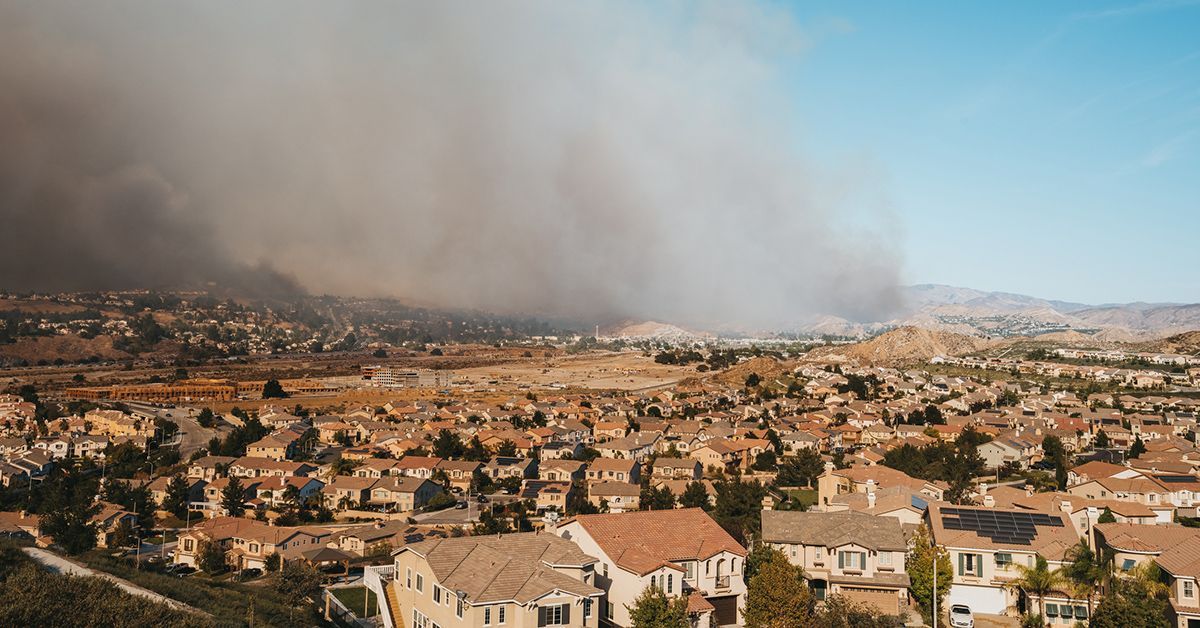
Wildfire Smoke in California: A Growing Public Health Concern
Californians have historically weathered wildfire smoke as a seasonal norm, yet recent trends indicate that these fires are occurring with greater intensity and frequency, transforming wildfire smoke into a significant public health issue. A groundbreaking study from UC San Diego’s Scripps Institution of Oceanography reveals that the intervals between multi-day smoke events are diminishing, limiting communities’ recovery time before smoke returns.
The Shrinking Window of Clean Air
Published on March 11 in the journal GeoHealth, the study highlights that California has experienced a reduction of over 60% in the duration of clean air between smoke waves from 2006 to 2020. The findings suggest that the neighborhoods most affected by this decreased recovery time are among the state’s most socially and economically vulnerable populations.
Health Risks Associated with Wildfire Smoke
Research over recent years has increasingly connected wildfire smoke exposure to serious health issues such as respiratory illness, cardiovascular disease, and premature death. A 2025 study estimated that short-term exposure to wildfire smoke is responsible for approximately 40,000 deaths annually in the United States. Notably, fine particulate matter from wildfire smoke has been found to be significantly more harmful per unit than similar particles produced by vehicles or industry.
Traditionally, research has treated each wildfire smoke event as an isolated incident, lacking comprehensive studies on the health implications of rapidly succeeding smoke events. Evidence from studies of wildland firefighters suggests that cumulative exposure over a wildfire season exacerbates airway inflammation and diminishes lung function, although the effects on the larger population remain undetermined.
Wildfires and Air Quality in California
As wildfire frequency and intensity escalate, smoke has reversed decades of improvements in air quality, now representing the leading source of fine particulate pollution in California. The cumulative impact on communities, especially those ill-equipped to adapt, raises serious public health questions, particularly as California confronts the realities of a warming climate.
“Wildfire smoke has become a chronic issue in California,” said Tarik Benmarhnia, an environmental epidemiologist at Scripps. “As we advance our understanding of these health impacts, it’s crucial we adapt our research and strategies accordingly.”
Study Findings: Analyzing Smoke Event Patterns
Benmarhnia and his research team sought to determine the rate at which Californians are experiencing diminishing intervals between smoke events and whether certain areas of the state are disproportionately affected.
Utilizing machine learning models, the researchers analyzed daily wildfire-related fine particulate pollution data across all California census tracts from 2006 to 2020. They defined a “smoke wave” as two or more consecutive days of elevated wildfire smoke and calculated the recovery periods by tallying days between successive waves.
Trends Over Time
The analysis revealed a dramatic increase in smoke wave frequency—approximately 85%—alongside a decline in average recovery periods by over 60% between the years 2006-2010 and 2016-2020.
The geographic patterns of these changes were striking. Northern California consistently displayed the highest smoke exposure levels throughout the study, yet it did not experience shorter recovery times. In contrast, Southern California and the Central Valley faced significant reductions in recovery periods.
Socioeconomic Disparities
The study uncovered troubling socioeconomic disparities: census tracts experiencing the most significant reductions in recovery time also had higher concentrations of Black, Hispanic, Asian, and other racial minority residents, as well as lower-income households and single female-headed households. Factors contributing to these patterns primarily stemmed from the demographics and geographies of the affected regions.
Implications for Public Health Policy
While the study establishes a clear link between shortened recovery times and vulnerable populations, the precise health impacts remain to be fully understood. Previous research on cumulative exposure’s effects underscores the urgency for further investigation in this area.
The socioeconomic factors identified may also impact these communities’ capacity to adapt, with barriers such as inadequate housing, limited healthcare access, outdoor occupational exposures, and fewer financial resources affecting their ability to obtain air filtration systems or temporarily relocate during smoke events.
Rethinking Air Quality Alerts
If future studies affirm that cumulative exposure with diminished recovery time leads to serious health, social, or economic consequences, existing public health policies—like air quality alerts—may need reevaluation. Current alerts are standardized without regard for previous smoke wave timings.
“The thresholds defining harmful exposure might require adjustments to reflect this temporal aspect that can compound risks,” noted Benmarhnia. “Understanding compounded risks, especially with other climate-related impacts like extreme heat, is crucial for future climate policy.”
Expanding the Focus
Researchers are currently engaged in follow-up studies examining how varying recovery times between wildfire smoke exposures relate to health outcomes. Although this study focuses on California, its findings resonate in other regions prone to wildfires, such as parts of Canada and Australia.
Understanding the interplay between wildfire smoke and health is essential for creating effective public health strategies that will protect vulnerable communities in a changing climate.
