

From Rural Roots to UCLA: The Journey of Community College Transfers
Introduction
Transitioning from community college to a prestigious institution like the University of California, Los Angeles (UCLA) can be an unexpected journey, especially for students from smaller schools. This article explores the inspiring stories of students like Red Darby and their experiences moving from regional community colleges to UCLA, shedding light on the challenges and opportunities involved.
A Leap of Faith: Red Darby’s Journey
Red Darby never anticipated gaining admission to UCLA as a transfer student from Columbia College, a small community college located in Northern California, far from the bustling cities of New York or Chicago. Nestled in the Sierra Nevada Mountains, roughly 45 miles from Yosemite National Park, Columbia College serves as a launching pad for many students aiming for prestigious universities.
Darby decided to take the plunge and apply to UCLA after encouragement from friends and academic advisors. Their reaction upon receiving the acceptance letter was one of sheer disbelief. “A small-town person getting into here, what? Unheard of,” said Darby, a third-year sociology student at UCLA.
Community College’s Limited Resources
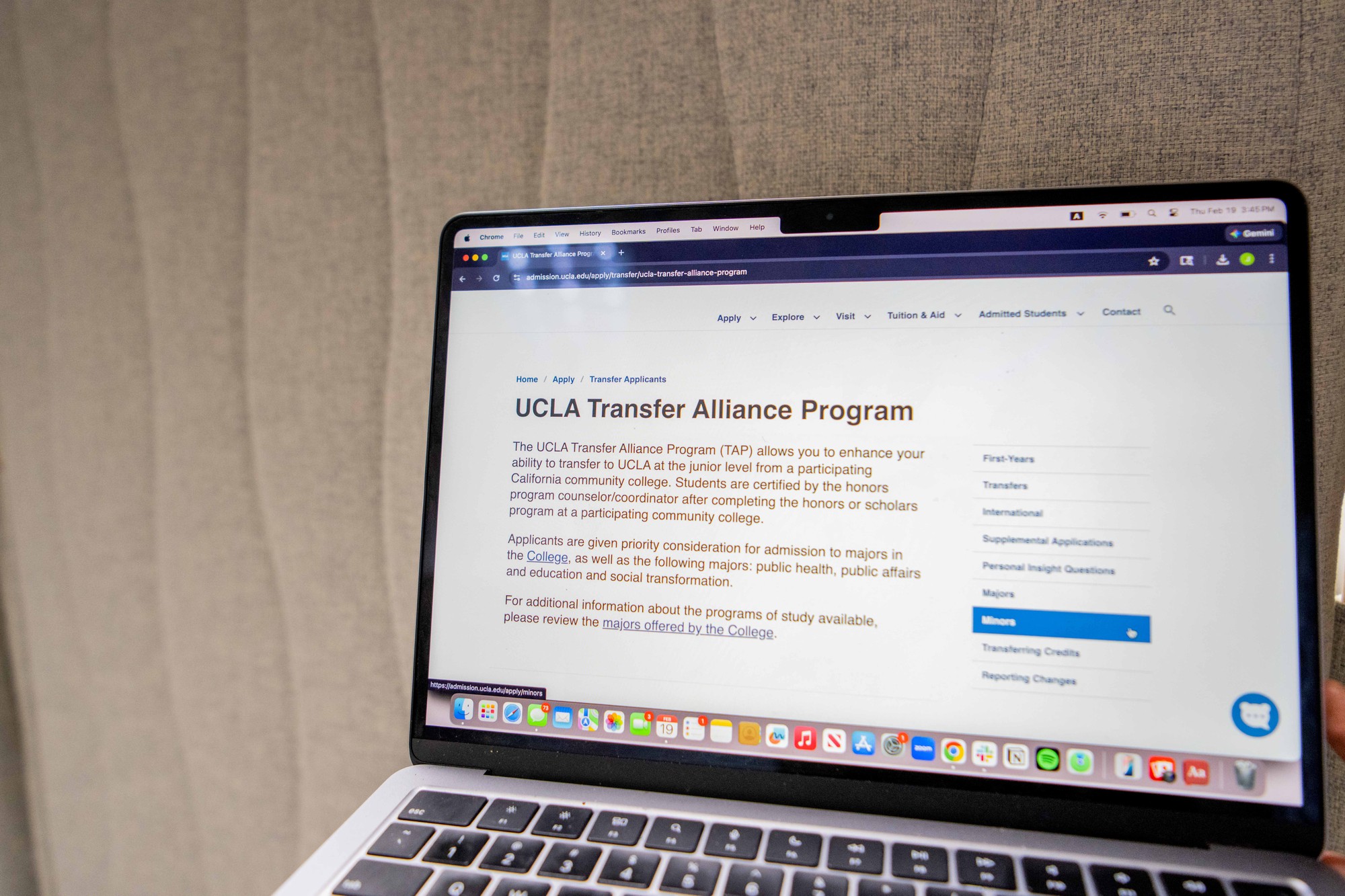
While Darby found a supportive community at Columbia College, they faced challenges due to the lack of access to UCLA’s Transfer Alliance Program (TAP). This program consists of honors courses and specialized academic support aimed at easing the transfer process for community college students. Notably, colleges with TAP programs have significantly higher UCLA transfer admission rates, often exceeding 70% for TAP students.
Only about half of California’s community colleges offer TAP, leaving many smaller, rural colleges without this added support. At Columbia College, only two students were admitted as transfer students to UCLA for the fall 2025 term, according to admissions statistics.
Transfer Student Demographics at UCLA
In the 2024-2025 academic year, transfer students accounted for approximately 37% of the incoming class at UCLA, marking the highest proportion among all University of California campuses. Ongoing efforts to support these students are crucial, especially in colleges without TAP programs.
Navigating the Transfer Process from Butte College
Butte College, located in California’s Central Valley, offers a different approach for prospective UCLA transfer students despite lacking the TAP program. Steve St. Cin, a transfer counselor at Butte College, emphasizes that the college hosts various resources, including application workshops, guest speaker events, and transfer days featuring representatives from around 40 universities.
With 36 students applying to transfer to UCLA for fall 2025 and boasting a 33% acceptance rate, Butte College focuses on providing personalized education. “The professors here didn’t come to publish or research; they came to teach,” St. Cin noted, highlighting the engaged academic environment offered at community colleges.
Supporting Diverse Backgrounds
Hyerim Yoon, the Undergraduate Students Association Council’s transfer student representative, has spearheaded efforts to connect prospective transfer students from diverse backgrounds, including those in rural areas. The council has reached out to all 116 California community colleges, providing information on UCLA’s opportunities like transfer leadership fairs and virtual panels to help students envision their future at UCLA.
Yoon emphasizes the importance of demonstrating that education at a renowned institution like UCLA is attainable for all students, regardless of their current circumstances.
Redefining Expectations: The Umoja Program Experience
Initially daunted by the move to Los Angeles, Darby found clarity and encouragement through the Umoja program, designed for Black students, where they built significant friendships. As part of UCLA’s McNair Research Scholars program, Darby aims to investigate how family, cultural, and community support systems influence the educational aspirations of rural community college students. “I hope they understand that they are seen and it’s all good to be from a small town,” they said.
Conclusion: The Community College Advantage
Another inspiring figure is Alexander Salazar, a psychology student who transitioned from Merced College. Serving as the student body president, he advocated for better support for Hispanic students while navigating the transfer process largely on his own. Merced College had 55 students apply to UCLA for fall 2025, with a 16% acceptance rate.
Salazar plans to pursue graduate studies and become an academic advisor, aiming to give back to the community that supported him. He remarked, “It’s a lot easier to learn about yourself in community college, and you’re going to feel really rewarded by going to the school you want to go to.”
Conclusion
The journey of transferring from a community college to UCLA is filled with challenges, but the rewards are substantial. Institutions like Columbia College and Butte College provide vital support systems despite lacking programs like TAP. By offering personalized education and community outreach, these colleges aim to empower students like Red Darby and Alexander Salazar to reach their educational goals.
For aspiring students navigating their own paths to higher education, the stories of these individuals serve as poignant reminders that achieving success is possible, no matter where you begin your journey.
For more information on community college transfer policies and programs, visit UCLA Transfer Students. Explore resources on academic support and community outreach at your local college to pave your way to prestigious universities.
