

The Phantom Duck of the Desert: A Legacy of Off-Roading in California
In the annals of off-roading history, the tale of the Phantom Duck of the Desert stands out as a testament to rebellion and camaraderie among dirt bikers in California’s expansive deserts. In 1975, this enigmatic figure, along with a group of fellow riders, defied regulations set by the Bureau of Land Management (BLM) by embarking on an unsanctioned trail ride from Barstow to Las Vegas. Their journey ignited a lasting conflict over land use and environmental conservation, reflecting broader societal debates that resonate to this day.
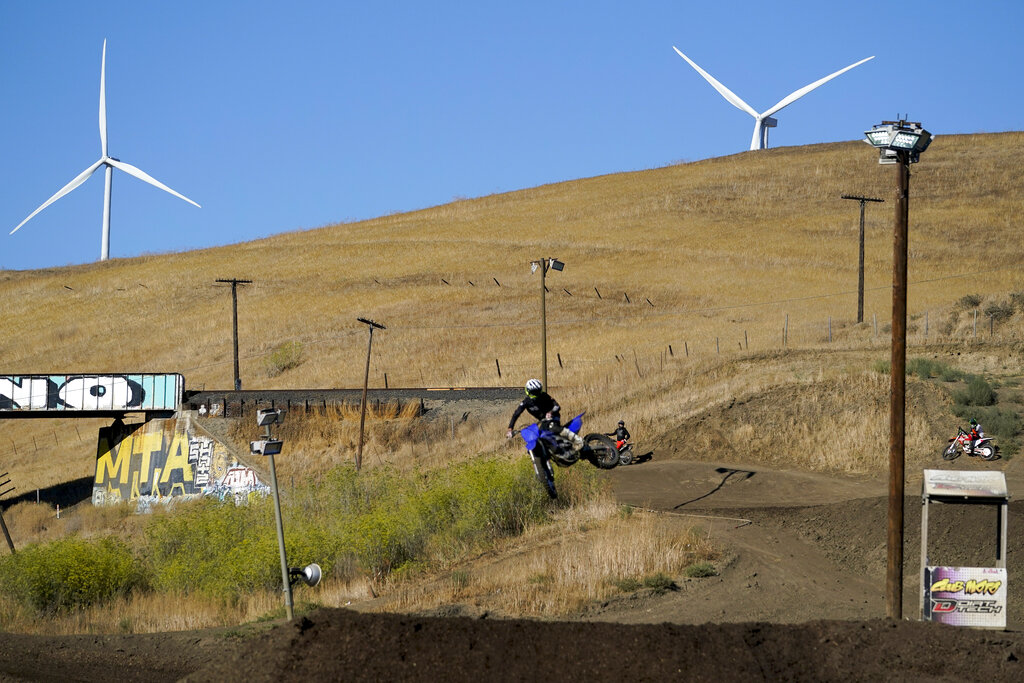
Wind turbines can be seen from a motocross track in Livermore in 2022. (Photo by Godofredo A. Vásquez/Associated Press)
The Backstory: A Clash of Interests
The roots of the Barstow-to-Vegas saga date back to the late 1960s, when this dirt bike race became synonymous with challenges involving endurance, skill, and navigation through California’s rough desert. With only two-thirds of participants finishing the race due to its grueling nature, it attracted both professional and amateur dirt bikers all over Southern California—a blend of seasoned riders and weekend enthusiasts eager to test their modified motorcycles.
However, as interest burgeoned, so did concerns about environmental degradation. By 1970, BLM officials began to recognize the severe impacts of off-road vehicles on the fragile desert ecosystems, including soil erosion and damage to the habitats of endangered species like the desert tortoise. As a result, they sought to regulate off-road recreation in partnership with the American Motorcyclist Association, but the clashes continued.
The 1975 Defiance
When the BLM denied permits for the 10th annual Barstow-to-Vegas race, the Phantom Duck—who was later identified as Louis McKey, an electrician from Fontana—and his fellow riders took matters into their own hands. On the Saturday following Thanksgiving, they rode out into the desert on an “unorganized” protest ride, symbolizing a growing rift between dirt bikers and conservationists.
Bikers argued for their right to recreational freedom, while conservationists highlighted the need to protect delicate ecosystems from the destructive impact of off-road vehicles. The staunch opposition of the bikers embraced an anti-establishment ethos, with letters to the editor in motorcycle publications expressing frustrations over perceived governmental overreach.
Escalation of Protests and Legal Battles
The protests gained traction over the years; by 1977, hundreds of bikers turned out for an unsanctioned ride, sporting plastic ducks taped to their helmets as a show of solidarity. The BLM’s legal efforts to quell these activities only fueled more dissent, demonstrating the deepening divide between off-road enthusiasts and environmental authorities.
In a notable court case, Judge Warren Ferguson ruled against the bikers’ claims to a constitutional right to ride over public lands, emphasizing that no one has the right to violate the regulations of public property. This legal defeat did not deter the bikers, as they continued their protests, drawing attention to their cause while challenging the BLM’s regulatory authority.
Shifts in Political Alignment
As the 1980s rolled in, the political landscape began to shift. The Reagan administration embraced the off-roading culture, marking a period where environmental regulations fell by the wayside. Groups like the Sahara Club emerged, channeling anti-environmental sentiments and targeting conservationists. Their rhetoric emphasized “wise use” of public lands, pivoting to celebrate corporate interests over environmental concerns—a legacy that influenced the discussion around land use deeply within California.
The Current Landscape of Off-Roading
Fast forward to today, much of the California desert is now protected, largely due to conservation efforts that were ignited by the very conflicts surrounding the Barstow-to-Vegas race. Recent judicial decisions have reinforced safeguards against off-road vehicle incursions into sensitive habitats, showcasing how advocacy for environmental protection can prevail amidst heavy opposition.
Though the Barstow-to-Vegas race has not taken place since 1989, the impacts of motorcycle use on the environment remain an ongoing conversation. As federal regulations continue to evolve, the conversation around responsible land use persists—echoing the conflicts of the past.
Conclusion: A Cautionary Tale
The story of the Phantom Duck serves as a reminder of the complexities involved in balancing recreational activities with environmental stewardship. As advocacy for wild spaces grows, the history of the Barstow-to-Vegas saga underscores the necessity for dialogue and sustainable practices in off-roading. Future generations must navigate these challenges thoughtfully, ensuring that the freedom to ride does not come at the expense of the fragile ecosystems that make California’s deserts unique.
For more information on the Bureau of Land Management and ongoing environmental regulations, visit BLM’s official site.
