

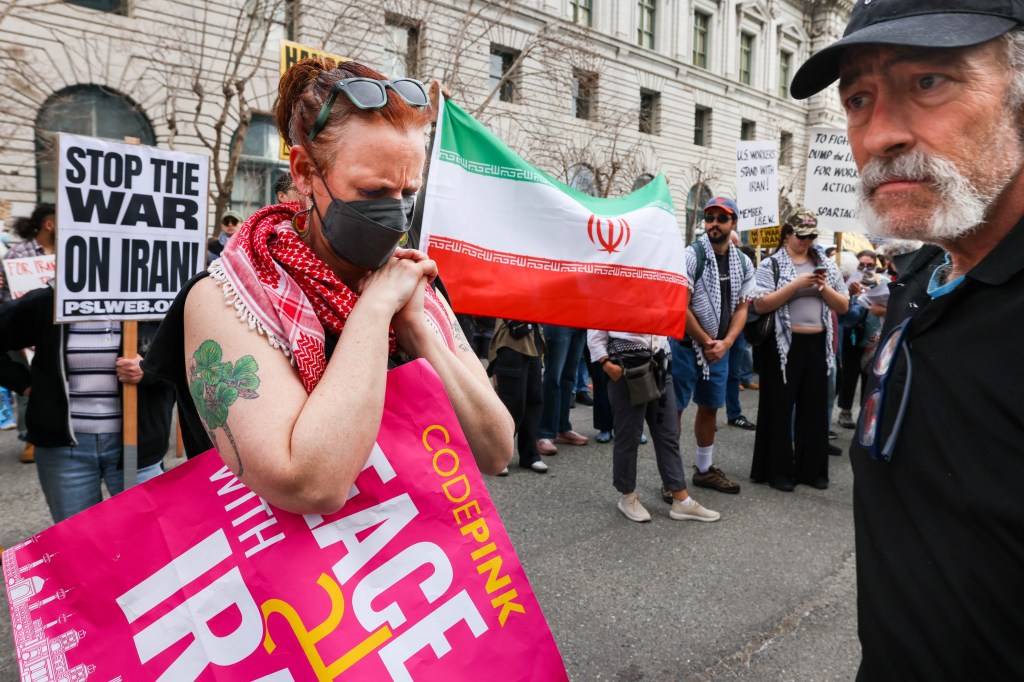
Iran’s Turmoil: Bay Area Reactions to the Death of Supreme Leader Khamenei
Shock and Celebration: Community Responses
The announcement from President Donald Trump regarding the assassination of Iranian Supreme Leader Ayatollah Ali Khamenei, confirmed later by Iranian state media, sent shockwaves through the Bay Area’s Iranian-American community. Emotions ranged from fear and anxiety to relief and celebration, illustrating the complexity of sentiments surrounding this pivotal moment in Middle Eastern politics.
Dina Asna, originally from Tehran, expressed her immediate distress, noting that her family remains in Iran, where her uncle and cousins reside in the capital. Asna, who founded the nonprofit organization Iranian Women in Network, reported that her contacts in Iran conveyed feelings of fear, stating they anticipated worsening economic conditions if the government collapses and violence escalates. She emphasized the uncertainty regarding potential successors in Iran’s leadership.
Divided Opinions: Reaction from the Iranian Diaspora
In stark contrast, some in the Bay Area expressed gratitude towards Trump’s actions. San Jose resident Shahrdad Khabir was among those who welcomed the news, believing it liberated the Iranian people from what he termed a “wicked regime.” Khabir noted that his conversations with people in Iran conveyed a sense of joy over the news, indicating a significant division of opinion within the Iranian diaspora.
Trump himself stated on social media that this represented “the single greatest chance for the Iranian people to take back their country,” reflecting an optimistic view on the implications of Khamenei’s death.
Political Backlash and Calls for Accountability
The announcement elicited criticism from California’s Democratic lawmakers, with many questioning Trump’s unilateral authority to engage in military action. Senator Adam Schiff categorized Iran as a “brutal and murderous dictatorship” but emphasized that no president should have the power to initiate a war without congressional approval. Schiff urged lawmakers to return to Washington to address this issue through a bipartisan War Powers Resolution initiated by Representatives Ro Khanna and Thomas Massie.
Protests Erupt Across the Bay Area
On February 28, protests emerged across the Bay Area in response to the U.S.-led strike. Activists planned demonstrations in cities like San Jose and Oakland. Hoda Katebi, an Oakland-based member of the local Iranian community, criticized Trump for exacerbating tensions, referencing reports of civilian casualties in Iran, including the deaths of schoolchildren due to the strikes.
The situation in the region remained tense, following months of escalating friction and failed diplomatic negotiations regarding Iran’s nuclear program. The recent assassination of Khamenei came amidst ongoing nuclear talks that had initially suggested “significant progress.”
Perspectives on Foreign Intervention
Reactions were further complicated by differing perspectives on foreign intervention. Mohamed Shehk, a director at the Arab Resource and Organizing Center, drew parallels between the violence in Iran and Israel’s ongoing military operations in Gaza, criticizing both for showing little regard for human life. Conversely, Tyler Gregory from the Jewish Community Relations Council expressed support for the military action, arguing Iran’s regime is responsible for funding terrorist organizations like Hamas.
Iranian voices within the Bay Area voiced their apprehensions about foreign intervention. Arzhang Kalbali, an organizer with Bay Area for Iran, revealed that many in Iran express desperation for change, suggesting that they’d support any means to escape their current conditions, illustrating the complexity of the situation on the ground.
In summary, the assassination of Khamenei marks a historic and turbulent chapter for Iran, eliciting various reactions from the Iranian-American community. This event not only reflects the divisions within the diaspora but also highlights the far-reaching implications of U.S. military actions on global stability. As various voices emerge, the discourse surrounding the future of Iran’s government and international relations continues to develop, emphasizing the need for careful consideration in U.S. foreign policy.
For more insights on the evolving landscape in Iran, explore external resources such as the Council on Foreign Relations and stay updated on local protests through San Francisco Chronicle.
