

California Faces Multi-Million Dollar Cost to Remove Cesar Chavez’s Legacy
California is grappling with the potential costs of removing the legacy of union leader Cesar Chavez from its schools, streets, and public monuments. The founder of the United Farm Workers has faced serious allegations of sexual assault, abuse, and grooming involving women and girls as young as 12, particularly during the 1960s and 1970s, when he held significant influence.
Impact of Allegations on Chavez’s Legacy
These allegations have led state authorities to take drastic steps, including changing the name of Cesar Chavez Day, a state holiday celebrated on his birthday, March 31. Once regarded as a symbol of the labor movement, Chavez’s legacy is now under scrutiny, and authorities are engaged in a swift response to address public sentiment.
Statues and Murals Under Review
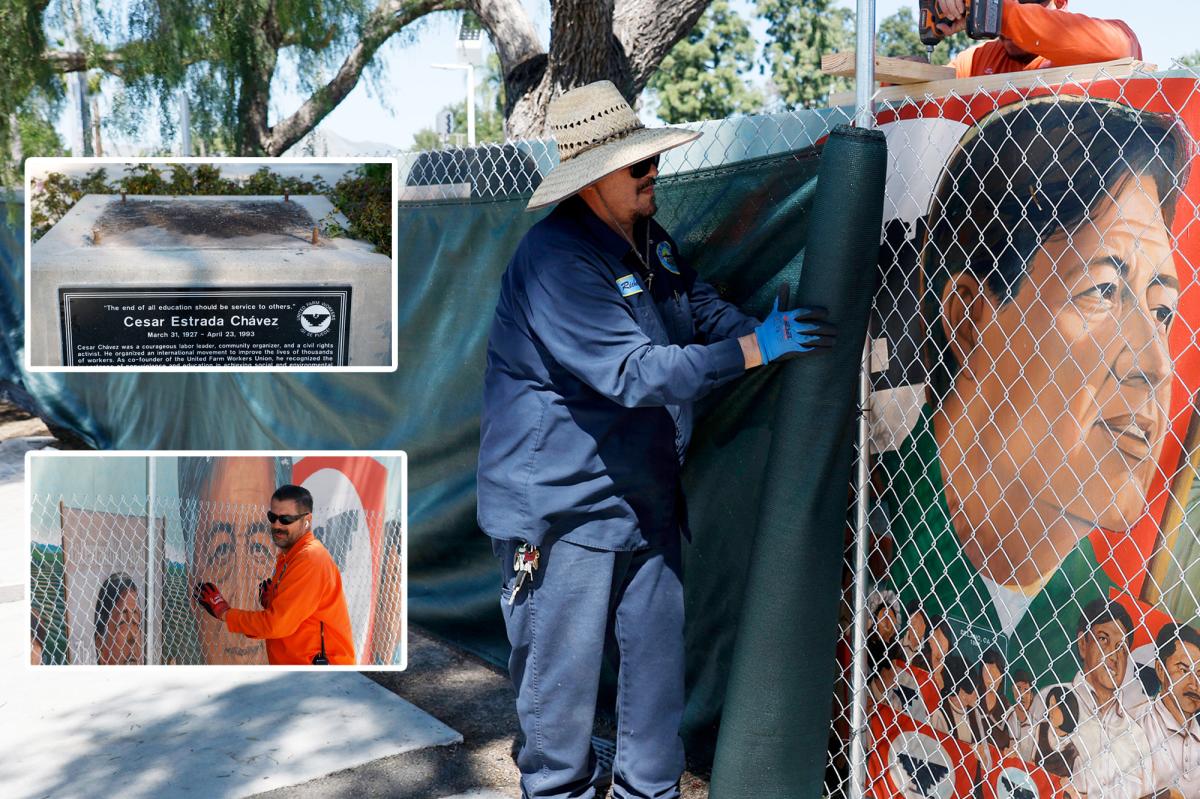
In various locations, such as San Fernando and Santa Ana College, statues and murals depicting Chavez are being dismantled or covered. This rapid backlash against Chavez, formerly viewed as a labor hero, has prompted discussions about the broader implications for California’s public spaces.
Financial Burden on Taxpayers
The financial responsibility for this removal operation is likely to fall on California taxpayers. According to the California Department of Finance, the ownership of the property determines who bears the cost. Most Chavez statues and signs are not on state property, meaning local governments will probably shoulder the financial burden.
Herb Morgan, a candidate for state controller, estimates that costs could exceed $10 million, primarily impacting local governments, cities, counties, and school districts. For example, the city of Fresno recently spent $142,000 to rename a 10-mile stretch of road, which was only changed to Cesar Chavez Boulevard in 2024.
Renaming Costs and Historical Precedents
The costs related to renaming streets and schools are alarming. In past cases, such as the proposed renaming of 44 schools in the San Francisco Unified School District, estimates ranged from $400,000 to $1 million. Major cities like San Francisco and Bakersfield could see costs escalate due to the logistical challenges involved in replacing signage and adjusting city maps.
For instance, in Bakersfield, officials estimate it will cost about $30,000 per city street sign replacement for streets associated with Cesar Chavez, alongside a hefty $200,000 for freeway signs on H Street, which was also renamed in his honor.
Stripping Away Chavez’s Legacy
The removal of landmarks and monuments associated with Chavez reflects a broader trend in California to reassess historical figures. Governor Gavin Newsom has indicated a desire to shift focus toward celebrating the wider farmworker and labor movement rather than individual legacies. Meanwhile, Los Angeles Mayor Karen Bass has already made the decision to rename Cesar Chavez Day to Farm Workers Day, suggesting that similar initiatives may extend to other public holidays and landmarks.
The Bigger Picture
The financial implications are significant. As communities reconsider their commemorative practices, the cost of stripping away Chavez’s legacy is becoming clear. From the reprinting of menus and licenses to the replacement of various legal documents, the overall expenditures could quickly add up.
For Californians, this ongoing reassessment raises essential questions about the cost of historical legacies and the changing narratives surrounding social movements. As cities grapple with these decisions, the expense and impact on the public purse continue to be areas of concern.
Conclusion
The movement to remove symbols associated with Cesar Chavez is not just a matter of local governance; it’s a profound reflection on how society chooses to remember its history and heroes. As California embarks on this costly journey, the public will be closely watching how these changes unfold and what they mean for the future of commemorative practices in the state.
For more on this topic, visit the New York Post and explore the complexities surrounding the legacy of historical figures.
