

Unprecedented March Heat Hits Southern California: Records Broken
Southern California’s desert community of Thermal recently made headlines as it recorded a scorching 108 degrees Fahrenheit (42.2 degrees Celsius), tying the highest March temperature ever documented in the United States. This remarkable heat event, first set in Rio Grande City, Texas, in 1954, underscores a broader trend of record-breaking winter temperatures across the Southwest.
Ongoing Heat Wave Alerts
Forecasters are predicting that this unprecedented warmth will persist into the weekend, with temperatures remaining 20 to 30 degrees above normal for March. The National Weather Service is closely monitoring these conditions, warning that Phoenix set a new record for the highest overnight low temperature for March 19th, reaching 69 degrees Fahrenheit (20.5 degrees Celsius).
Temperatures on the Rise
In what many are calling a climatic anomaly, daytime temperatures in Arizona are expected to surge into the triple digits, peaking around 105 degrees Fahrenheit (40.5 degrees Celsius). Meteorologists have noted that the last occurrence of temperatures exceeding 100 degrees during March in Phoenix was nearly 40 years ago.
Closures and Cautions
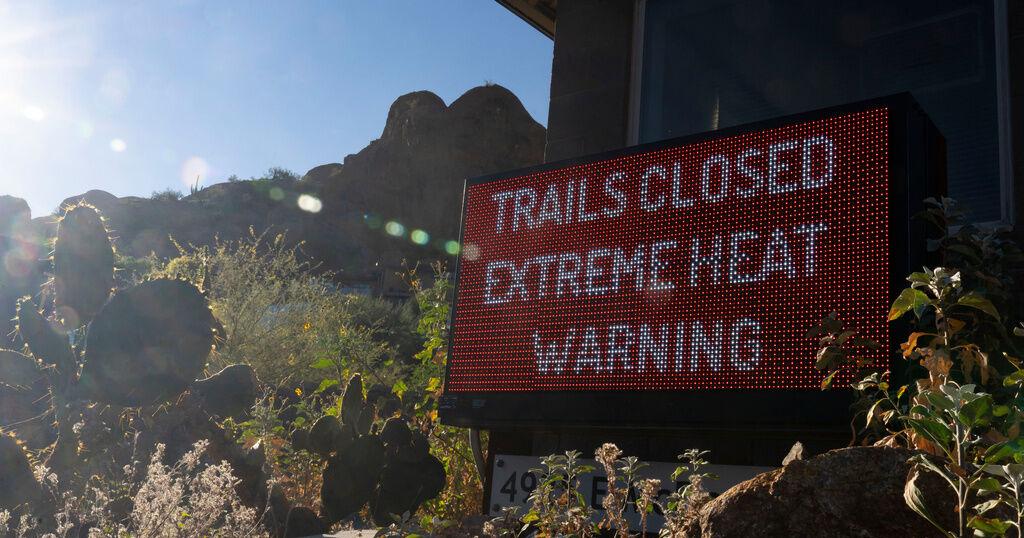
Hiking trails around Phoenix have been temporarily closed due to the heightened risk of heat illness, as residents and visitors alike prepare for the rising temperatures. The coming days could see peaks even hotter than the current readings, with Thermal forecasted to reach 110 degrees Fahrenheit (43.3 degrees Celsius) on Friday.
Cities Breaking Records
In addition to Thermal, various cities across the region are experiencing unseasonable heat. Cathedral City, located near Palm Springs, also registered 108 degrees on Thursday. Meanwhile, Las Vegas broke its all-time March high by hitting 99 degrees Fahrenheit (37.2 degrees Celsius), surpassing the previous record of 93 degrees set in 2022. Downtown Los Angeles reached 94 degrees (34.4 degrees Celsius), outpacing its previous high for March 18th of 87 degrees recorded in 1997.
How Residents are Coping
Despite the extreme heat, residents like Ruben Pantaleon, who was found cleaning car windshields in Thermal, seem to adapt to the climate. Equipped with electrolyte drinks and comfortable attire, he expresses no concerns, commenting, “It’s the desert. It gets real hot. I’m not worried about it.”
What’s Next for the Southwest
As the heat wave continues, other cities in the region are expected to record their earliest 100-plus degree days. However, forecasters predict a slight temperature drop starting Sunday, offering some relief from the intense heat. Understanding these weather patterns is crucial for preparing for future climatic phenomena.
Conclusion
The Southwest’s ongoing heat wave serves as a stark reminder of changing weather patterns and climate variability across the United States. Residents are urged to stay hydrated and take heat safety precautions as they navigate these unprecedented conditions.
For more information on extreme weather events and their implications, visit National Weather Service and keep informed on how to prepare for future weather phenomena.
