

Small Earthquakes Rock San Francisco Bay Area: What You Need to Know
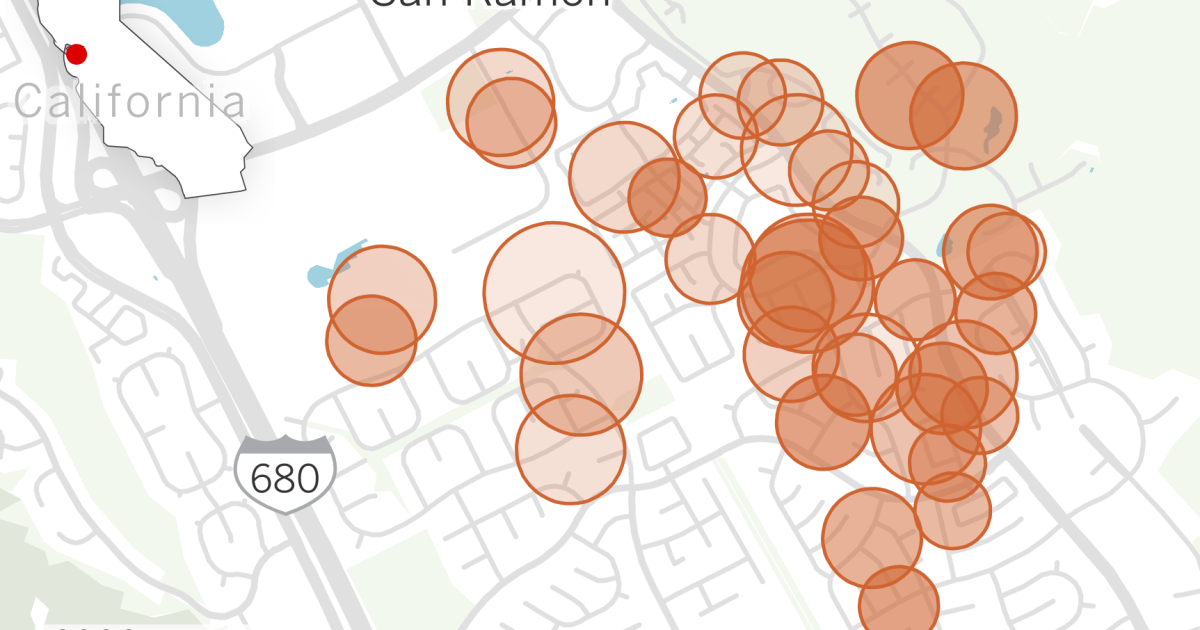
Dozens of small earthquakes have recently shaken the San Francisco Bay Area, particularly the East Bay suburb of San Ramon, near the Calaveras fault. Over the past month, these tremors have rattled nerves and sparked concerns about potentially stronger seismic activity.
Recent Seismic Activity
On a particularly active Monday, at least 19 earthquakes of magnitude 2 or greater were recorded, with the most significant quake reaching a magnitude of 3.6 at 9:07 a.m. This disturbance was enough to cause shoppers at a nearby Safeway in Dublin to exchange alarmed looks as they experienced the brief tremor. The day began with six earthquakes before dawn, creating an unsettling start for many residents.
One local expressed their unease on Threads, commenting, “Wee bit nervous,” and mentioning their intent to stock up on water and emergency supplies. Another humorously noted, “San Ramon is basically a massage chair today … but like, the stressful kind.”
Overview of Recent Swarms
The current seismic activity began on November 9, with 13 earthquakes occurring on that day, the largest being a magnitude 3.8. Subsequent tremors followed on November 10, 15, 17, 18, and 20. Most recently, a magnitude 2.9 quake struck near Oakland’s Montclair neighborhood, close to the Hayward fault.
San Ramon and the surrounding Tri-Valley area have a history of earthquake swarms, with similar events noted in 2002, 2003, and 2015. Annemarie Baltay, a U.S. Geological Survey seismologist, stated that while these swarms are unsettling, they typically do not precede larger quakes. Historically, swarms vary in duration, lasting anywhere from two days to as long as 42 days.
Understanding Earthquake Swarm Risks
While the U.S. Geological Survey (USGS) reports a 5% chance that any given earthquake will be followed by a larger quake in the week that follows, most swarms do not culminate in significant temblors. Historical context reveals that smaller quakes have often preceded larger ones, like the 7.8 magnitude quake that hit the San Andreas fault in 1857, which followed smaller quakes in Monterey County.
The Bay Area Faults
Scientists are particularly wary of the Calaveras fault, which runs from Alamo southeast along Interstate 680, passing through Danville, Dublin, and Pleasanton. The fault has the potential to generate quakes of magnitude 6.7 or greater. The last major activity along this fault occurred in 1984, when a magnitude 6.2 earthquake caused extensive damage.
The Hayward Fault
The Hayward fault is another significant concern for scientists, as it passes through major areas like Richmond, Berkeley, and Oakland. A hypothetical magnitude 7 earthquake along this fault could result in catastrophic consequences, including significant injuries and structural collapses.
Preparedness is Key
Residents are encouraged to prepare for potential seismic events by securing objects that could fall during an earthquake. Recommendations include strapping bookcases to walls and ensuring that heavy appliances are anchored securely. Property owners should also consider whether their homes or apartments require retrofitting to withstand seismic shocks.
Expert Advice
The USGS estimates a 72% probability that an earthquake of magnitude 6.7 or greater will strike the Bay Area by 2043. In light of the recent uptick in seismic activity, experts stress the importance of being proactive in disaster preparedness.
Residents can learn more about earthquake preparedness strategies through resources provided by the USGS. Understanding local seismic risks and maintaining readiness is essential for safety in this earthquake-prone region.
For more information on earthquake safety and preparedness, visit the USGS Earthquake Hazards Program.
