

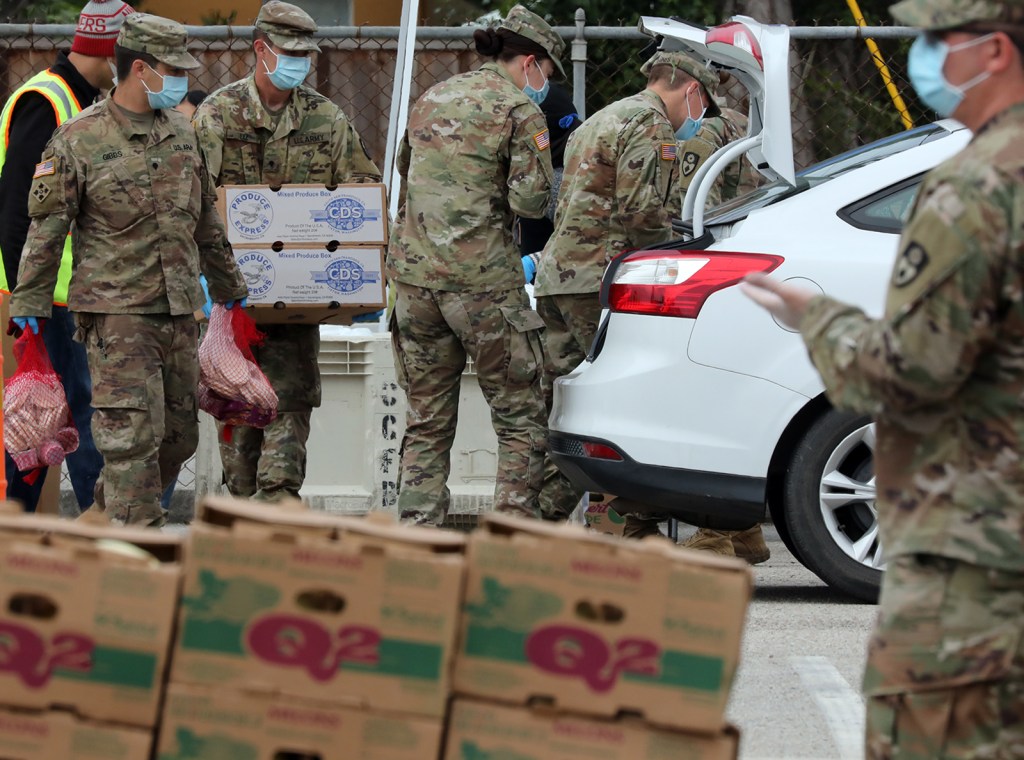
National Guard Support for Food Banks Amid Federal Shutdown Raises Concerns
As the federal government enters its fourth week of a shutdown, food banks across California are grappling with the potential impact on federal food assistance programs, particularly for the low-income residents of the Bay Area. The Second Harvest of Silicon Valley, based in Santa Clara County, finds itself reflecting on the dual nature of support from the California National Guard, recalling their essential help during the early stages of the COVID-19 pandemic.
The Role of the National Guard in Food Banks
During the initial months of the pandemic, California National Guard troops acted as “lifesavers” by stepping in for hundreds of volunteers who were unable to assist due to stay-at-home orders. Around 200 Guard members packed, loaded, and distributed meals for families facing unexpected job losses and food insecurity.
However, the context surrounding the National Guard’s recent mobilization raises significant concerns. Governor Gavin Newsom has offered National Guard assistance for food banks overwhelmed by potential delays in federal SNAP (Supplemental Nutrition Assistance Program) payments. Unfortunately, the timing of this deployment may evoke fear within communities already facing stress and uncertainty.
Community Concerns
Leslie Bacho, CEO of Second Harvest, expressed her hesitations regarding the presence of uniformed military staff at food distribution centers. “Just in this moment, there’s a lot of fear and concern in the community,” she stated. The current political climate, marked by increased National Guard involvement in immigration and crime crackdowns, may deter families from seeking help. Many clients might confuse the National Guard with Immigration and Customs Enforcement (ICE) agents.
Bacho emphasized the importance of creating a welcoming environment at food banks. Although she recognizes the vital role the National Guard played in 2020, she believes that any troops should solely assist in warehouse operations, far from public-facing roles.
Other Food Banks’ Perspectives
Similar sentiments were echoed by Caitlyn Sly, CEO of the Food Bank of Contra Costa and Solano. While she appreciates the aid offer, Sly noted that currently, her organization has sufficient volunteers, particularly during the holiday season. However, that may change as the federal shutdown continues to impact over 98,000 households in their service area due to CalFresh payment delays. Like Bacho, Sly expressed wariness about having National Guard members involved in public-facing operations, preferring their assistance in warehouse functions instead.
Other organizations, such as the San Francisco-Marin Food Bank and the Alameda County Food Bank, have also declined offers for National Guard deployment. Their responses indicate a cautious approach to managing community relations amidst ongoing uncertainty.
The Federal Shutdown’s Impact on Food Assistance
As families prepare for the holiday season, the disruption in SNAP benefits has raised alarms. With an estimated 5.5 million CalFresh recipients facing delays, Governor Newsom’s office is moving to fast-track $80 million in state funding to assist food banks across California, aiming to mitigate food insecurity.
The Governor’s office has outlined a plan for National Guard troops to support food distribution efforts without direct public interaction. Troops are expected to assist with warehouse operations, packaging, and managing deliveries to ensure that food continues to reach those in need.
Moving Forward
While the California National Guard has pledged to be a supportive presence, food bank leaders like Bacho and Sly remain vigilant about community sentiment and safety. Both organizations are poised to welcome assistance if circumstances change but are adamant about prioritizing a non-threatening atmosphere for those seeking food aid.
As food banks navigate the challenges stemming from the government shutdown, the emphasis will remain on ensuring that all individuals can access critical resources without fear. The ongoing dialogue between food banks, the community, and state authorities will be essential to fostering a supportive environment for families in need.
For more information on food assistance programs, visit California’s Department of Social Services and explore resources available through your local food bank.
