

Ongoing Earthquake Swarms Rattle the Bay Area
For over a month now, residents of the Bay Area have been experiencing a series of earthquake swarms. Most recently, the East Bay suburb of San Ramon has been at the center of this seismic activity. A magnitude 4.0 earthquake struck on Friday night, marking the largest tremor since the swarm began, followed by another sizeable quake of magnitude 3.9 on Saturday. Since November 9, California’s U.S. Geological Survey (USGS) has recorded more than 80 earthquakes in the area with magnitudes of 2.0 or greater.
Understanding the Nature of Earthquake Swarms
Despite the frequency of these minor tremors, experts emphasize that such swarms typically do not indicate an imminent larger earthquake. For example, past seismic swarms, such as those in Malibu and Ontario, have not been followed by major earthquakes. Annemarie Baltay, a seismologist at the U.S. Geological Survey, states, “While there is going to be a big earthquake in the Bay Area, we just can’t predict exactly when or where it will happen.”
Predicting Major Earthquakes
The looming threat of major earthquakes is a constant concern for Californians. Current estimations indicate a 60% chance of a magnitude 6.7 or greater earthquake striking the Los Angeles region by 2043, and a 72% chance in the San Francisco Bay Area, based on 30-year USGS estimates from 2014. With a 48% chance of experiencing a magnitude 7.5 earthquake or greater by 2043, and a 7% chance of a magnitude 8 or more, prevailing fears remain valid.
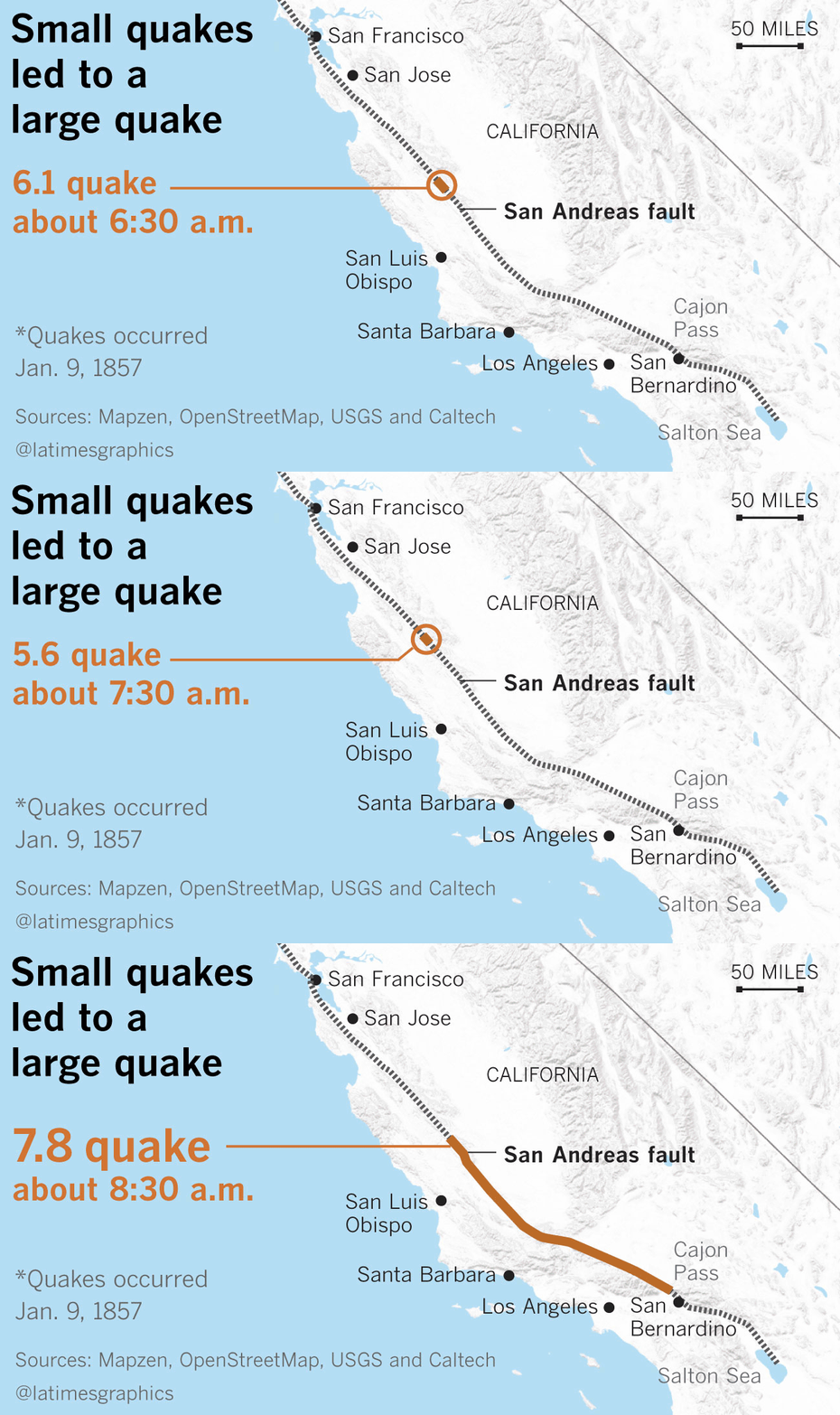
Interestingly, while aftershocks following earthquakes carry a 1-in-20 chance of leading to a larger quake, experts conclude that approximately half of all earthquakes occur without any easily detectable foreshocks.
Historical Context of Earthquake Patterns
In Southern California, certain clusters of tremors have sparked widespread concern, such as the Malibu earthquakes in early 2024. The region saw multiple quakes reaching magnitudes of 4.6 and 4.7 but has since calmed down. Similarly, a spate of earthquakes in Ontario culminated in a magnitude 4.0 quake in October 2024, yet has dissipated significantly since.
The Calaveras Fault: Potential Danger Zone
The current swarms near San Ramon are linked to the Calaveras Fault, known for having the potential to trigger significant earthquakes. Historically, the fault caused the Morgan Hill earthquake in 1984, registering a magnitude of 6.2. The fault has not experienced a major rupture since, but it remains under close observation.
Other notable faults to monitor are the Hayward Fault and the infamous San Andreas Fault.
A Record Year for Small Earthquakes
Last year proved to be particularly active in Southern California, with 15 earthquake sequences of at least magnitude 4 recorded, marking the highest total in 65 years, surpassing the 13 recorded in 1988. However, 2025 has yielded only five seismic sequences of equal magnitude thus far.
Conclusion: Staying Prepared
As small earthquakes continue to shake the ground beneath, it remains essential for residents to stay prepared for larger quakes. The Californian geological landscape suggests that while these small foreshocks are unsettling, they do not necessarily predict a catastrophic event.
Even in the absence of clear foreshocks, history has shown that significant earthquakes can—and do—occur without warning. As Californians, continuous vigilance and preparedness are crucial for managing the reality of living in a seismically active region.
