

The Rising Heat and Health Risks for Farmworkers in California’s Imperial Valley
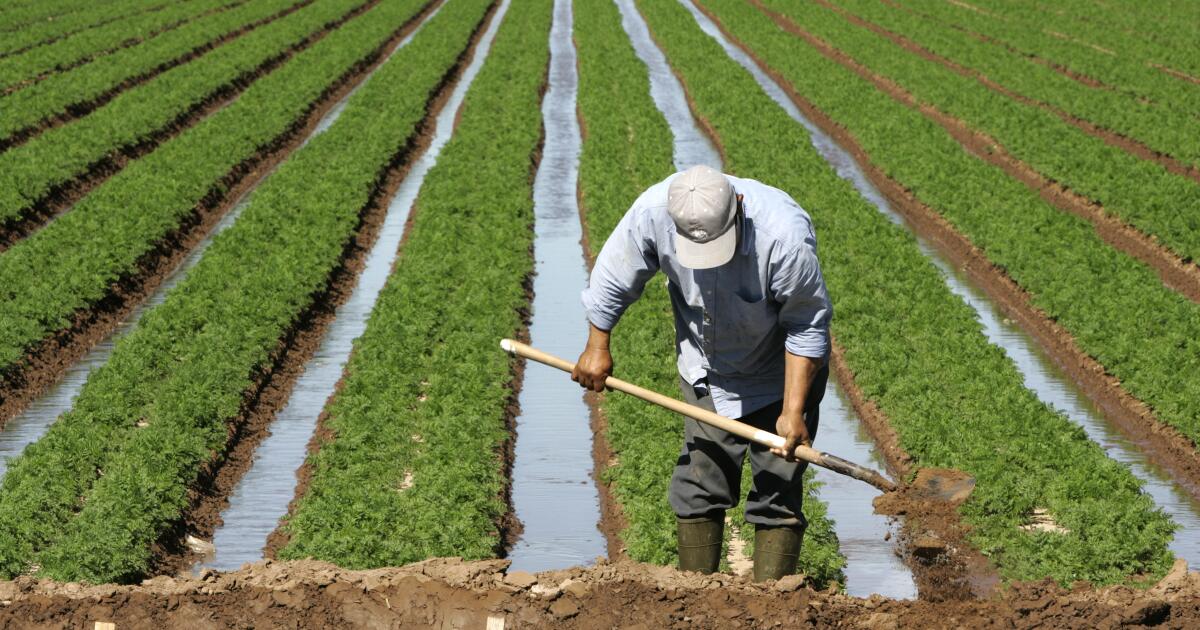
In the scorching summers of California’s Imperial Valley, farmworker Raul Cruz starts his labor at dawn, battling the intense heat that the region is notorious for. As he expertly chops, cleans, and bundles sugarcane, he is acutely aware of the rising temperatures. “We just have to beat the heat,” Cruz explains, having committed 15 years to this grueling job. The workday typically concludes by 9 or 10 a.m. to avoid the dangers of heat-related illnesses, but the mental strain of escalating temperatures remains ever-present.
Understanding the Risks of Heat Stress
The very climate that makes this Californian region a hub for agriculture also poses grave risks to its farmworkers. Researchers from San Diego State University are delving into the impact of heat stress on these workers, aiming to identify heat anomalies and develop effective protective measures against climate change.
“Workers could potentially be dying or having some serious issues,” warns Nicolas Lopez-Galvez, project leader and public health assistant professor. “It’s essential to act sooner.”
The Growing Threat of Rising Temperatures
Statistics indicate that California has been experiencing significant temperature increases since the early 20th century. In fact, seven of the state’s last eight years up to 2024 recorded exceptionally high temperatures, with Southern California warming at nearly double the rate of the north. Ana Solorio, an organizer with the advocacy group Líderes Campesinas, has personal experience of this oppressive heat, recalling her suffocating days as a farmworker in the Coachella Valley.
Investigating Variations in Heat Stress
Researchers are keen to understand how different factors contribute to heat stress among farmworkers. Over two years, data from around 300 workers was collected using body sensors to monitor heart rates and core body temperatures. Environmental monitors provided daily data on temperature, humidity, and other conditions, illustrating the nuances of heat exposure across various crops.
Interestingly, ground-level crops can expose workers to higher degrees of heat compared to tree crops. Additionally, factors such as tree cover, proximity to water bodies, and vacant fields play a considerable role in generating “heat islands,” where temperatures soar higher than in surrounding areas.
Extreme Heat in Agricultural Hotspots
The Imperial Valley is not just agriculturally rich but also experiences extreme temperatures, averaging about 123 days above 95°F annually. This region, which borders the Colorado River and the Salton Sea, is critical for the nation’s winter vegetable supply and employs thousands of farmworkers, many of whom belong to a sizeable Latino community. Unfortunately, this area has one of the highest rates of heat-related illnesses in California.
Researching Solutions for Heat Stress Management
Initial findings from the research team have already begun to shed light on the mitigation of heat stress among farmworkers. For instance, a study revealed that while irrigating crop fields can reduce day-time temperatures, it paradoxically increases nighttime temperatures due to heightened humidity. This elevated nighttime heat restricts workers’ ability to recuperate from the daytime stress.
Based on extensive temperature data, researchers recommend more frequent rest breaks for farmworkers, particularly when wet-bulb globe temperatures exceed safety thresholds. Despite existing heat regulations in California, enforcement remains a significant issue.
Future Prospects for Heat Stress Research
The focus of future studies will expand to California’s Central Valley and possibly into regions like Yuma, Arizona. Understanding how to best protect farmworkers from escalating heat is an urgent concern, as climate change trends threaten to worsen these precarious conditions.
By raising awareness and developing targeted interventions, this research helps shape policies that could lead to safer working environments for those essential to the agricultural sector.
For more information about heat-related illnesses, explore resources from the California Office of Environmental Health Hazard Assessment and stay informed on the importance of protecting farmworkers during these critical climate changes.
